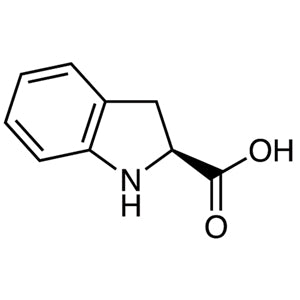
(S)-(-)-Indoline-2-carboxylic Acid is a chiral compound widely used in asymmetric synthesis to produce molecules with specific optical configurations. This material plays a crucial role in laboratories where precise control over stereochemistry is required. Its application is particularly significant in pharmaceutical research and drug development, where the spatial arrangement of atoms can drastically affect biological activity. As a reagent or catalyst, it facilitates the formation of compounds with desired stereochemical properties, making it an essential tool in modern synthetic chemistry.
The compound is valued for its high purity and its ability to interact selectively with other reactants under controlled conditions. Its complex molecular structure allows for specific interactions with substrates, enabling the synthesis of enantiomerically pure products. These properties make it a preferred choice for applications requiring high precision and reproducibility. The chiral nature of this acid ensures that it can influence reaction pathways in a way that aligns with the desired outcome, enhancing the efficiency of asymmetric synthesis processes.
In Indonesian laboratories, (S)-(-)-Indoline-2-carboxylic Acid is commonly used in scientific research and drug development projects. It is a key component in studies focused on biological activity and the synthesis of new compounds. Its availability in the local market ensures that researchers and scientists have access to this essential material for their work. The compound supports both academic and industrial applications, contributing to advancements in chemical and pharmaceutical sciences.
TCI brochures (PDF)
- Asymmetric Organocatalysts 2025-06-12 · p. 7
- Asymmetric Synthesis 2026-03-18 · p. 8
- Amino Acids and Peptide Synthesis Reagents 2025-08-14 · p. 9
Related TCI products
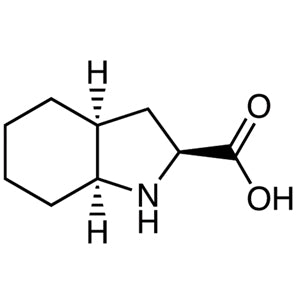
- TCI O0370 80875-98-5 (2S,3aS,7aS)-Octahydro-1H-indole-2-carboxylic Acid
- TCI T1515 74163-81-8 (S)-(-)-1,2,3,4-Tetrahydroisoquinoline-3-carboxylic Acid
- TCI A1043 2133-34-8 L-Azetidine-2-carboxylic Acid [Antagonist of L-Proline]
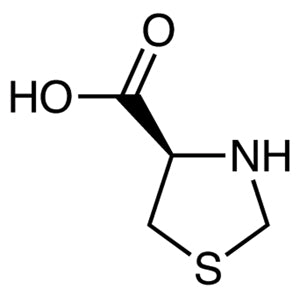
- TCI T0219 34592-47-7 L-Thioproline
- TCI T4195 67123-97-1 H-DL-Tic-OH
- TCI P1404 3105-95-1 L-Pipecolic Acid
- Asymmetric synthesis for the production of enantiomerically pure compounds due to its chiral structure and reactivity.
- Pharmaceutical research to develop drugs with specific stereochemical configurations for enhanced biological activity.
- Organic chemistry experiments requiring precise control over stereocenter formation in complex molecule synthesis.
- Academic research in chemical sciences for studying molecular interactions and reaction mechanisms.
- Drug development projects aiming to optimize the efficacy and safety of new therapeutic agents through stereocontrolled synthesis.
| Brand | TCI |
|---|---|
| CAS number | 79815-20-6 |
| Molecular formula | — |
| Purity | — |
| Category | Chemistry > Asymmetric Synthesis > Chiral Catalysts, Chiral Ligands, Chiral Reagents |
| Pack sizes | Available in various quantities as per standard laboratory supply options |
| Physical form | Solid (exact form may vary based on supplier packaging) |
| Storage | Store in a cool, dry place away from light and moisture |
This compound should be stored in a cool, dry environment, away from direct light and moisture to maintain its stability and purity. It is recommended to use airtight containers to prevent exposure to air and humidity, which could affect its chemical integrity. As a chiral compound, it should be handled with care to avoid contamination or unintended stereochemical changes. Laboratory personnel should wear appropriate personal protective equipment, such as gloves and safety goggles, when handling this material. Proper ventilation is essential to minimize inhalation risks. The compound is generally non-hazardous under normal storage conditions but should be treated as a chemical reagent requiring standard laboratory safety protocols.
—
Product Categories
- Asymmetric SynthesisChiral Catalysts, Chiral Ligands, Chiral ReagentsProline-Based Organocatalysts [Asymmetric Synthesis]
- Catalysis and Inorganic ChemistryOrganocatalysts [Catalysis]Asymmetric Organocatalysts
- Chemical BiologyPeptide ChemistryUnnatural Amino Acid Derivatives
- Pharmaceutical Development and Drug Discovery Research ReagentsPeptide ChemistryUnnatural Amino Acid Derivatives
Produk Terkait
-
(2S,3aS,7aS)-Octahydro-1H-indole-2-carboxylicAcid TCI O0370
Regular price From Rp 1.565.550,00Regular price -
(S)-(-)-1,2,3,4-Tetrahydroisoquinoline-3-carboxylicAcid TCI T1515
Regular price From Rp 743.400,00Regular price -
L-Azetidine-2-carboxylicAcid[AntagonistofL-Proline] TCI A1043
Regular price From Rp 1.326.150,00Regular price -
L-Thioproline TCI T0219
Regular price From Rp 1.590.750,00Regular price -
H-DL-Tic-OH TCI T4195
Regular price Rp 2.359.350,00Regular price -
L-PipecolicAcid TCI P1404
Regular price From Rp 505.050,00Regular price -
(+/-)-Indoline-2-carboxylicAcid TCI I0394
Regular price From Rp 1.246.350,00Regular price -
trans-4-Fluoro-L-proline TCI F0818
Regular price Rp 2.730.000,00Regular price

![2133-34-8 L-Azetidine-2-carboxylic Acid [Antagonist of L-Proline] - AMI Scientific](http://amiscientific.com/cdn/shop/files/TCI2510A1043.jpg?v=1767080570&width=533)