(2S,3aS,7aS)-Octahydro-1H-indole-2-carboxylic Acid is a chiral compound widely used in asymmetric synthesis to produce molecules with specific optical properties. This material plays a crucial role in organic chemistry laboratories, particularly in reactions requiring precise stereochemical control. Its chiral nature allows it to act as a key component in the development of chiral ligands and catalysts, which are essential for creating enantiomerically pure compounds. In research settings, it is a fundamental reagent for advancing synthetic methodologies in both academic and industrial environments.
The compound’s unique stereochemical configuration and chiral properties make it a preferred choice for researchers aiming to achieve high enantioselectivity. Its ability to interact selectively with other molecules enables it to be a valuable tool in the synthesis of bioactive compounds. The compound's structural complexity and specificity contribute to its effectiveness in various synthetic pathways. These characteristics make it a reliable and versatile reagent for chemists working on complex organic transformations.
In Indonesian laboratories, this compound is commonly used in organic chemistry and pharmacology research. Scientists rely on it to develop more efficient and sustainable synthetic methods. Its application extends to pharmaceutical research, where it supports the creation of compounds with high biological activity. Due to its importance in synthetic chemistry, it is a key material in both academic and applied research projects.
TCI brochures (PDF)
- Asymmetric Organocatalysts 2025-06-12 · p. 7
- Amino Acids and Peptide Synthesis Reagents 2025-08-14 · p. 10
Related TCI products
- TCI I0395 79815-20-6 (S)-(-)-Indoline-2-carboxylic Acid
- TCI T1515 74163-81-8 (S)-(-)-1,2,3,4-Tetrahydroisoquinoline-3-carboxylic Acid
- TCI A1043 2133-34-8 L-Azetidine-2-carboxylic Acid [Antagonist of L-Proline]
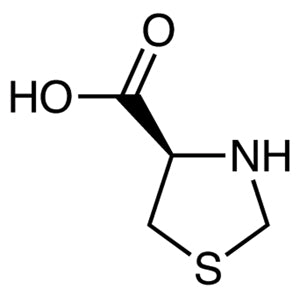
- TCI T0219 34592-47-7 L-Thioproline
- TCI T4195 67123-97-1 H-DL-Tic-OH
- TCI P1404 3105-95-1 L-Pipecolic Acid
- Asymmetric Synthesis: This compound is ideal for asymmetric synthesis due to its chiral structure, enabling the production of enantiomerically pure compounds with high selectivity.
- Chiral Ligand Development: It serves as a foundational reagent in the design of chiral ligands, which are critical for catalytic processes requiring stereochemical control.
- Pharmaceutical Research: Its use in pharmaceutical research supports the synthesis of bioactive molecules, contributing to drug development efforts.
- Organic Chemistry Studies: It is widely used in organic chemistry laboratories for exploring new synthetic pathways and reaction mechanisms.
- Sustainable Synthesis Projects: Researchers use it to develop more efficient and environmentally friendly synthetic methods in their laboratory work.
| Brand | TCI |
|---|---|
| CAS number | 80875-98-5 |
| Molecular formula | — |
| Purity | — |
| Category | Chemistry > Asymmetric Synthesis > Chiral Catalysts, Chiral Ligands, Chiral Reagents |
| Pack sizes | — |
| Physical form | — |
| Storage | Store in a cool, dry place away from light |
This compound should be stored in a cool, dry environment, away from direct sunlight and sources of heat. It is recommended to keep it in a tightly sealed container to prevent moisture absorption and contamination. Due to its chiral nature, it is important to handle it with care to maintain its structural integrity and optical purity. Proper labeling of containers is essential to ensure safe handling and prevent mix-ups in the laboratory. Always use appropriate personal protective equipment when handling this material to ensure safety and compliance with laboratory protocols.
—
Product Categories
- Asymmetric SynthesisChiral Catalysts, Chiral Ligands, Chiral ReagentsProline-Based Organocatalysts [Asymmetric Synthesis]
- Catalysis and Inorganic ChemistryOrganocatalysts [Catalysis]Asymmetric Organocatalysts
- Chemical BiologyPeptide ChemistryUnnatural Amino Acid Derivatives
- Pharmaceutical Development and Drug Discovery Research ReagentsPeptide ChemistryUnnatural Amino Acid Derivatives
Produk Terkait
-
(S)-(-)-Indoline-2-carboxylicAcid TCI I0395
Regular price From Rp 557.550,00Regular price -
(S)-(-)-1,2,3,4-Tetrahydroisoquinoline-3-carboxylicAcid TCI T1515
Regular price From Rp 743.400,00Regular price -
L-Azetidine-2-carboxylicAcid[AntagonistofL-Proline] TCI A1043
Regular price From Rp 1.326.150,00Regular price -
L-Thioproline TCI T0219
Regular price From Rp 1.590.750,00Regular price -
H-DL-Tic-OH TCI T4195
Regular price Rp 2.359.350,00Regular price -
L-PipecolicAcid TCI P1404
Regular price From Rp 505.050,00Regular price -
trans-4-Fluoro-L-proline TCI F0818
Regular price Rp 2.730.000,00Regular price -
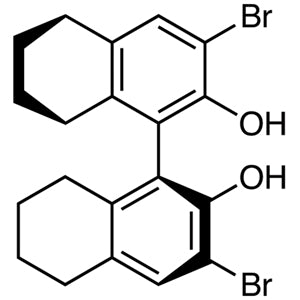
(S)-(-)-3,3'-Dibromo-5,5',6,6',7,7',8,8'-octahydro-1,1'-bi-2-naphthol TCI D5107
Regular price Rp 2.466.450,00Regular price


![2133-34-8 L-Azetidine-2-carboxylic Acid [Antagonist of L-Proline] - AMI Scientific](http://amiscientific.com/cdn/shop/files/TCI2510A1043.jpg?v=1767080570&width=533)