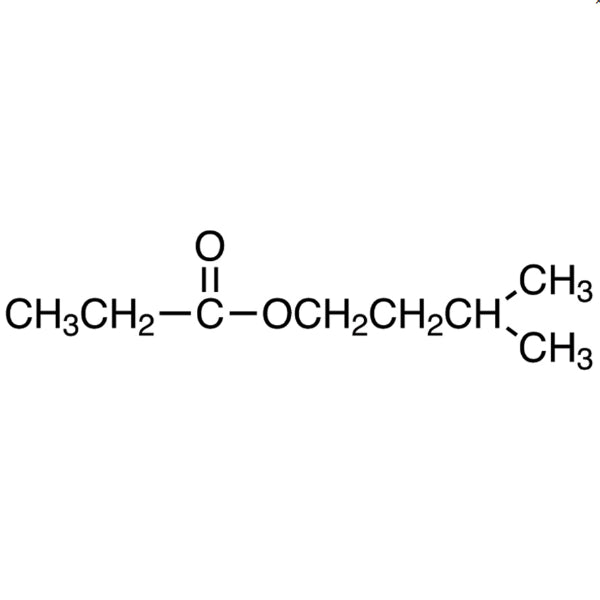
Isoamyl Propionate is a chemical compound widely used in various laboratory applications, particularly in the synthesis of organic compounds. As a key building block in chemical reactions, it plays a crucial role in the production of esters, which are essential components in many chemical substances. Its versatility makes it an important reagent in both research and educational settings, supporting a wide range of experimental processes. In the laboratory, it is commonly used for esterification reactions or as an auxiliary material in specific chemical reactions, contributing to the development of new compounds and the refinement of existing ones.
One of the main reasons Isoamyl Propionate is preferred is its solubility in organic solvents such as ethanol and ether, which facilitates its use in a variety of chemical processes. Its stability under certain conditions further enhances its reliability in laboratory settings. These properties make it easy to handle and integrate into different reaction systems, simplifying the process of isolating or purifying final products. Additionally, its relatively high boiling point allows it to be effectively used in distillation or evaporation processes, making it a valuable tool for chemical separation techniques.
In Indonesian laboratories, Isoamyl Propionate is commonly used in chemical research, especially in the fields of organic synthesis, chemical analysis, and the development of chemical products. It is also frequently found in educational and research laboratories that require chemical reagents for experiments and investigations. Its availability and chemical properties make it a standard component in many laboratory workflows across Indonesia.
TCI brochures (PDF)
- Lipids 2025-12-17 · p. 12
- Organic synthesis applications benefit from Isoamyl Propionate due to its role in esterification reactions and its ability to participate in various chemical transformations.
- It is ideal for chemical analysis processes where its solubility in organic solvents allows for accurate and efficient sample preparation and testing.
- In the development of chemical products, Isoamyl Propionate serves as a key building block for creating ester-based compounds used in pharmaceuticals and industrial applications.
- Educational laboratories use it for teaching purposes, providing students with hands-on experience in esterification and other organic reaction techniques.
- Research laboratories rely on Isoamyl Propionate for its stability and versatility, making it suitable for a wide range of experimental setups and chemical investigations.
| Brand | TCI |
|---|---|
| CAS number | 105-68-0 |
| Molecular formula | — |
| Purity | — |
| Category | Chemistry > Building Blocks > Non-Heterocyclic Building Blocks |
| Pack sizes | Available in standard laboratory quantities |
| Physical form | Liquid |
| Storage | Store in a cool, dry place away from direct sunlight |
Isoamyl Propionate should be stored in a cool, dry place, away from direct sunlight and sources of heat. It is recommended to use airtight containers made of glass or polyethylene to prevent contamination and evaporation. Due to its flammable nature, it should be kept in a well-ventilated area and away from any potential ignition sources. In laboratory settings, it is important to handle the compound with care, using appropriate personal protective equipment such as gloves and safety goggles. Proper labeling of storage containers is essential to ensure safe handling and prevent accidental exposure. Regular monitoring of storage conditions helps maintain the integrity and stability of the compound, ensuring its effectiveness in laboratory applications.
—
Produk Terkait
-
IsoamylHexanoate TCI I0899
Regular price From Rp 610.050,00Regular price -
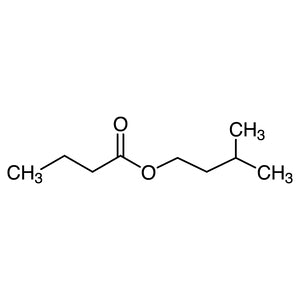
IsoamylButyrate TCI B0760
Regular price From Rp 717.150,00Regular price -
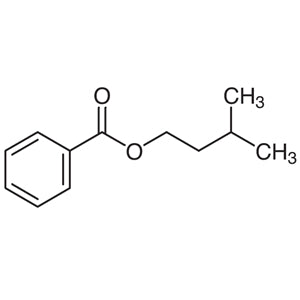
IsoamylBenzoate TCI B0071
Regular price From Rp 717.150,00Regular price -
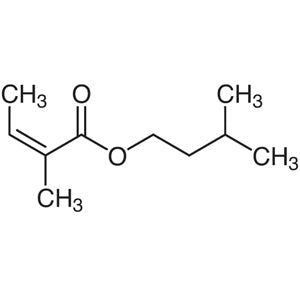
IsoamylAngelate TCI A1131
Regular price Rp 1.988.700,00Regular price -
IsoamylAcetoacetate TCI A0812
Regular price From Rp 1.273.650,00Regular price -
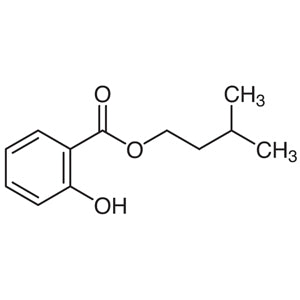
IsoamylSalicylate(contains2-MethylbutylSalicylate) TCI S0012
Regular price From Rp 505.050,00Regular price -
IsoamylPhenylacetate TCI P0123
Regular price Rp 2.809.800,00Regular price -
Isoamyln-Octanoate(contains2-Methylbutyln-Octanoate) TCI O0031
Regular price Rp 637.350,00Regular price