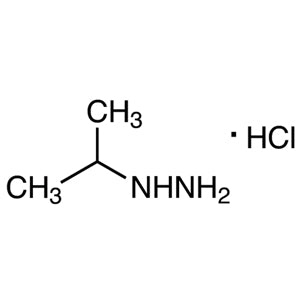
Isopropylhydrazine Hydrochloride is a chemical compound widely used as a building block in various chemical reactions, particularly in the synthesis of heterocyclic compounds and other organic molecules. Its versatility makes it a valuable asset in laboratory settings where complex molecular structures are being developed. This compound is commonly found in chemical laboratories due to its ability to participate in substitution and condensation reactions, which are fundamental to organic synthesis. As a key reagent, it enables chemists to create more complex compounds through targeted chemical transformations.
The compound’s molecular structure is stable, yet it exhibits sufficient reactivity to engage in a wide range of synthetic applications. Its ability to form bonds with various functional groups, such as carboxylates, amines, and sulfonates, enhances its utility in diverse chemical processes. These chemical properties make Isopropylhydrazine Hydrochloride an ideal choice for organic chemistry research and the development of complex compounds. Its reactivity and stability ensure it remains a reliable component in synthetic pathways.
In Indonesian laboratories, Isopropylhydrazine Hydrochloride is utilized in scientific research and educational settings. It is commonly used in organic chemistry experiments, especially in teaching and research environments where students and scientists aim to explore chemical synthesis and molecular construction. Its presence in both academic and industrial research contexts highlights its importance in advancing chemical knowledge and innovation.
Related TCI products
- TCI I0877 50632-53-6 N-Isopropylhydroxylamine Hydrochloride
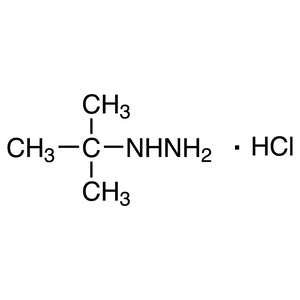
- TCI B1195 7400-27-3 tert-Butylhydrazine Hydrochloride
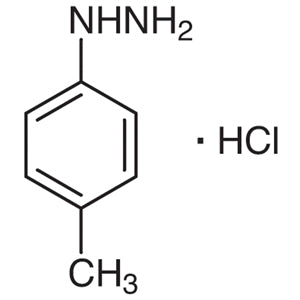
- TCI T0319 637-60-5 p-Tolylhydrazine Hydrochloride
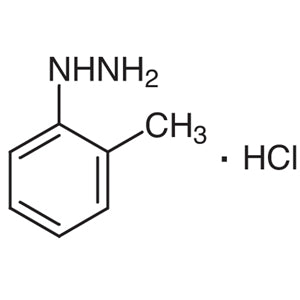
- TCI T0318 635-26-7 o-Tolylhydrazine Hydrochloride
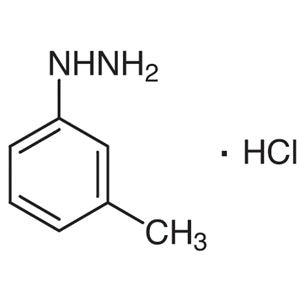
- TCI T0317 637-04-7 m-Tolylhydrazine Hydrochloride
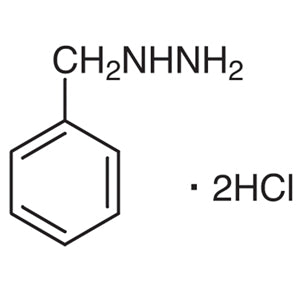
- TCI B3471 20570-96-1 Benzylhydrazine Dihydrochloride
- Organic synthesis experiments due to its ability to participate in substitution and condensation reactions.
- Development of heterocyclic compounds as it serves as a versatile building block for complex molecule formation.
- Educational purposes in chemistry laboratories for teaching synthetic chemistry techniques.
- Research applications in pharmaceutical and industrial chemistry for compound modification and functional group introduction.
- Molecular construction studies where the compound's reactivity with various functional groups is essential for structural diversity.
| Brand | TCI |
|---|---|
| CAS number | 16726-41-3 |
| Molecular formula | — |
| Purity | — |
| Category | Chemistry > Building Blocks > Non-Heterocyclic Building Blocks |
| Pack sizes | Available in standard laboratory quantities |
| Physical form | Solid powder |
| Storage | Store in a cool, dry place away from moisture and direct sunlight |
Isopropylhydrazine Hydrochloride should be stored in a cool, dry environment to maintain its chemical stability. It is recommended to keep the compound in a sealed container to prevent exposure to moisture and air. Due to its reactivity, it should be handled in a well-ventilated area to minimize inhalation risks. Suitable containers for storage include glass or high-density polyethylene vessels that are resistant to chemical degradation. General laboratory precautions include wearing appropriate personal protective equipment, such as gloves and safety goggles, when handling the compound. It is also important to ensure that the compound is stored away from incompatible substances to avoid any potential chemical interactions.
—
Produk Terkait
-
N-IsopropylhydroxylamineHydrochloride TCI I0877
Regular price From Rp 1.565.550,00Regular price -
tert-ButylhydrazineHydrochloride TCI B1195
Regular price Rp 664.650,00Regular price -
p-TolylhydrazineHydrochloride TCI T0319
Regular price Rp 3.419.850,00Regular price -
o-TolylhydrazineHydrochloride TCI T0318
Regular price From Rp 928.200,00Regular price -
m-TolylhydrazineHydrochloride TCI T0317
Regular price Rp 2.094.750,00Regular price -
BenzylhydrazineDihydrochloride TCI B3471
Regular price Rp 1.618.050,00Regular price -
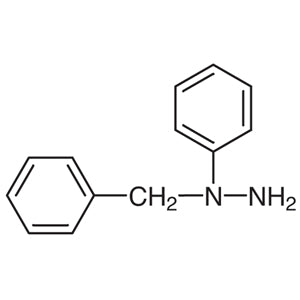
1-Benzyl-1-phenylhydrazine TCI B1157
Regular price Rp 2.782.500,00Regular price -
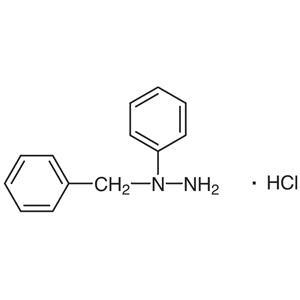
1-Benzyl-1-phenylhydrazineHydrochloride TCI B0434
Regular price From Rp 1.565.550,00Regular price