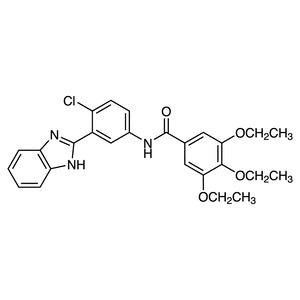
TCI I1108, with the CAS number 147591-46-6, is a chemical compound widely used in life science research, particularly in cell biology and stem cell biology. This compound plays a vital role in laboratory settings where scientists aim to isolate, maintain, and study stem cells. Its application is essential in biomedical research, especially in the development of methods for stem cell cultivation and preservation. As a key component in laboratory experiments, it supports the advancement of regenerative medicine and genetic disease research.
The compound is valued for its chemical stability and solubility in specific organic solvents, which simplifies its use in various experimental protocols. Its non-reactive nature and good solubility make it a preferred choice for researchers seeking a reliable and consistent reagent. Additionally, its stability under certain conditions minimizes the risk of degradation during storage, ensuring that it remains effective for extended periods. These properties contribute to its widespread use in laboratory environments.
In Indonesian laboratories, TCI I1108 is commonly used in stem cell biology research. It is an essential tool for scientists working on regenerative therapies and genetic disease studies. Its reliability and performance make it a trusted material in both academic and industrial research settings. The compound supports the development of new treatments and contributes to the understanding of cellular mechanisms in biological systems.
Related TCI products
- TCI T3112 433695-36-4 N,N,2-Trimethyl-5-nitrobenzenesulfonamide
- TCI T2477 58880-19-6 Trichostatin A
- TCI B4436 327036-89-5 4-Benzyl-2-methyl-1,2,4-thiadiazolidine-3,5-dione
- TCI B4006 667463-62-9 (2'Z,3'E)-6-Bromoindirubin-3'-oxime
- TCI B2836 472-15-1 Betulinic Acid
- TCI B1468 306-67-2 N,N'-Bis(3-aminopropyl)-1,4-butanediamine Tetrahydrochloride
- Stem Cell Cultivation: TCI I1108 is ideal for maintaining stem cell cultures due to its stability and solubility, ensuring consistent experimental results.
- Regenerative Medicine Research: Its role in preserving stem cells makes it suitable for studies focused on tissue regeneration and therapeutic applications.
- Genetic Disease Studies: The compound supports experiments that investigate the role of stem cells in genetic disorders, aiding in the development of targeted treatments.
- Cell Isolation Protocols: Its chemical properties make it a valuable reagent in procedures that isolate and purify stem cells from various sources.
- Biomedical Innovation: TCI I1108 is used in research aimed at creating new therapies and understanding cellular behavior in complex biological systems.
| Brand | TCI |
|---|---|
| CAS number | 147591-46-6 |
| Molecular formula | — |
| Purity | — |
| Category | Life Science > Cell Biology > Stem Cell Biology |
| Pack sizes | — |
| Physical form | — |
| Storage | Store in a cool, dry place away from direct sunlight |
TCI I1108 should be stored in a cool, dry environment to maintain its chemical stability and prevent degradation. It is recommended to keep the compound in a tightly sealed container to minimize exposure to moisture and air. Since it is soluble in certain organic solvents, it should be handled in a well-ventilated area to avoid inhalation of vapors. Laboratory personnel should wear appropriate personal protective equipment, such as gloves and safety goggles, when handling the compound. Proper storage and handling practices ensure the compound remains effective and safe for use in research applications.
—
Produk Terkait
-
N,N,2-Trimethyl-5-nitrobenzenesulfonamide TCI T3112
Regular price From Rp 2.571.450,00Regular price -
TrichostatinA TCI T2477
Regular price From Rp 10.387.650,00Regular price -
4-Benzyl-2-methyl-1,2,4-thiadiazolidine-3,5-dione TCI B4436
Regular price From Rp 1.776.600,00Regular price -
(2'Z,3'E)-6-Bromoindirubin-3'-oxime TCI B4006
Regular price From Rp 4.347.000,00Regular price -
BetulinicAcid TCI B2836
Regular price From Rp 1.670.550,00Regular price -
N,N'-Bis(3-aminopropyl)-1,4-butanediamineTetrahydrochloride TCI B1468
Regular price From Rp 4.823.700,00Regular price -
TMPyP[=alpha,beta,gamma,delta-Tetrakis(1-methylpyridinium-4-yl)porphyrinp-Toluenesulfonate][Ultra-highsensitivespectrophotometricreagentforCu,Mg][ForthesimultaneousdeterminationofmetalsbyHPLC] TCI A5014
Regular price From Rp 1.298.850,00Regular price -
SANT-2 TCI A3537
Regular price Rp 6.042.750,00Regular price


![36951-72-1 TMPyP [=alpha,beta,gamma,delta-Tetrakis(1-methylpyridinium-4-yl)porphyrin p-Toluenesulfonate] [Ultra-high sensitive spectrophotometric reagent for Cu, Mg] [For the simultaneous determination of metals by HPLC] - AMI Scientific](http://amiscientific.com/cdn/shop/files/TCI2510A5014.jpg?v=1768203998&width=533)
![36951-72-1 TMPyP [=alpha,beta,gamma,delta-Tetrakis(1-methylpyridinium-4-yl)porphyrin p-Toluenesulfonate] [Ultra-high sensitive spectrophotometric reagent for Cu, Mg] [For the simultaneous determination of metals by HPLC] - AMI Scientific](http://amiscientific.com/cdn/shop/files/TCI2510A5014_63fd8d60-181a-4b04-a4ef-aab4621faaf1.jpg?v=1769055177&width=533)