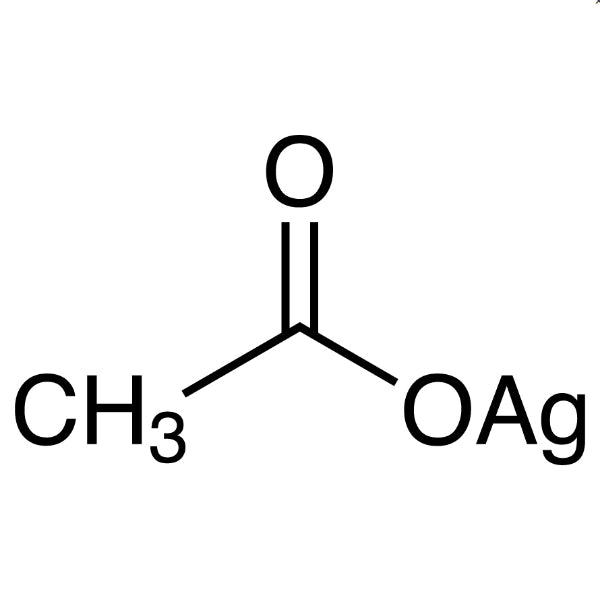
Silver(I) Acetate (TCI I1173) is a chemical compound widely used in laboratory settings for its unique reactivity and catalytic properties. As a silver salt of acetic acid, it plays a vital role in various chemical reactions, particularly in catalysis and redox processes. Its ability to facilitate reactions under controlled conditions makes it an essential reagent in both academic and industrial research. This compound is particularly valued for its stability and predictable behavior, allowing scientists to achieve consistent results in their experiments.
The chemical properties of Silver(I) Acetate make it a preferred choice for laboratory applications. It exhibits controlled reactivity, which is crucial for maintaining the integrity of chemical reactions. Its molecular structure is simple yet highly effective, enabling it to participate in a wide range of synthetic processes. Additionally, it is non-corrosive and relatively safe to handle in a controlled laboratory environment, reducing the risk of accidents or contamination. These characteristics ensure its reliability and effectiveness in various experimental setups.
In Indonesian laboratories, Silver(I) Acetate is commonly used in chemical research, educational institutions, and industrial applications. It is a key component in the synthesis of both organic and inorganic compounds, supporting a wide array of experimental needs. Its availability in various packaging options makes it accessible for use in small to medium-scale experiments. Its stability and controlled reactivity make it a trusted material for both research and teaching purposes.
TCI brochures (PDF)
- Metallic Salts 2025-11-06 · p. 11
- Transition Metal Catalysts 2026-04-10 · p. 16
- Lipids 2025-12-17 · p. 6
Related TCI products
- Catalytic reactions in organic synthesis where controlled redox processes are required.
- Preparation of silver nanoparticles for use in electrochemical and material science applications.
- Redox reactions in analytical chemistry for the determination of specific ions in solution.
- Synthesis of inorganic compounds where silver ions are needed as a reactive component.
- Teaching demonstrations in undergraduate chemistry courses to illustrate catalytic and redox mechanisms.
| Brand | TCI |
|---|---|
| CAS number | 563-63-3 |
| Molecular formula | — |
| Purity | — |
| Category | Chemistry > Catalysis and Inorganic Chemistry > Transition Elements |
| Pack sizes | Available in various sizes suitable for small to medium-scale laboratory use |
| Physical form | Solid powder |
| Storage | Store in a cool, dry place away from moisture and direct sunlight |
Silver(I) Acetate should be stored in a cool, dry place, away from moisture and direct sunlight to maintain its stability and effectiveness. It is recommended to use airtight containers to prevent exposure to humidity, which could affect its chemical properties. While it is non-corrosive, it should still be handled with care to avoid contamination. In a laboratory setting, it should be stored separately from strong acids or reactive materials to prevent unintended chemical interactions. Proper labeling and storage conditions ensure safety and prolong the compound's usability in experimental processes.
—
Produk Terkait
-
SilverHexafluorophosphate TCI S0981
Regular price From Rp 1.829.100,00Regular priceRp 1.278.900,00Sale price From Rp 1.829.100,00 -
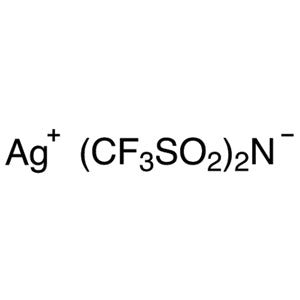
SilverBis(trifluoromethanesulfonyl)imide TCI S0898
Regular price From Rp 5.485.200,00Regular priceRp 3.835.650,00Sale price From Rp 5.485.200,00 -
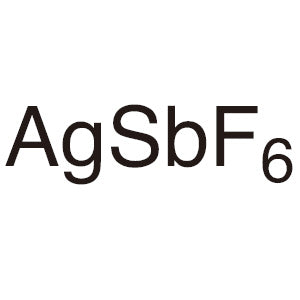
SilverHexafluoroantimonate(V) TCI S0463
Regular price Rp 3.155.250,00Regular priceRp 2.206.050,00Sale price Rp 3.155.250,00 -
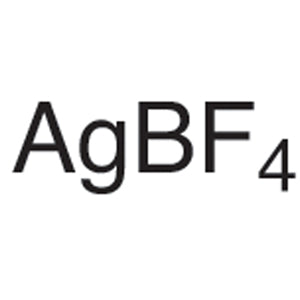
SilverTetrafluoroborate TCI S0446
Regular price From Rp 2.650.200,00Regular priceRp 1.853.250,00Sale price From Rp 2.650.200,00 -
PotassiumSilver(I)Cyanide TCI P3370
Regular price Rp 848.400,00Regular priceRp 593.250,00Sale price Rp 848.400,00 -
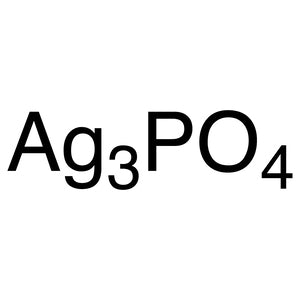
Silver(I)Phosphate TCI I1259
Regular price From Rp 1.670.550,00Regular priceRp 1.167.600,00Sale price From Rp 1.670.550,00 -
Silver(I)Bromide TCI I1258
Regular price From Rp 1.644.300,00Regular priceRp 1.149.750,00Sale price From Rp 1.644.300,00 -
Silver(I)Nitrate TCI I1245
Regular price From Rp 795.900,00Regular priceRp 556.500,00Sale price From Rp 795.900,00