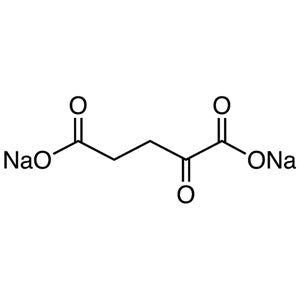
Disodium 2-Oxoglutarate (CAS No. 305-72-6) is a chemical compound widely used in chemical and biochemical experiments. As a sodium salt of 2-oxoglutaric acid, it plays a crucial role in cellular metabolism and serves as a building block for the synthesis of various organic compounds. This compound is particularly valuable in redox reactions and the formation of complex molecules, making it an essential reagent in both academic and industrial research settings. Its versatility allows it to be applied in multiple areas of chemical and biochemical research, contributing to the advancement of scientific knowledge.
One of the key attributes that make Disodium 2-Oxoglutarate a preferred choice is its solubility in water, which simplifies handling and mixing in laboratory procedures. It exhibits chemical stability under controlled conditions, though it remains sensitive to moisture and air exposure. These properties ensure that it can be reliably used in a variety of experimental setups without compromising the integrity of the results. Its compatibility with different reagents and its ability to maintain stability during storage further enhance its appeal for laboratory use.
In Indonesian laboratories, Disodium 2-Oxoglutarate is commonly used by researchers and educational institutions for both basic chemical experiments and advanced research projects. Its availability and reliability make it a fundamental component in the development of chemical and biochemical studies. The compound supports a wide range of applications, from teaching demonstrations to cutting-edge research, ensuring its relevance in the scientific community.
- Chemical synthesis applications benefit from Disodium 2-Oxoglutarate due to its role in redox reactions and the formation of complex organic molecules.
- Biochemical research uses this compound as a precursor in metabolic pathway studies, aiding in the understanding of cellular processes.
- Educational institutions incorporate it into laboratory courses to teach fundamental chemical reactions and synthesis techniques.
- Industrial research applications rely on its stability and solubility for large-scale chemical production and process development.
- Analytical chemistry uses it as a standard reference material for calibration and quality control in various analytical techniques.
| Brand | TCI |
|---|---|
| CAS number | 305-72-6 |
| Molecular formula | — |
| Purity | — |
| Category | Chemistry > Building Blocks > Non-Heterocyclic Building Blocks |
| Pack sizes | Available in various quantities as per standard laboratory supply |
| Physical form | White crystalline powder |
| Storage | Store in a cool, dry place away from moisture and direct sunlight |
Disodium 2-Oxoglutarate should be stored in a cool, dry environment to prevent degradation due to moisture and air exposure. It is recommended to use airtight containers to maintain its chemical stability and prevent contamination. Laboratory personnel should handle the compound with care, using appropriate personal protective equipment such as gloves and safety goggles. While it is not highly hazardous, it is important to ensure that it is stored separately from incompatible substances to avoid any potential chemical interactions. Proper storage and handling practices help maintain the compound's integrity and ensure safe laboratory operations.
—
Produk Terkait
-
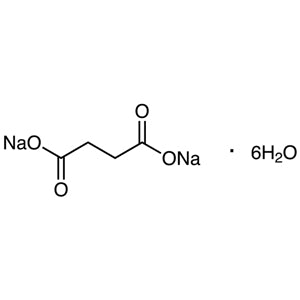
DisodiumSuccinateHexahydrate TCI S0105
Regular price From Rp 477.750,00Regular price -
DisodiumFumarate TCI F0070
Regular price From Rp 610.050,00Regular price -
Dimethyl2-Oxoglutarate TCI K0013
Regular price From Rp 3.155.250,00Regular price -
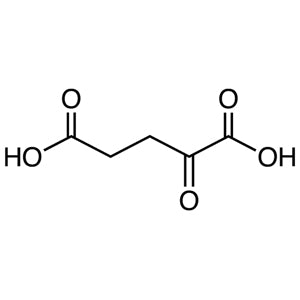
2-OxoglutaricAcid TCI K0005
Regular price From Rp 903.000,00Regular price -
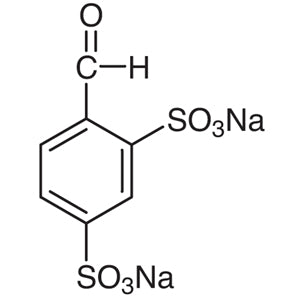
Disodium4-Formylbenzene-1,3-disulfonate TCI B0008
Regular price Rp 1.431.150,00Regular price -
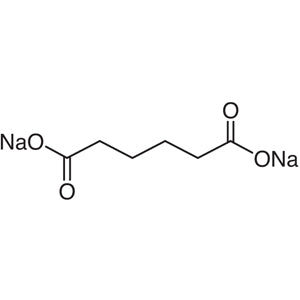
DisodiumAdipate TCI A0592
Regular price From Rp 1.803.900,00Regular price -
DisodiumTerephthalate TCI T1097
Regular price From Rp 1.510.950,00Regular price -
Tetrahydroxy-1,4-benzoquinoneDisodiumSalt TCI T0122
Regular price From Rp 1.115.100,00Regular price