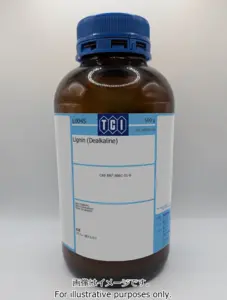

TCI L0045 Lignin (Dealkaline) is a lignin that has undergone an alkali removal process, so its salt and residual base content is reduced compared with ordinary alkali lignin. Lignin itself is a natural aromatic polymer and one of the main components of plant cell walls alongside cellulose and hemicellulose, and it ranks as the largest renewable source of aromatic carbon in nature. In the laboratory, this material is used as a macromolecular reagent for materials research, biomass conversion studies, and the development of products based on natural polymers.
The characteristic that makes dealkaline lignin a frequent choice is its polyphenolic structure, rich in hydroxyl groups and aromatic rings, which offers many points for chemical modification such as etherification, esterification, and polymer grafting. The dealkaline form brings a practical advantage because lower ash and salt content makes thermal and spectroscopic analysis results cleaner and easier to interpret. Its pH-dependent solubility allows researchers to control dissolution and precipitation in a deliberate, staged manner. As a powder, the material is also easy to weigh and blend into composite formulations.
In Indonesian laboratories, this reagent fits naturally into work at universities and research institutes exploring the valorisation of lignocellulosic biomass, a field with strong local relevance given the abundance of agricultural and plantation residues. It is commonly handled in polymer chemistry, materials science, and chemical engineering groups that prepare bio-based resins, adhesives, dispersants, and carbon precursors, as well as in analytical work where lignin serves as a reference natural polymer.
- Biomass conversion research: the material serves as a representative lignin feedstock for depolymerisation and catalytic studies aimed at recovering aromatic platform chemicals from plant residues.
- Bio-based polymer synthesis: abundant hydroxyl groups let researchers graft, esterify, or etherify the backbone when preparing polyurethanes, epoxies, and other natural-polymer derivatives.
- Composite and blend formulation: as a dry powder it disperses into polymer matrices as a renewable filler or reinforcing phase, and is straightforward to weigh reproducibly.
- Adhesive and dispersant development: the polyphenolic structure supports formulation work on binders, surfactants, and dispersing agents derived from renewable aromatic carbon sources.
- Thermal and spectroscopic characterisation: reduced ash and salt content in the dealkaline form yields cleaner baselines, making TGA, DSC, FTIR, and NMR data easier to interpret.
| Brand | TCI (Tokyo Chemical Industry) |
|---|---|
| CAS number | 8061-51-6 |
| Molecular formula | — |
| Purity | — |
| Category | Materials Science > Polymer/Macromolecule Reagents > Polymers |
| Pack sizes | available in the pack sizes listed on this product page |
| Physical form | powder |
| Storage | store in a tightly closed container in a cool, dry place, protected from moisture |
- Catalogue number: L0045
Store the product in its original tightly closed container in a cool, dry, well-ventilated area, away from moisture, direct sunlight, and sources of ignition. Because the material is supplied as a fine powder, weigh and transfer it inside a fume hood or ventilated enclosure to limit dust generation, and use clean, dry spatulas to prevent contamination and caking. Wear a laboratory coat, safety goggles, and suitable gloves during handling, and use a dust mask when dispensing larger quantities. Reseal the container promptly after use, keep it clearly labelled, and consult the manufacturer's safety data sheet before first use and before disposal.
—
Produk Terkait
-
TCI B5774 5,10-Bis(4,4,5,5-tetramethyl-1,3,2-dioxaborolan-2-yl)naphtho[1,2-c:5,6-c']bis([1,2,5]oxadiazole)
Regular price Rp 10.255.350,00Regular price -
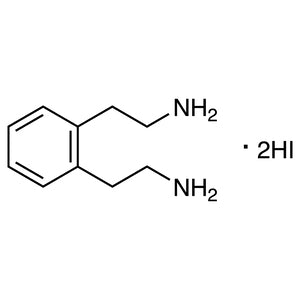
Dihydroiodide TCI B6569
Regular price From Rp 1.936.200,00Regular price -
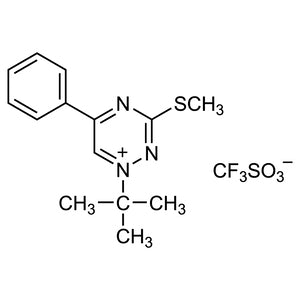
Trifluoromethanesulfonate TCI B7003
Regular price From Rp 1.936.200,00Regular price
![5,10-Bis(4,4,5,5-tetramethyl-1,3,2-dioxaborolan-2-yl)naphtho[1,2-c:5,6-c']bis([1,2,5]oxadiazole) - TCI B5774 - AMI Scientific](http://amiscientific.com/cdn/shop/files/TCI2510B5774.jpg?v=1769180228&width=533)