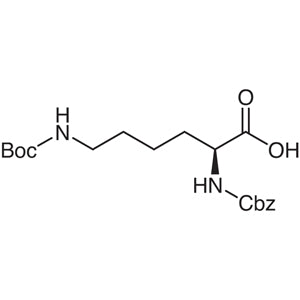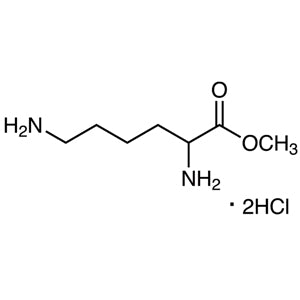
DL-Lysine Methyl Ester Dihydrochloride is a chemical compound widely used in biochemical and chemical biology research, particularly in peptide chemistry. This compound serves as a key intermediate in the synthesis of complex molecules with biological activity. Its unique chemical structure makes it an essential tool for researchers aiming to modify peptides or study molecular structures. In laboratory settings, it is frequently employed to produce intermediates necessary for various synthetic processes.
DL-Lysine Methyl Ester Dihydrochloride is valued for its chemical stability under controlled conditions and its solubility in organic solvents. These properties make it a preferred choice for a wide range of chemical reactions. Its solid form enhances handling and storage convenience, while its reactivity allows it to participate effectively in synthetic pathways. The compound’s ability to dissolve in common organic solvents further supports its versatility in laboratory applications.
In Indonesian laboratories, DL-Lysine Methyl Ester Dihydrochloride is commonly used in biochemical, pharmacological, and organic chemistry research. It is a critical component in experiments requiring specific intermediate structures. Many research institutions and universities rely on this compound for its reliability and effectiveness in producing desired chemical outcomes. Its availability and performance make it a valuable resource for scientific investigations.
Related TCI products
- TCI L0202 26348-70-9 L-Lysine Methyl Ester Dihydrochloride
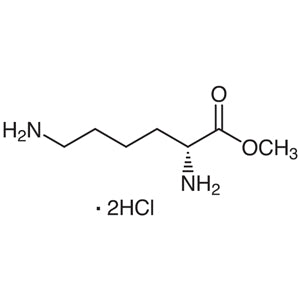
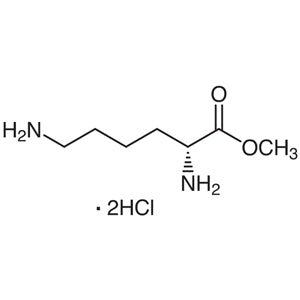
- TCI L0201 67396-08-1 D-Lysine Methyl Ester Dihydrochloride
- TCI L0131 657-26-1 L-(+)-Lysine Dihydrochloride
- TCI L0130 617-68-5 DL-Lysine Dihydrochloride
- TCI B4931 78081-87-5 Nalpha,Nepsilon-Bis[(9H-fluoren-9-ylmethoxy)carbonyl]-L-lysine
- TCI B3072 71989-26-9 Nepsilon-(tert-Butoxycarbonyl)-Nalpha-[(9H-fluoren-9-ylmethoxy)carbonyl]-L-lysine
- Biochemical research utilizes DL-Lysine Methyl Ester Dihydrochloride for the synthesis of peptides and proteins due to its role as a chemical precursor.
- Organic chemistry experiments benefit from this compound because of its solubility in organic solvents and its ability to participate in various synthetic reactions.
- Peptide modification studies rely on this material as it provides a stable intermediate for structural manipulation and functional analysis.
- Pharmacological research employs this compound to develop and test new drugs by synthesizing bioactive molecules with specific structures.
- Structural molecular studies use this compound to investigate the behavior and interactions of complex chemical entities in biological systems.
| Brand | TCI |
|---|---|
| CAS number | 34015-48-0 |
| Molecular formula | — |
| Purity | — |
| Category | Chemistry > Chemical Biology > Peptide Chemistry |
| Pack sizes | — |
| Physical form | Solid |
| Storage | Must be stored in a dry, airtight container to prevent moisture and air exposure. |
DL-Lysine Methyl Ester Dihydrochloride should be stored in a dry, airtight container to maintain its chemical stability and prevent degradation. It is sensitive to moisture and air, so exposure should be minimized. Suitable containers include glass or sealed plastic vessels with desiccant to control humidity. In laboratory settings, it should be handled in a controlled environment to avoid contamination. Proper labeling and storage conditions are essential to ensure its effectiveness and safety during use. Always follow standard laboratory safety procedures when working with this compound.
—
Product Categories
Produk Terkait
-
L-LysineMethylEsterDihydrochloride TCI L0202
Regular price From Rp 1.140.300,00Regular price -
D-LysineMethylEsterDihydrochloride TCI L0201
Regular price From Rp 1.749.300,00Regular price -
L-(+)-LysineDihydrochloride TCI L0131
Regular price Rp 1.273.650,00Regular price -
DL-LysineDihydrochloride TCI L0130
Regular price Rp 5.672.100,00Regular price -
Nalpha,Nepsilon-Bis[(9H-fluoren-9-ylmethoxy)carbonyl]-L-lysine TCI B4931
Regular price From Rp 1.008.000,00Regular price -
Nepsilon-(tert-Butoxycarbonyl)-Nalpha-[(9H-fluoren-9-ylmethoxy)carbonyl]-L-lysine TCI B3072
Regular price Rp 1.115.100,00Regular price -
Nepsilon-(tert-Butoxycarbonyl)-Nalpha-[(9H-fluoren-9-ylmethoxy)carbonyl]-D-lysine TCI B3071
Regular price From Rp 1.220.100,00Regular price -
Nepsilon-(tert-Butoxycarbonyl)-Nalpha-carbobenzoxy-L-lysine TCI B1862
Regular price From Rp 2.571.450,00Regular price



![78081-87-5 Nalpha,Nepsilon-Bis[(9H-fluoren-9-ylmethoxy)carbonyl]-L-lysine - AMI Scientific](http://amiscientific.com/cdn/shop/files/TCI2510B4931.jpg?v=1769180094&width=533)
![71989-26-9 Nepsilon-(tert-Butoxycarbonyl)-Nalpha-[(9H-fluoren-9-ylmethoxy)carbonyl]-L-lysine - AMI Scientific](http://amiscientific.com/cdn/shop/files/TCI2510B3072.jpg?v=1768204181&width=533)
![71989-26-9 Nepsilon-(tert-Butoxycarbonyl)-Nalpha-[(9H-fluoren-9-ylmethoxy)carbonyl]-L-lysine - AMI Scientific](http://amiscientific.com/cdn/shop/files/TCI2510B3072_4b5e842c-a4b3-4909-8dc2-14a7d17533e7.jpg?v=1768359590&width=533)
![92122-45-7 Nepsilon-(tert-Butoxycarbonyl)-Nalpha-[(9H-fluoren-9-ylmethoxy)carbonyl]-D-lysine - AMI Scientific](http://amiscientific.com/cdn/shop/files/TCI2510B3071.jpg?v=1769145139&width=533)
![92122-45-7 Nepsilon-(tert-Butoxycarbonyl)-Nalpha-[(9H-fluoren-9-ylmethoxy)carbonyl]-D-lysine - AMI Scientific](http://amiscientific.com/cdn/shop/files/TCI2510B3071_64d13ee0-5ca8-4ec8-b2c3-e619a7d2f053.jpg?v=1769179817&width=533)