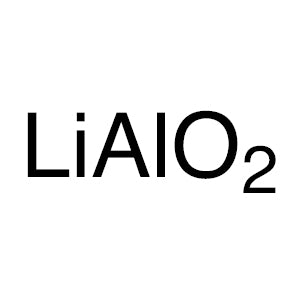
Lithium Aluminate (LiAlO₂), with CAS number 12003-67-7, is an inorganic compound widely used in laboratory settings for its catalytic and chemical properties. It plays a crucial role in various chemical reactions and catalytic processes, particularly in the synthesis of complex compounds and redox reactions. As a metallic salt, it is a key component in the field of catalysis and inorganic chemistry, offering stability and reactivity that make it valuable for advanced chemical applications. Its ability to act as a catalyst in controlled environments makes it a preferred material for researchers seeking precise chemical transformations.
The compound is known for its high chemical purity and consistent quality, which are essential for reliable experimental outcomes. Lithium Aluminate has a stable crystalline structure, contributing to its effectiveness in laboratory applications. Its unique chemical properties allow it to participate in a range of reactions while maintaining stability under controlled conditions. These characteristics make it a versatile material for both synthetic and analytical purposes in chemical research. Its inertness in certain conditions also enhances its usability in various experimental setups.
In Indonesian laboratories, Lithium Aluminate is extensively used in chemical research, especially in catalysis and synthesis. Its availability and high purity make it a popular choice among researchers and scientists. The compound is commonly found in academic and industrial research settings where controlled chemical reactions and catalytic processes are required. Its application is broad, supporting both basic and applied research in the field of inorganic chemistry.
- Catalytic Reactions: Lithium Aluminate is used in catalytic reactions due to its ability to facilitate chemical transformations under controlled conditions.
- Redox Synthesis: It serves as a catalyst in redox reactions, enabling the synthesis of complex compounds with high efficiency.
- Purification Processes: The compound is employed in purification steps where controlled chemical interactions are necessary for isolating desired products.
- Inorganic Chemistry Research: Its stable crystalline structure and reactivity make it ideal for studies in inorganic chemistry and material science.
- Controlled Chemical Environments: Lithium Aluminate is preferred for experiments requiring precise chemical behavior and minimal side reactions.
| Brand | TCI |
|---|---|
| CAS number | 12003-67-7 |
| Molecular formula | — |
| Purity | — |
| Category | Chemistry > Catalysis and Inorganic Chemistry > Metallic Salts |
| Pack sizes | Available in various quantities suitable for laboratory use |
| Physical form | Solid powder |
| Storage | Store in a dry, cool place away from moisture and strong acids |
Lithium Aluminate should be stored in a dry, cool environment to prevent moisture absorption and chemical degradation. It is recommended to use airtight containers made of inert materials such as glass or polyethylene to ensure long-term stability. Due to its reactivity with water and strong acids, it must be handled with care, avoiding exposure to these substances. In laboratory settings, it should be stored in a designated chemical storage area, away from incompatible materials. Proper labeling and containment are essential to ensure safety and maintain the integrity of the compound during storage and use.
—
Produk Terkait
-
TCI B5774 5,10-Bis(4,4,5,5-tetramethyl-1,3,2-dioxaborolan-2-yl)naphtho[1,2-c:5,6-c']bis([1,2,5]oxadiazole)
Regular price Rp 10.255.350,00Regular price -
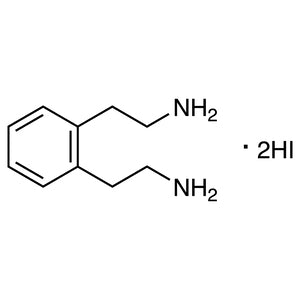
Dihydroiodide TCI B6569
Regular price From Rp 1.936.200,00Regular price -
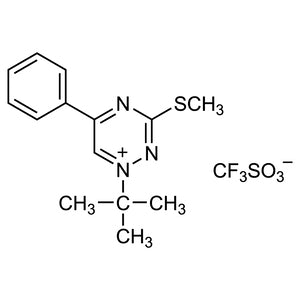
Trifluoromethanesulfonate TCI B7003
Regular price From Rp 1.936.200,00Regular price
![5,10-Bis(4,4,5,5-tetramethyl-1,3,2-dioxaborolan-2-yl)naphtho[1,2-c:5,6-c']bis([1,2,5]oxadiazole) - TCI B5774 - AMI Scientific](http://amiscientific.com/cdn/shop/files/TCI2510B5774.jpg?v=1769180228&width=533)