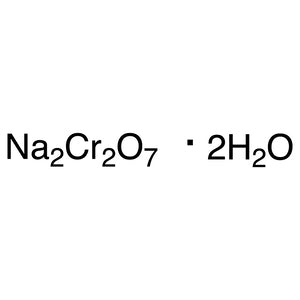
Sodium Dichromate Dihydrate is the sodium salt of the dichromate ion in its dihydrate form, with chromium in the +6 oxidation state. It is a strong oxidizing agent that has long been used in synthetic chemistry, analytical chemistry and many industrial processes. In the laboratory it is used to oxidize organic compounds, for example to convert alcohols into aldehydes, ketones or carboxylic acids. It also serves as a reagent in many analytical determinations based on redox reactions, which makes it a standard part of the inorganic and metallic salt reagent range.
Chemists choose this compound for its strong oxidizing power, which is greatest under acidic conditions. Its colour also changes during reaction, from the orange of dichromate to the green of chromium(III), so analysts can follow the reaction by eye without extra indicators. Sodium dichromate is generally more soluble in water than potassium dichromate, which helps when a concentrated oxidizing solution is needed. However, hexavalent chromium compounds are highly toxic, carcinogenic, can cause skin sensitization and are hazardous to the environment, so this material must be used under strict controls.
In Indonesia, Sodium Dichromate Dihydrate is used in university chemistry laboratories, testing laboratories and materials research laboratories that need a strong oxidant. Academic teams use it in teaching and research on organic oxidation reactions and redox chemistry. Testing laboratories use it in analytical procedures based on redox reactions. Materials research groups use it where controlled oxidation of a sample or precursor is required. In all these settings, laboratories need trained staff, suitable engineering controls and proper hazardous waste handling.
- Oxidation of primary alcohols: the strong oxidizing power of the dichromate ion in acidic media converts primary alcohols into aldehydes or carboxylic acids, which makes it useful in synthetic organic work.
- Oxidation of secondary alcohols to ketones: this is a classic synthetic transformation in which the change from orange dichromate to green chromium(III) shows clearly how far the reaction has progressed.
- Redox-based analytical determinations: sodium dichromate is a strong, well-characterized oxidant, so it suits analytical methods that rely on a measurable redox reaction between the reagent and the analyte.
- Preparation of concentrated oxidizing solutions: sodium dichromate is generally more soluble in water than potassium dichromate, so it is the better choice when a procedure needs a more concentrated dichromate solution.
- Teaching and research in inorganic and redox chemistry: university laboratories use this salt to demonstrate chromium(VI) chemistry, oxidation states and colour changes, provided strict safety and waste controls are in place.
| Brand | TCI (product code O0671) |
|---|---|
| CAS number | 7789-12-0 |
| Molecular formula | — |
| Purity | — |
| Category | Chemistry > Catalysis and Inorganic Chemistry > Metallic Salts |
| Pack sizes | available in the pack sizes offered by TCI for this product |
| Physical form | solid dihydrate salt, showing the orange colour typical of dichromate |
| Storage | keep tightly closed in a cool, dry, well-ventilated area away from combustible and reducing materials |
Store Sodium Dichromate Dihydrate in its original tightly closed container in a cool, dry, well-ventilated chemical storage area. Keep it apart from combustible materials, organic substances and reducing agents, because it is a strong oxidizer. Use only clearly labelled, compatible containers and keep the material in a designated area for toxic and oxidizing chemicals. Handle it in a fume hood and wear chemical-resistant gloves, safety goggles and a laboratory coat. Avoid creating dust, and prevent any contact with skin or eyes, since hexavalent chromium is toxic, carcinogenic and a skin sensitizer. Only trained personnel should handle this reagent. Collect all residues and waste solutions as hazardous waste so they never reach drains or the environment, and follow the safety data sheet and local regulations.
—
Produk Terkait
-
TCI B5774 5,10-Bis(4,4,5,5-tetramethyl-1,3,2-dioxaborolan-2-yl)naphtho[1,2-c:5,6-c']bis([1,2,5]oxadiazole)
Regular price Rp 10.255.350,00Regular price -
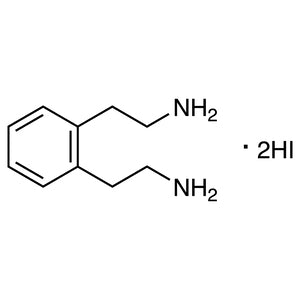
Dihydroiodide TCI B6569
Regular price From Rp 1.936.200,00Regular price -
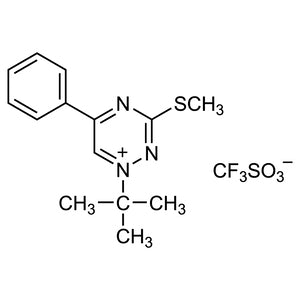
Trifluoromethanesulfonate TCI B7003
Regular price From Rp 1.936.200,00Regular price
![5,10-Bis(4,4,5,5-tetramethyl-1,3,2-dioxaborolan-2-yl)naphtho[1,2-c:5,6-c']bis([1,2,5]oxadiazole) - TCI B5774 - AMI Scientific](http://amiscientific.com/cdn/shop/files/TCI2510B5774.jpg?v=1769180228&width=533)