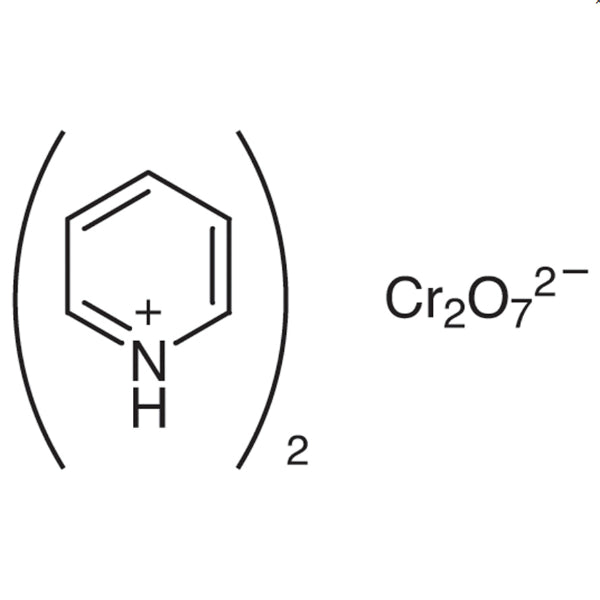
Pyridinium Dichromate (TCI P0931), with CAS number 20039-37-6, is a synthetic reagent widely used in chemical laboratories for its strong oxidizing properties. It plays a crucial role in oxidation reactions, particularly in organic synthesis where it facilitates the conversion of various functional groups. This compound is especially valuable for its ability to oxidize alcohols, aldehydes, and phenols into higher carbon chain products. Its chemical structure allows for high reactivity, making it a versatile tool for chemists seeking to manipulate organic molecules.
One of the key attributes that make Pyridinium Dichromate a preferred choice is its stability under controlled laboratory conditions and its solubility in organic solvents. These properties enable it to be used in non-aqueous reactions, expanding its applicability in synthetic chemistry. Additionally, its effectiveness as a catalyst in certain reactions allows for faster reaction rates without significant degradation. This makes it an essential component in both research and industrial settings where efficiency and reliability are paramount.
In Indonesian laboratories, Pyridinium Dichromate is commonly employed in organic synthesis and chemical analysis. It is a vital reagent for academic institutions, research laboratories, and industrial facilities involved in chemical processes. Its role in advancing chemical research and supporting educational programs underscores its importance in the scientific community. The compound’s reliability and performance make it a go-to choice for chemists working in diverse research environments.
- Organic synthesis reactions benefit from Pyridinium Dichromate’s strong oxidizing properties, enabling the conversion of alcohols into ketones or carboxylic acids.
- It is ideal for oxidation of aldehydes to carboxylic acids, offering a reliable and efficient alternative to other oxidizing agents.
- Phenol oxidation applications utilize its reactivity to produce aromatic ketones, which are essential in pharmaceutical and industrial chemistry.
- In analytical chemistry, it serves as a reagent for qualitative and quantitative analysis of organic compounds through oxidation reactions.
- Its use in catalytic reactions enhances reaction efficiency, making it valuable in green chemistry initiatives that aim to reduce waste and energy consumption.
| Brand | TCI |
|---|---|
| CAS number | 20039-37-6 |
| Molecular formula | — |
| Purity | — |
| Category | Chemistry > Synthetic Reagents > Oxidation [Synthetic Reagents] |
| Pack sizes | Available in various quantities as per supplier specifications |
| Physical form | Solid (exact form may vary based on supplier packaging) |
| Storage | Store in a cool, dry place away from incompatible materials |
Pyridinium Dichromate should be stored in a cool, dry environment to maintain its chemical stability. It is recommended to keep it in airtight containers to prevent exposure to moisture and air, which can affect its reactivity. Due to its oxidizing nature, it should be stored separately from reducing agents and flammable materials to avoid potential hazards. Laboratory personnel should handle the compound with care, using appropriate personal protective equipment such as gloves and safety goggles. Regular monitoring of storage conditions is essential to ensure the integrity of the reagent and the safety of the laboratory environment. Proper labeling of containers is also important for safe handling and emergency response.
—
Produk Terkait
-
TCI B5774 5,10-Bis(4,4,5,5-tetramethyl-1,3,2-dioxaborolan-2-yl)naphtho[1,2-c:5,6-c']bis([1,2,5]oxadiazole)
Regular price Rp 10.255.350,00Regular price -
Dihydroiodide TCI B6569
Regular price From Rp 1.936.200,00Regular price -
Trifluoromethanesulfonate TCI B7003
Regular price From Rp 1.936.200,00Regular price
![5,10-Bis(4,4,5,5-tetramethyl-1,3,2-dioxaborolan-2-yl)naphtho[1,2-c:5,6-c']bis([1,2,5]oxadiazole) - TCI B5774 - AMI Scientific](http://amiscientific.com/cdn/shop/files/TCI2510B5774.jpg?v=1769180228&width=533)