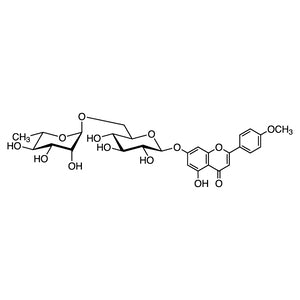
Linarin is a chemical compound belonging to the flavonoid family, specifically a type of flavonoid with a complex molecular structure. It plays a significant role in chemical biology and glycoscience research due to its ability to interact with various biological molecules. This compound is naturally found in several plant species, particularly in the Apiaceae family, such as carrot leaves and garlic. In the laboratory, linarin serves as a key reagent for the synthesis of other compounds and is used in studies examining its biological activities. Its versatility makes it a valuable tool for researchers exploring natural products and their potential applications.
Linarin is prized for its chemical stability under certain conditions, although it is sensitive to light exposure and oxidation. Its solubility varies depending on the solvent used, which facilitates separation and isolation processes in experimental settings. These characteristics make linarin an ideal choice for research requiring precise control over chemical reactions and compound stability. Its unique properties also support its use in advanced analytical techniques and biochemical assays.
In Indonesian laboratories, linarin is commonly used in biochemical, pharmacological, and natural compound extraction studies. Its presence in plant-based research contributes to the development of new therapeutic agents and functional food ingredients. Due to its natural origin and chemical versatility, linarin remains a popular compound among researchers in both academic and industrial settings.
TCI brochures (PDF)
- Phytochemicals 2025-12-17 · p. 11
- Biochemical research utilizes linarin to study its interactions with enzymes and cellular components due to its structural complexity and reactivity.
- Pharmacological studies benefit from linarin’s natural origin, allowing researchers to explore its potential therapeutic applications in drug development.
- Natural product extraction experiments rely on linarin’s solubility properties to isolate and analyze bioactive compounds from plant sources.
- Analytical chemistry applications use linarin as a reference standard for chromatographic and spectroscopic analyses due to its well-defined chemical structure.
- Glycoscience research incorporates linarin to investigate its role in carbohydrate-based molecular interactions and metabolic pathways.
| Brand | TCI |
|---|---|
| CAS number | 480-36-4 |
| Molecular formula | — |
| Purity | — |
| Category | Chemistry > Chemical Biology > Glycoscience |
| Pack sizes | Available in various quantities as per supplier specifications |
| Physical form | Solid or crystalline, depending on the batch |
| Storage | Store in a cool, dark place away from light and oxidizing agents |
Linarin should be stored in a cool, dark environment to prevent degradation due to light exposure. It is recommended to use amber-colored glass containers or opaque plastic vessels to minimize light contact. The compound is sensitive to oxidation, so it should be kept in an airtight container to limit air exposure. In laboratory settings, it is important to handle linarin with care, using appropriate personal protective equipment such as gloves and safety goggles. Regular monitoring of storage conditions is advised to maintain its chemical integrity and ensure safe handling during experiments. Proper labeling and storage protocols are essential to prevent contamination and ensure the compound remains suitable for research use.
—
Product Categories
Produk Terkait
-
RutinHydrate TCI R0035
Regular price Rp 1.378.650,00Regular price -
Neodiosmin TCI N1161
Regular price Rp 8.931.300,00Regular price -
Narirutin TCI N1125
Regular price Rp 5.300.400,00Regular price -
Neohesperidin TCI N1121
Regular price Rp 3.658.200,00Regular price -
NeohesperidinDihydrochalcone TCI N0675
Regular price From Rp 3.155.250,00Regular price -
Naringin TCI N0073
Regular price Rp 1.618.050,00Regular price -
Hesperidin TCI H0049
Regular price From Rp 1.220.100,00Regular price -
EpmedinC TCI E1320
Regular price From Rp 2.199.750,00Regular price