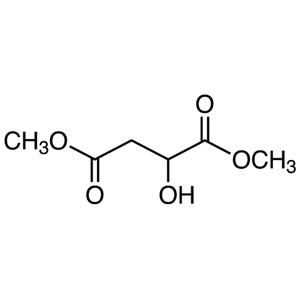
Dimethyl DL-Malate (CAS 1587-15-1) is a versatile chemical compound widely utilized in laboratory settings for its role in organic synthesis. As a building block in chemical reactions, it serves as a key intermediate in the creation of more complex molecules. Its simple molecular structure allows for various substitution and reaction pathways, making it an essential component in the toolkit of chemists. This compound is commonly used in research involving the development of new materials, pharmaceuticals, and specialty chemicals. Due to its reactivity and availability, it is a favored choice among researchers in both academic and industrial laboratories.
The properties of Dimethyl DL-Malate contribute to its popularity in chemical applications. It exhibits good solubility in common organic solvents such as ethyl acetate and acetone, which facilitates its use in a wide range of synthetic procedures. Its relatively low melting and boiling points make it easy to handle during heating and cooling processes, enhancing its practicality in laboratory workflows. Additionally, its non-toxic nature in normal usage conditions ensures a safer working environment, aligning with standard laboratory safety protocols.
In Indonesian laboratories, Dimethyl DL-Malate is commonly used in organic synthesis and research projects. It is frequently found in academic and industrial settings where the development of new chemical compounds is required. Its availability and ease of handling make it a preferred choice for chemists working on various projects, including the synthesis of functionalized compounds and the study of reaction mechanisms.
- Organic synthesis is a primary application where Dimethyl DL-Malate is used to create complex molecules through substitution and functionalization reactions.
- Pharmaceutical research benefits from its role in the development of new drug compounds, as it can be modified to produce various derivatives.
- Material science applications utilize this compound to synthesize polymers and other advanced materials with specific properties.
- Analytical chemistry experiments often incorporate Dimethyl DL-Malate as a reference standard or in preparative procedures.
- Environmental studies may use it as a model compound to investigate chemical behavior in different reaction conditions.
| Brand | TCI |
|---|---|
| CAS number | 1587-15-1 |
| Molecular formula | — |
| Purity | — |
| Category | Chemistry > Building Blocks > Non-Heterocyclic Building Blocks |
| Pack sizes | Available in various quantities as per supplier specifications |
| Physical form | Solid |
| Storage | Store in a cool, dry place away from direct sunlight |
Dimethyl DL-Malate should be stored in a cool, dry environment to maintain its chemical integrity. It is recommended to keep it in a tightly sealed container to prevent exposure to moisture and air. While it is generally non-toxic, proper laboratory safety practices should still be followed, including the use of personal protective equipment when handling. The compound is stable under normal laboratory conditions, making it suitable for long-term storage. It should be kept away from incompatible substances to ensure safe handling and prevent unwanted reactions.
—
Produk Terkait
-
DisodiumDL-Malate TCI M0026
Regular price From Rp 505.050,00Regular price -
DiethylDL-Malate TCI M0024
Regular price From Rp 1.035.300,00Regular price -
DibutylDL-Malate TCI M0023
Regular price Rp 1.829.100,00Regular price -
DimethylD-(+)-Malate TCI M1347
Regular price From Rp 3.075.450,00Regular price -
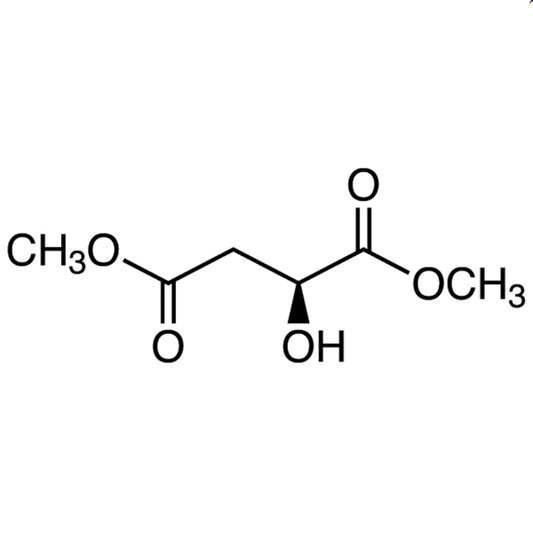
DimethylL-(-)-Malate TCI M1343
Regular price From Rp 795.900,00Regular price -
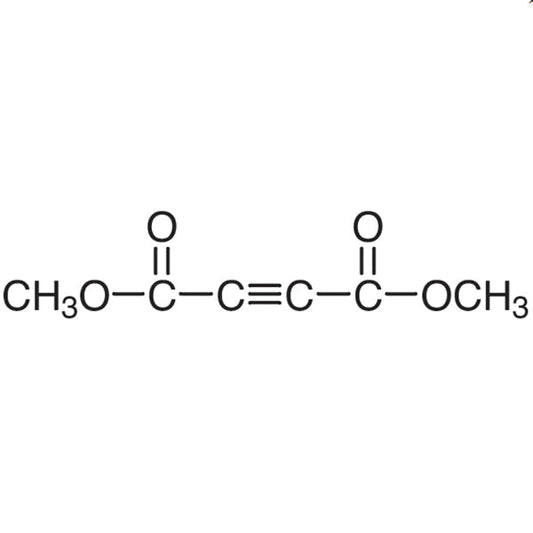
DimethylAcetylenedicarboxylate TCI A0090
Regular price From Rp 2.041.200,00Regular price -
Dimethyl1,3-Acetonedicarboxylate TCI A0056
Regular price From Rp 1.298.850,00Regular price -
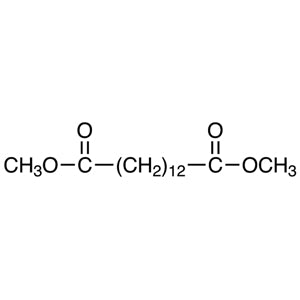
DimethylTetradecanedioate TCI T1726
Regular price From Rp 2.411.850,00Regular price