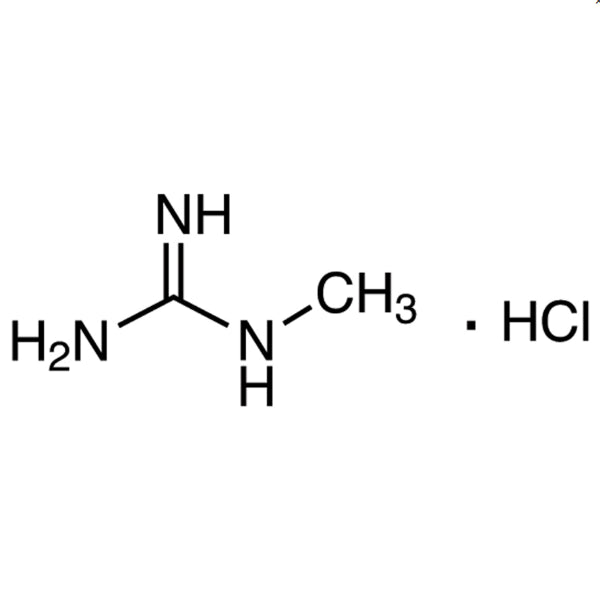
1-Methylguanidine Hydrochloride is a chemical compound widely used in various chemical reactions and organic synthesis within laboratory settings. It is a versatile reagent that plays a crucial role in the development of complex molecules and industrial chemical processes. This compound is particularly valued for its ability to participate in a range of chemical transformations, including condensation, substitution, and the formation of complex structures. Its unique chemical structure, featuring an active amine group and a chloride ion, contributes to its reactivity and utility in synthetic chemistry.
The reactivity of 1-Methylguanidine Hydrochloride is a key factor in its popularity among chemists. It is especially effective in reactions involving electrophilic groups, making it a preferred choice for catalytic and synthetic applications. Despite its reactivity, the compound is stable under certain conditions, although it remains sensitive to moisture and high temperatures. This sensitivity necessitates careful handling to prevent unintended reactions. Its chemical properties make it an essential tool in both research and industrial chemical synthesis.
In Indonesian laboratories, 1-Methylguanidine Hydrochloride is extensively used in organic chemistry research, particularly in the synthesis of complex compounds and industrial chemical reactions. Its availability and effectiveness have made it a staple in many laboratories, supporting a wide range of chemical investigations and applications. Its role in both academic and industrial settings underscores its importance in the chemical sciences.
Related TCI products
- Organic synthesis applications benefit from 1-Methylguanidine Hydrochloride due to its reactivity and ability to participate in complex chemical transformations.
- It is ideal for condensation reactions where the amine group can act as a nucleophile, facilitating the formation of new chemical bonds.
- The compound is commonly used in substitution reactions, where it can replace functional groups in target molecules, enhancing reaction efficiency.
- Its role in catalytic processes makes it suitable for reactions requiring active reagents that can accelerate chemical transformations.
- Industrial chemical processes often rely on 1-Methylguanidine Hydrochloride for the synthesis of complex compounds and the production of specialized chemicals.
| Brand | TCI |
|---|---|
| CAS number | 21770-81-0 |
| Molecular formula | — |
| Purity | — |
| Category | TCI |
| Pack sizes | Available in various quantities as per supplier specifications |
| Physical form | Solid powder |
| Storage | Should be stored in a cool, dry place away from moisture and heat |
1-Methylguanidine Hydrochloride should be stored in a cool, dry environment to maintain its stability and prevent degradation. It is recommended to use airtight containers to protect the compound from moisture and humidity, which can affect its chemical integrity. Due to its reactivity, it should be handled with care, using appropriate personal protective equipment such as gloves and goggles. Avoid exposure to high temperatures and direct sunlight to ensure long-term stability. In laboratory settings, it is essential to store the compound separately from incompatible materials to prevent unintended chemical reactions. Proper storage and handling protocols are crucial to maintaining the compound’s effectiveness and safety in laboratory applications.
—
Produk Terkait
-
1-MethylguanidineSulfate TCI M1691
Regular price Rp 2.254.350,00Regular price -
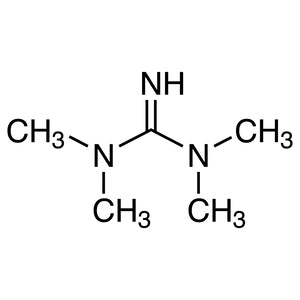
1,1,3,3-Tetramethylguanidine TCI T0148
Regular price From Rp 689.850,00Regular price -
1,1-DimethylguanidineSulfate TCI D1799
Regular price From Rp 584.850,00Regular price -
2-tert-Butyl-1,1,3,3-tetramethylguanidine TCI B6052
Regular price From Rp 1.565.550,00Regular price -
1,1-DiethylguanidineSulfate TCI D2035
Regular price From Rp 2.757.300,00Regular price -
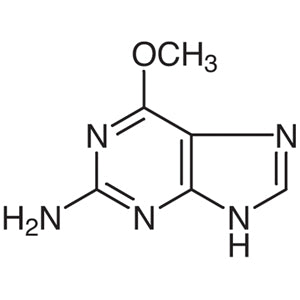
6-O-Methylguanine TCI A1151
Regular price Rp 2.121.000,00Regular price -
7-Methylguanine TCI M3490
Regular price Rp 4.664.100,00Regular price -
1,3-Di-o-tolylguanidine TCI D0953
Regular price From Rp 505.050,00Regular price