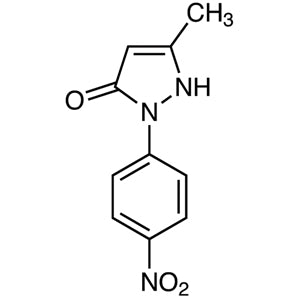
1-(4-Nitrophenyl)-3-methyl-5-pyrazolone is a versatile chemical compound widely used in laboratory settings as a building block for the synthesis of heterocyclic compounds. This compound plays a crucial role in organic chemistry by enabling the formation of complex molecular structures through various chemical reactions. Its unique structure allows it to participate in substitution, condensation, and coordination reactions, making it an essential tool for researchers working on the development of new chemical entities.
The compound's reactivity and structural versatility make it a preferred choice for chemists seeking to modify molecular frameworks or introduce specific functional groups. Its ability to interact with a variety of reagents and catalysts under controlled conditions enhances its applicability in both academic and industrial research. Additionally, its stability under certain conditions ensures that it remains a reliable material for use in multiple synthetic pathways.
In Indonesian laboratories, 1-(4-Nitrophenyl)-3-methyl-5-pyrazolone is commonly used in the synthesis of bioactive compounds, pharmaceutical intermediates, and organic materials. Its role in creating molecules with specific biological or chemical properties makes it a valuable resource for researchers in the field of medicinal chemistry and materials science.
Related TCI products
- TCI B0976 4551-69-3 4-Benzoyl-3-methyl-1-phenyl-5-pyrazolone
- TCI P2563 137-44-0 5-Pyrazolone
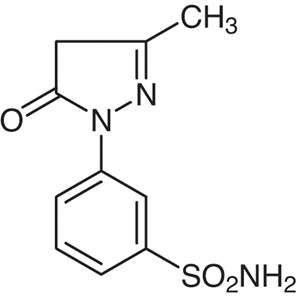
- TCI M0659 89-29-2 3-Methyl-1-(3'-sulfoamidophenyl)-5-pyrazolone
- TCI M0554 86-92-0 3-Methyl-1-p-tolyl-5-pyrazolone
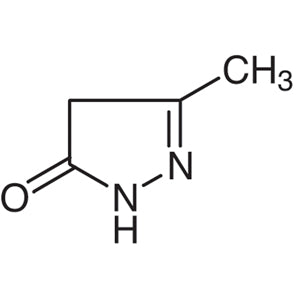
- TCI M0491 108-26-9 3-Methyl-5-pyrazolone
- TCI D5064 277299-70-4 1-(3,4-Dimethylphenyl)-3-methyl-5-pyrazolone
- Pharmaceutical research utilizes this compound for the synthesis of bioactive molecules due to its ability to introduce nitro and methyl functional groups.
- Organic synthesis experiments benefit from its reactivity, allowing the formation of complex heterocyclic structures through various chemical reactions.
- Industrial chemical development leverages its structural versatility for the creation of specialized organic compounds with tailored properties.
- Analytical chemistry applications take advantage of its stability in controlled environments for use in reference standards and reaction intermediates.
- Materials science research employs it as a building block for the development of new organic materials with specific functional properties.
| Brand | TCI |
|---|---|
| CAS number | 6402-09-1 |
| Molecular formula | — |
| Purity | — |
| Category | Chemistry > Building Blocks > Heterocyclic Building Blocks |
| Pack sizes | Available in various quantities as per standard laboratory supply options |
| Physical form | Solid, typically in crystalline or powder form |
| Storage | Store in a cool, dry place away from direct sunlight and moisture |
This compound should be stored in a cool, dry environment to maintain its chemical stability. It is recommended to keep it in a sealed container to prevent exposure to moisture and air, which can affect its reactivity. Due to its potential reactivity under certain conditions, it should be handled with appropriate personal protective equipment, such as gloves and safety goggles. Storage away from incompatible materials is essential to ensure safety in the laboratory. The compound is best kept in a well-ventilated area to minimize any risk associated with its chemical properties. Regular monitoring of storage conditions is advised to maintain its integrity and effectiveness for laboratory use.
—
Produk Terkait
-
4-Benzoyl-3-methyl-1-phenyl-5-pyrazolone TCI B0976
Regular price From Rp 2.016.000,00Regular price -
5-Pyrazolone TCI P2563
Regular price From Rp 717.150,00Regular price -
3-Methyl-1-(3'-sulfoamidophenyl)-5-pyrazolone TCI M0659
Regular price Rp 795.900,00Regular price -
3-Methyl-1-p-tolyl-5-pyrazolone TCI M0554
Regular price Rp 1.298.850,00Regular price -
3-Methyl-5-pyrazolone TCI M0491
Regular price From Rp 505.050,00Regular price -
1-(3,4-Dimethylphenyl)-3-methyl-5-pyrazolone TCI D5064
Regular price From Rp 1.538.250,00Regular price -
1,3-Dimethyl-5-pyrazolone TCI D2031
Regular price Rp 2.121.000,00Regular price -
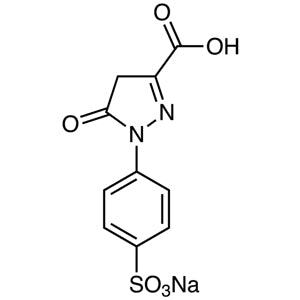
3-Carboxy-1-(4-sulfophenyl)-5-pyrazoloneSodiumSalt TCI C0845
Regular price Rp 1.405.950,00Regular price