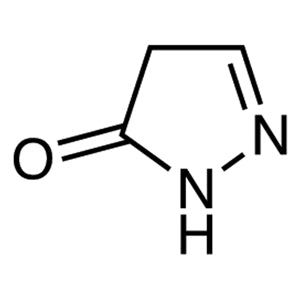
5-Pyrazolone is a chemical compound classified under the heterocyclic category, and it serves as a fundamental building block in the synthesis of complex compounds. Its unique molecular structure, containing two nitrogen atoms within a single heterocyclic ring, enables it to participate in a wide range of chemical reactions. In the laboratory, 5-Pyrazolone is widely used as a key reagent for the development of pharmaceuticals, industrial materials, and other organic compounds. Its versatility makes it an essential component in various synthetic pathways, contributing to the advancement of chemical research and innovation.
The compound is valued for its stable chemical structure and favorable reactivity, making it a preferred choice in laboratory settings. It exhibits good compatibility with a variety of reagents, including acids, bases, and metals, which allows for its use in multiple reaction types such as condensation, substitution, and functional group modification. These properties ensure that it remains a reliable and efficient material for chemical synthesis, supporting both academic and industrial research efforts.
In Indonesian laboratories, 5-Pyrazolone is extensively utilized in chemical research, particularly in the fields of pharmacy and the synthesis of complex compounds. It is commonly employed in projects focused on drug development and the creation of heterocyclic-based chemical materials. Its availability and performance make it a go-to material for researchers aiming to explore new chemical structures and applications.
Related TCI products
- TCI D5064 277299-70-4 1-(3,4-Dimethylphenyl)-3-methyl-5-pyrazolone
- TCI B0976 4551-69-3 4-Benzoyl-3-methyl-1-phenyl-5-pyrazolone
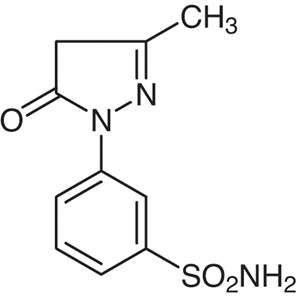
- TCI M0659 89-29-2 3-Methyl-1-(3'-sulfoamidophenyl)-5-pyrazolone
- TCI M0554 86-92-0 3-Methyl-1-p-tolyl-5-pyrazolone
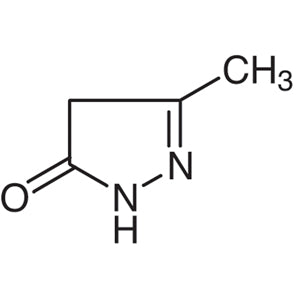
- TCI M0491 108-26-9 3-Methyl-5-pyrazolone
- TCI M0377 6402-09-1 1-(4-Nitrophenyl)-3-methyl-5-pyrazolone
- Pharmaceutical Synthesis: 5-Pyrazolone is widely used in the development of new drugs due to its ability to form stable and reactive intermediates in complex organic synthesis.
- Organic Chemistry Research: Its unique heterocyclic structure makes it ideal for studying reaction mechanisms and exploring new synthetic pathways in organic chemistry.
- Industrial Chemical Production: The compound is frequently used as a building block in the manufacture of industrial chemicals, contributing to the production of various functional materials.
- Heterocyclic Compound Development: Its structural characteristics make it a valuable resource for the synthesis of heterocyclic compounds, which are essential in many pharmaceutical and agrochemical applications.
- Academic Research Projects: 5-Pyrazolone is commonly used in academic laboratories to support research on new chemical compounds and their potential applications in medicine and materials science.
| Brand | TCI |
|---|---|
| CAS number | 137-44-0 |
| Molecular formula | — |
| Purity | — |
| Category | Chemistry > Building Blocks > Heterocyclic Building Blocks |
| Pack sizes | — |
| Physical form | — |
| Storage | Store in a cool, dry place away from direct sunlight |
5-Pyrazolone should be stored in a cool, dry environment to maintain its chemical stability and prevent degradation. It is recommended to keep the compound in a tightly sealed container to avoid exposure to moisture and air. Due to its reactivity, it should be handled with care, using appropriate personal protective equipment such as gloves and safety goggles. It is advisable to store it away from incompatible substances like strong acids or bases. Proper labeling of containers is essential to ensure safe handling and prevent accidental exposure in the laboratory setting.
—
Product Categories
Produk Terkait
-
1-(3,4-Dimethylphenyl)-3-methyl-5-pyrazolone TCI D5064
Regular price From Rp 1.538.250,00Regular price -
4-Benzoyl-3-methyl-1-phenyl-5-pyrazolone TCI B0976
Regular price From Rp 2.016.000,00Regular price -
3-Methyl-1-(3'-sulfoamidophenyl)-5-pyrazolone TCI M0659
Regular price Rp 795.900,00Regular price -
3-Methyl-1-p-tolyl-5-pyrazolone TCI M0554
Regular price Rp 1.298.850,00Regular price -
3-Methyl-5-pyrazolone TCI M0491
Regular price From Rp 505.050,00Regular price -
1-(4-Nitrophenyl)-3-methyl-5-pyrazolone TCI M0377
Regular price From Rp 1.140.300,00Regular price -
1,3-Dimethyl-5-pyrazolone TCI D2031
Regular price Rp 2.121.000,00Regular price -
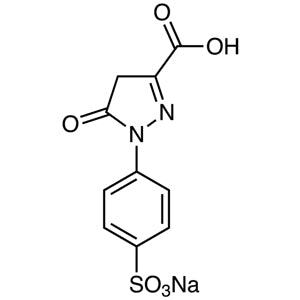
3-Carboxy-1-(4-sulfophenyl)-5-pyrazoloneSodiumSalt TCI C0845
Regular price Rp 1.405.950,00Regular price