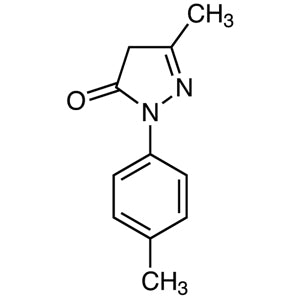
3-Methyl-1-p-tolyl-5-pyrazolone is a heterocyclic compound widely used in chemical research and laboratory settings. It serves as a key building block in the synthesis of complex organic molecules, particularly in pharmaceutical and medicinal chemistry. This compound is valued for its versatility and ability to participate in various chemical reactions, making it an essential tool for researchers seeking to develop new compounds with specific biological activities. Its unique molecular structure enables it to interact with a wide range of reagents, enhancing its utility in synthetic pathways.
The compound's stability and reactivity make it a preferred choice for laboratory applications. It exhibits compatibility with a variety of reagents, including acids, bases, and organic solvents, which allows for a broad range of chemical transformations. Its predictable behavior under different reaction conditions ensures reliable results, making it a trusted component in both academic and industrial research. The compound's ability to undergo substitution, addition, and condensation reactions further solidifies its role as a versatile intermediate in chemical synthesis.
In Indonesian laboratories, 3-Methyl-1-p-tolyl-5-pyrazolone is commonly used in scientific research, particularly in organic chemistry and pharmaceutical development. It is frequently found in academic institutions and research centers where it supports the creation of new drugs and bioactive compounds. Its availability in various packaging formats also facilitates its use across different laboratory environments, ensuring accessibility for researchers working on diverse projects.
- Organic synthesis applications benefit from the compound's ability to participate in multiple reaction types, supporting the development of complex molecules.
- Pharmaceutical research utilizes this compound as a building block for creating bioactive compounds and drug candidates.
- Medicinal chemistry studies rely on its reactivity to design new therapeutic agents with targeted biological effects.
- Industrial chemical production uses it as a versatile intermediate in the synthesis of specialty chemicals.
- Academic research laboratories employ it for teaching and experimental purposes in advanced organic chemistry courses.
| Brand | TCI |
|---|---|
| CAS number | 86-92-0 |
| Molecular formula | — |
| Purity | — |
| Category | Chemistry > Building Blocks > Heterocyclic Building Blocks |
| Pack sizes | Available in various packaging formats for different laboratory needs |
| Physical form | Solid, typically in crystalline or powder form |
| Storage | Store in a cool, dry place away from direct sunlight |
This compound should be stored in a cool, dry environment, away from direct sunlight and sources of heat. It is recommended to use airtight containers to prevent moisture absorption and contamination. Due to its chemical nature, it should be handled with appropriate personal protective equipment, such as gloves and safety goggles, to ensure laboratory safety. Proper ventilation is essential when working with this compound to minimize exposure to vapors. It is important to keep it away from incompatible materials like strong oxidizers or acids to prevent unwanted reactions. Regular inspection of storage conditions and containers ensures the compound remains stable and suitable for use in laboratory applications.
—
Produk Terkait
-
4-Benzoyl-3-methyl-1-phenyl-5-pyrazolone TCI B0976
Regular price From Rp 2.016.000,00Regular price -
5-Pyrazolone TCI P2563
Regular price From Rp 717.150,00Regular price -
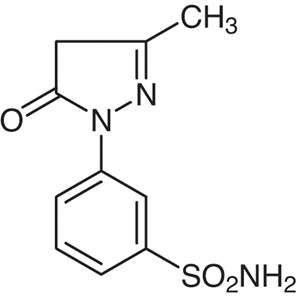
3-Methyl-1-(3'-sulfoamidophenyl)-5-pyrazolone TCI M0659
Regular price Rp 795.900,00Regular price -
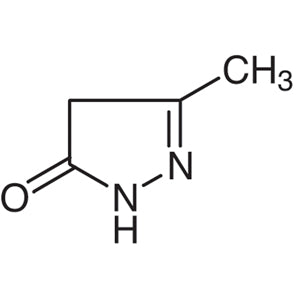
3-Methyl-5-pyrazolone TCI M0491
Regular price From Rp 505.050,00Regular price -
1-(4-Nitrophenyl)-3-methyl-5-pyrazolone TCI M0377
Regular price From Rp 1.140.300,00Regular price -
1-(3,4-Dimethylphenyl)-3-methyl-5-pyrazolone TCI D5064
Regular price From Rp 1.538.250,00Regular price -
1,3-Dimethyl-5-pyrazolone TCI D2031
Regular price Rp 2.121.000,00Regular price -
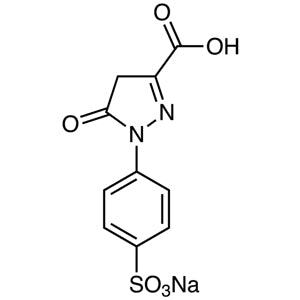
3-Carboxy-1-(4-sulfophenyl)-5-pyrazoloneSodiumSalt TCI C0845
Regular price Rp 1.405.950,00Regular price