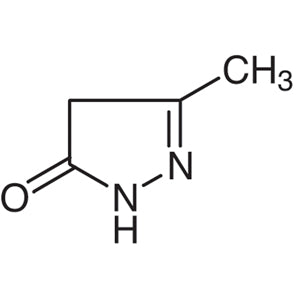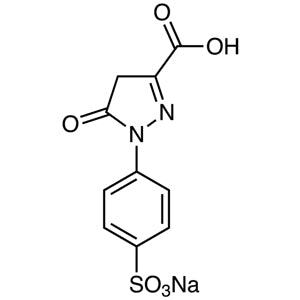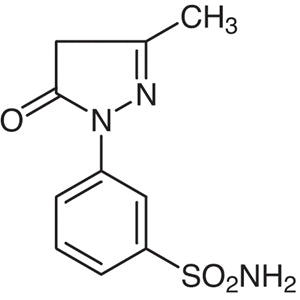
3-Methyl-1-(3'-sulfoamidophenyl)-5-pyrazolone is a chemical compound widely used in organic synthesis reactions within laboratory settings. This compound belongs to the class of heterocyclic building blocks, which are essential in the development of complex molecular structures. Its unique chemical structure, combining a pyrazolone ring with a sulfonamide group, makes it a versatile reagent for various synthetic pathways. It is commonly employed in the preparation of bioactive compounds and pharmaceutical intermediates, contributing to the advancement of medicinal chemistry research.
The compound's stability under controlled conditions, along with its reactivity towards a range of reagents, makes it a preferred choice for synthetic chemists. Its ability to participate in multiple reaction mechanisms, such as electrophilic substitution and nucleophilic attack, enhances its utility in laboratory applications. The presence of functional groups allows for further modification, making it adaptable to different synthetic strategies. This flexibility is particularly valuable in the design of new drugs and bioactive molecules.
In Indonesian laboratories, 3-Methyl-1-(3'-sulfoamidophenyl)-5-pyrazolone is frequently used in organic chemistry research, especially in pharmacology and the synthesis of bioactive compounds. Its complex molecular structure and reactivity make it a key component in studies aimed at understanding chemical reactivity and biological activity. Researchers in Indonesia rely on this compound for its reliability and effectiveness in producing high-quality chemical products.
Related TCI products
- TCI B0976 4551-69-3 4-Benzoyl-3-methyl-1-phenyl-5-pyrazolone
- TCI P2563 137-44-0 5-Pyrazolone
- TCI M0554 86-92-0 3-Methyl-1-p-tolyl-5-pyrazolone
- TCI M0491 108-26-9 3-Methyl-5-pyrazolone
- TCI M0377 6402-09-1 1-(4-Nitrophenyl)-3-methyl-5-pyrazolone
- TCI D5064 277299-70-4 1-(3,4-Dimethylphenyl)-3-methyl-5-pyrazolone
- Organic synthesis is a primary application for this compound due to its ability to participate in various reaction mechanisms, enabling the creation of complex molecular structures.
- Pharmaceutical research benefits from its use in the synthesis of bioactive compounds, as it provides a versatile platform for drug development.
- Medicinal chemistry studies utilize this compound to explore new drug candidates, leveraging its reactivity and structural adaptability.
- Bioactive compound synthesis relies on its functional groups, allowing for the modification of molecules to achieve desired biological effects.
- Chemical reactivity studies use this compound to investigate reaction mechanisms and the behavior of heterocyclic structures under different conditions.
| Brand | TCI |
|---|---|
| CAS number | 89-29-2 |
| Molecular formula | — |
| Purity | — |
| Category | Chemistry > Building Blocks > Heterocyclic Building Blocks |
| Pack sizes | Available in various quantities as per supplier specifications |
| Physical form | Solid |
| Storage | Store in a cool, dry place away from light and moisture |
This compound should be stored in a cool, dry environment, away from direct sunlight and moisture to maintain its chemical stability. It is recommended to use airtight containers made of glass or high-density polyethylene to prevent exposure to humidity and contaminants. Due to its sensitivity to UV light and moisture, it should be kept in a dark, sealed container when not in use. Laboratory personnel should handle the compound with care, using appropriate personal protective equipment such as gloves and safety goggles. Proper ventilation should be maintained in the workspace to minimize any potential exposure. Regular monitoring of storage conditions is essential to ensure the compound remains in optimal condition for experimental use.
—
Produk Terkait
-
4-Benzoyl-3-methyl-1-phenyl-5-pyrazolone TCI B0976
Regular price From Rp 2.016.000,00Regular price -
5-Pyrazolone TCI P2563
Regular price From Rp 717.150,00Regular price -
3-Methyl-1-p-tolyl-5-pyrazolone TCI M0554
Regular price Rp 1.298.850,00Regular price -
3-Methyl-5-pyrazolone TCI M0491
Regular price From Rp 505.050,00Regular price -
1-(4-Nitrophenyl)-3-methyl-5-pyrazolone TCI M0377
Regular price From Rp 1.140.300,00Regular price -
1-(3,4-Dimethylphenyl)-3-methyl-5-pyrazolone TCI D5064
Regular price From Rp 1.538.250,00Regular price -
1,3-Dimethyl-5-pyrazolone TCI D2031
Regular price Rp 2.121.000,00Regular price -
3-Carboxy-1-(4-sulfophenyl)-5-pyrazoloneSodiumSalt TCI C0845
Regular price Rp 1.405.950,00Regular price