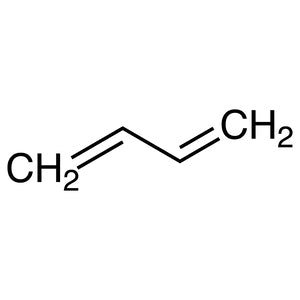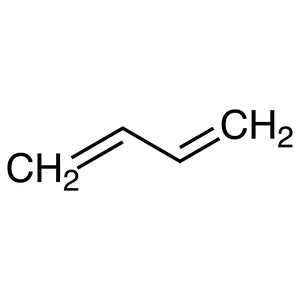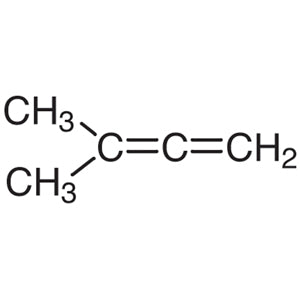
3-Methyl-1,2-butadiene is a versatile organic compound widely used in laboratory settings for constructing complex molecular structures. As a key building block in organic synthesis, it plays a crucial role in the development of various chemical compounds. Its unique molecular structure enables it to participate in multiple reaction types, making it an essential tool for chemists. This compound is particularly valuable in synthetic pathways that require the formation of carbon-carbon bonds through addition or substitution reactions.
The reactivity of 3-Methyl-1,2-butadiene stems from its two double bonds, which make it highly responsive to a range of reagents such as acids, bases, and alkali metals. This reactivity allows it to be a preferred choice in both academic and industrial research. Its ability to undergo polymerization reactions further expands its utility in the creation of polymers and other advanced materials. Due to its chemical nature, it is often used in experiments that require precise control over reaction conditions.
In Indonesian laboratories, 3-Methyl-1,2-butadiene is commonly utilized in organic chemistry research, pharmaceutical development, and industrial chemical production. It is a fundamental component in the work of research institutions and universities across the country. Its application spans various fields, from basic research to applied science, supporting the advancement of chemical knowledge and innovation.
Related TCI products
- TCI D1148 513-81-5 2,3-Dimethyl-1,3-butadiene (stabilized with BHT)
- TCI D0879 886-65-7 trans,trans-1,4-Diphenyl-1,3-butadiene
- TCI B6533 106-99-0 1,3-Butadiene (ca. 5% in N,N-Dimethylformamide, ca. 0.9 mol/L)
- TCI B6532 106-99-0 1,3-Butadiene (ca. 6% in Dichloromethane, ca. 1.5 mol/L)
- TCI T0168 1450-63-1 1,1,4,4-Tetraphenyl-1,3-butadiene
- TCI E0337 930-22-3 1,3-Butadiene Monoepoxide
- Organic synthesis experiments benefit from 3-Methyl-1,2-butadiene due to its reactivity and ability to form complex molecular structures.
- Pharmaceutical research utilizes this compound to develop new drug compounds through synthetic pathways.
- Polymerization studies often incorporate 3-Methyl-1,2-butadiene to create various types of polymers and materials.
- Industrial chemical production relies on this compound for the synthesis of specialty chemicals and intermediates.
- Research institutions use it as a key reagent in teaching and experimental setups for advanced chemical techniques.
| Brand | TCI |
|---|---|
| CAS number | 598-25-4 |
| Molecular formula | — |
| Purity | — |
| Category | Chemistry > Building Blocks > Non-Heterocyclic Building Blocks |
| Pack sizes | Available in various quantities as per standard laboratory supply |
| Physical form | Liquid |
| Storage | Requires storage in a cool, dark place away from heat and light |
3-Methyl-1,2-butadiene should be stored in a cool, dark location, away from heat and direct sunlight. It is recommended to use sealed, airtight containers to prevent exposure to air and moisture. Due to its reactivity, it should be kept in a well-ventilated area to minimize the risk of vapor accumulation. Proper labeling of containers is essential for safety and identification. Laboratory personnel should wear appropriate personal protective equipment, including gloves and safety goggles, when handling this compound. Regular monitoring of storage conditions ensures the compound remains stable and safe for use in experimental procedures.
—
Produk Terkait
-
2,3-Dimethyl-1,3-butadiene(stabilizedwithBHT) TCI D1148
Regular price From Rp 2.094.750,00Regular price -
trans,trans-1,4-Diphenyl-1,3-butadiene TCI D0879
Regular price From Rp 1.696.800,00Regular price -
1,3-Butadiene(ca.5%inN,N-Dimethylformamide,ca.0.9mol/L) TCI B6533
Regular price From Rp 1.405.950,00Regular price -
1,3-Butadiene(ca.6%inDichloromethane,ca.1.5mol/L) TCI B6532
Regular price From Rp 1.405.950,00Regular price -
1,1,4,4-Tetraphenyl-1,3-butadiene TCI T0168
Regular price From Rp 1.035.300,00Regular price -
1,3-ButadieneMonoepoxide TCI E0337
Regular price From Rp 1.378.650,00Regular price -
1,4-Di(2-thienyl)-1,3-butadiene(mixtureofisomers) TCI D2077
Regular price From Rp 3.021.900,00Regular price -
1,2-Pentadiene TCI P0805
Regular price From Rp 8.453.550,00Regular price