1,2-Methylenedioxybenzene is an organic chemical compound with an aromatic structure featuring two methylenedioxy groups at positions 1 and 2 of the benzene ring. This compound plays a crucial role in laboratory settings, serving as a key reagent in various chemical reactions. It is widely utilized in the synthesis of aromatic and heterocyclic compounds, making it an essential material for researchers and chemists. Its versatility and chemical stability make it a reliable choice for both academic and industrial applications.
The compound's unique chemical properties, including its methylenedioxy groups, contribute to its reactivity in electrophilic substitution and redox reactions. These characteristics allow it to participate in controlled chemical transformations with predictable outcomes. Its aromatic structure provides stability under normal conditions, while its reactivity ensures it can be manipulated in a wide range of experimental setups. This balance of stability and reactivity makes it a preferred choice for complex chemical processes.
In Indonesian laboratories, 1,2-Methylenedioxybenzene is commonly used in organic chemistry, pharmaceutical research, and industrial chemical production. Its role in synthesizing active pharmaceutical ingredients and dyes makes it a valuable component in both academic and commercial research. Its application is particularly prominent in studies involving controlled chemical reactions and material synthesis.
Related TCI products
- TCI B1230 2635-13-4 4-Bromo-1,2-methylenedioxybenzene
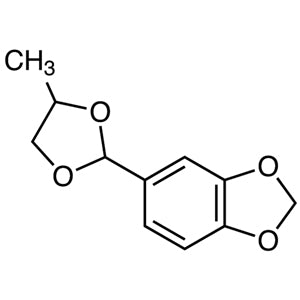
- TCI M2483 61683-99-6 4-(4-Methyl-1,3-dioxolan-2-yl)-1,2-methylenedioxybenzene
- TCI B2019 29668-44-8 3,4-Ethylenedioxybenzaldehyde
- TCI A1356 28657-75-2 6'-Amino-3',4'-(methylenedioxy)acetophenone
- TCI M1378 7797-83-3 2,3-(Methylenedioxy)benzaldehyde
- TCI M0874 3162-29-6 3',4'-(Methylenedioxy)acetophenone
- Organic synthesis reactions benefit from its aromatic structure and reactivity, enabling the creation of complex molecules.
- Pharmaceutical research utilizes it for the synthesis of active pharmaceutical ingredients due to its chemical versatility.
- Dye production relies on its ability to participate in redox and substitution reactions, contributing to color development.
- Industrial chemical manufacturing incorporates it as a building block for various chemical compounds.
- Material science experiments use it to explore the properties of aromatic compounds in different reaction conditions.
| Brand | TCI |
|---|---|
| CAS number | 274-09-9 |
| Molecular formula | — |
| Purity | — |
| Category | TCI |
| Pack sizes | Available in various quantities as per standard laboratory requirements |
| Physical form | Solid |
| Storage | Store in a cool, dry place away from light and incompatible materials |
This compound should be stored in a cool, dry environment, away from direct sunlight and sources of heat. It is recommended to use airtight containers made of materials such as glass or polyethylene to prevent contamination and maintain chemical integrity. Due to its reactivity, it should be handled with care, using appropriate personal protective equipment. It is important to keep it away from strong acids, bases, and organic solvents to avoid unwanted chemical interactions. Proper labeling and storage conditions are essential to ensure safety and maintain the compound's stability over time.
—
Produk Terkait
-
4-Bromo-1,2-methylenedioxybenzene TCI B1230
Regular price From Rp 769.650,00Regular price -
4-(4-Methyl-1,3-dioxolan-2-yl)-1,2-methylenedioxybenzene TCI M2483
Regular price Rp 2.386.650,00Regular price -
3,4-Ethylenedioxybenzaldehyde TCI B2019
Regular price From Rp 530.250,00Regular price -
6'-Amino-3',4'-(methylenedioxy)acetophenone TCI A1356
Regular price Rp 2.782.500,00Regular price -
2,3-(Methylenedioxy)benzaldehyde TCI M1378
Regular price From Rp 2.439.150,00Regular price -
3',4'-(Methylenedioxy)acetophenone TCI M0874
Regular price Rp 3.312.750,00Regular price -
4,4'-(1,4-Phenylenedioxy)bisphthalicAnhydride TCI P2421
Regular price From Rp 2.942.100,00Regular price