
TCI M0678 Methylfluorone Hemisulfate is a chemical compound used in qualitative and quantitative analysis for the detection of heavy metals such as antimony (Sb), germanium (Ge), molybdenum (Mo), and tin (Sn). It plays a crucial role in analytical laboratories by serving as a reagent that enables the identification of these metals in various samples. This compound is widely applied in spectroscopic techniques, particularly in atomic absorption spectroscopy (AAS) and UV-Vis spectrophotometry. Its ability to form complexes with specific metals makes it an essential tool for accurate and sensitive detection.
The compound is known for its chemical stability and appropriate reactivity, making it a preferred choice for different analytical methods. Its ability to undergo color changes or absorbance shifts upon interaction with target metals enhances its utility in detecting trace amounts of these elements. These properties ensure reliable and reproducible results, which are vital in both research and industrial settings. The compound's effectiveness in forming stable complexes with heavy metals contributes to its widespread use in analytical chemistry.
In Indonesian laboratories, TCI M0678 Methylfluorone Hemisulfate is commonly used in environmental, industrial, and research applications. It is particularly relevant for analyzing water, soil, and chemical samples containing heavy metals. Its reliability and sensitivity make it a valuable reagent for ensuring accurate data in analytical processes. The compound is essential for maintaining high standards of quality in laboratory work across various sectors.
Related TCI products
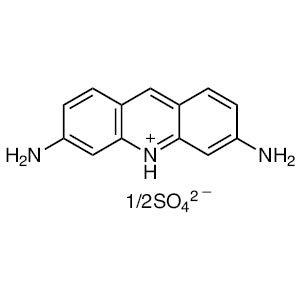
- TCI D0073 1811-28-5 Proflavine Hemisulfate
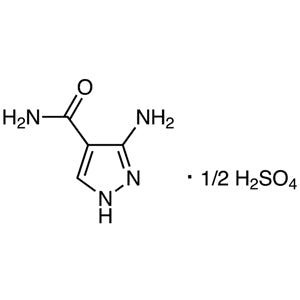
- TCI A1532 27511-79-1 3-Aminopyrazole-4-carboxamide Hemisulfate
- TCI A1640 75-07-0 Acetaldehyde (ca. 2% in N,N-Dimethylformamide) [for Detection of Primary and Secondary Amines]
- TCI P1447 2508-19-2 Picrylsulfonic Acid (ca. 1% in N,N-Dimethylformamide) [for Detection of Primary Amines]
- TCI C1770 118-75-2 Chloranil (ca. 2% in N,N-Dimethylformamide) [for Detection of Primary and Secondary Amines]
- TCI A0509 90-44-8 Anthrone
- Atomic Absorption Spectroscopy (AAS) utilizes this reagent for the accurate detection of trace metals in environmental samples due to its ability to form stable complexes.
- UV-Vis Spectrophotometry benefits from this compound's capacity to induce color changes, enabling precise quantification of heavy metals in solution.
- Environmental Analysis relies on this reagent to detect antimony, germanium, molybdenum, and tin in water and soil samples, ensuring compliance with regulatory standards.
- Industrial Quality Control employs this compound to monitor metal content in raw materials and finished products, ensuring product consistency and safety.
- Research Laboratories use this reagent for studying metal interactions and developing new analytical methods for heavy metal detection.
| Brand | TCI |
|---|---|
| CAS number | 1534-78-1 |
| Molecular formula | — |
| Purity | — |
| Category | Analytical Chemistry > Analytical Reagents > Spectroscopy Reagents |
| Pack sizes | Available in various quantities as per standard reagent packaging |
| Physical form | Solid powder |
| Storage | Store in a cool, dry place away from direct sunlight and moisture |
This reagent should be stored in a cool, dry place, away from direct sunlight and moisture to maintain its chemical stability. It is recommended to use airtight containers to prevent exposure to humidity and contaminants. Proper labeling of storage containers is essential to ensure safe handling and prevent accidental use. In laboratory settings, it is important to handle the compound with care, using appropriate personal protective equipment such as gloves and safety goggles. The compound should not be stored near incompatible materials, such as strong oxidizing agents, to avoid potential chemical reactions. Regular inspection of storage conditions ensures the reagent remains effective for analytical use.
—
Produk Terkait
-
ProflavineHemisulfate TCI D0073
Regular price From Rp 1.246.350,00Regular price -
3-Aminopyrazole-4-carboxamideHemisulfate TCI A1532
Regular price Rp 584.850,00Regular price -
Acetaldehyde(ca.2%inN,N-Dimethylformamide)[forDetectionofPrimaryandSecondaryAmines] TCI A1640
Regular price Rp 1.696.800,00Regular price -
PicrylsulfonicAcid(ca.1%inN,N-Dimethylformamide)[forDetectionofPrimaryAmines] TCI P1447
Regular price From Rp 1.670.550,00Regular price -
Chloranil(ca.2%inN,N-Dimethylformamide)[forDetectionofPrimaryandSecondaryAmines] TCI C1770
Regular price Rp 903.000,00Regular price -
Anthrone TCI A0509
Regular price From Rp 1.035.300,00Regular price -
ButylAcetate[forSpectrophotometry] TCI A0228
Regular price Rp 1.538.250,00Regular price -
EthylAcetate[forSpectrophotometry] TCI A0030
Regular price Rp 1.167.600,00Regular price
![75-07-0 Acetaldehyde (ca. 2% in N,N-Dimethylformamide) [for Detection of Primary and Secondary Amines] - AMI Scientific](http://amiscientific.com/cdn/shop/files/TCI2510A1640.jpg?v=1768203865&width=533)
![2508-19-2 Picrylsulfonic Acid (ca. 1% in N,N-Dimethylformamide) [for Detection of Primary Amines] - AMI Scientific](http://amiscientific.com/cdn/shop/files/TCI2510P1447.jpg?v=1769057414&width=533)
![Chloranil (ca. 2% in N,N-Dimethylformamide) [for Detection of Primary and Secondary Amines] (CAS 118-75-2) - TCI C1770 - AMI Scientific](http://amiscientific.com/cdn/shop/files/TCI2510C1770.jpg?v=1769144441&width=533)

![123-86-4 Butyl Acetate [for Spectrophotometry] - AMI Scientific](http://amiscientific.com/cdn/shop/files/TCI2510A0228.jpg?v=1767078302&width=533)
![141-78-6 Ethyl Acetate [for Spectrophotometry] - AMI Scientific](http://amiscientific.com/cdn/shop/files/TCI2510A0030.jpg?v=1767077891&width=533)