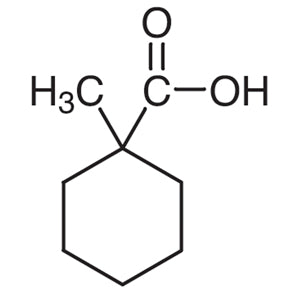
1-Methyl-1-cyclohexanecarboxylic Acid is a versatile chemical compound widely used in laboratory settings for the synthesis of complex molecules. As a key building block in organic chemistry, it plays a crucial role in the development of new compounds with specific functional properties. This compound is commonly utilized in research involving both aromatic and heterocyclic structures, making it an essential tool for chemists working in various fields. Its presence in synthetic pathways allows for the creation of a wide range of derivatives, contributing to advancements in pharmaceutical and material sciences.
The compound is valued for its stable molecular structure and controlled reactivity, which simplify the synthesis process and enhance reproducibility. Its consistent chemical and physical properties make it a reliable choice for laboratory experiments, ensuring predictable outcomes. The availability in multiple packaging options allows for flexibility in experimental scale, from small-scale research to larger production processes. This adaptability makes it a preferred material for both academic and industrial laboratories.
In Indonesian laboratories, 1-Methyl-1-cyclohexanecarboxylic Acid is frequently used in organic chemistry research, particularly in pharmacology and material science. Local researchers rely on this compound to develop new substances with potential applications in medicine and industry. Its stability and reactivity make it a valuable component in many scientific experiments conducted by research institutions across the country.
Related TCI products
- TCI T3097 84682-27-9 1-(p-Tolyl)-1-cyclohexanecarboxylic Acid
- TCI B3253 27687-14-5 trans-4-(tert-Butoxycarbonylaminomethyl)cyclohexanecarboxylic Acid
- TCI B3251 162046-58-4 4-(tert-Butoxycarbonylaminomethyl)cyclohexanecarboxylic Acid (cis- and trans- mixture)
- TCI B3250 53292-89-0 trans-4-(tert-Butoxycarbonylamino)cyclohexanecarboxylic Acid
- TCI B3249 53292-90-3 cis-4-(tert-Butoxycarbonylamino)cyclohexanecarboxylic Acid
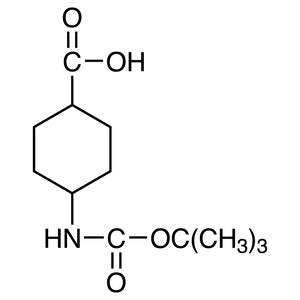
- TCI B3248 130309-46-5 4-(tert-Butoxycarbonylamino)cyclohexanecarboxylic Acid (cis- and trans- mixture)
- Organic synthesis is a primary application where this compound serves as a building block for creating complex molecules with desired functional groups.
- Pharmaceutical research benefits from its use in the development of new drugs, as it can be modified to produce compounds with specific biological activities.
- Material science applications involve its use in the synthesis of polymers and other advanced materials with tailored properties.
- Chemical analysis laboratories utilize it as a standard reference material for testing and calibration of analytical instruments.
- Environmental studies may incorporate it in the study of chemical degradation processes and the behavior of organic compounds in different environments.
| Brand | TCI |
|---|---|
| CAS number | 1123-25-7 |
| Molecular formula | — |
| Purity | — |
| Category | Chemistry > Building Blocks > Non-Heterocyclic Building Blocks |
| Pack sizes | Available in various sizes to suit different experimental needs |
| Physical form | Solid, crystalline appearance |
| Storage | Store in a cool, dry place away from direct sunlight |
This compound should be stored in a cool, dry environment, away from direct sunlight and sources of heat. It is recommended to use airtight containers to prevent moisture absorption and contamination. As a solid, it should be kept in a well-ventilated area to minimize exposure to airborne particles. Laboratory personnel should wear appropriate personal protective equipment, such as gloves and safety goggles, when handling the material. Avoid contact with skin and eyes, and ensure proper disposal according to local regulations. Regular monitoring of storage conditions is advised to maintain the compound's integrity and ensure safe handling in all laboratory settings.
—
Produk Terkait
-
1-(p-Tolyl)-1-cyclohexanecarboxylicAcid TCI T3097
Regular price From Rp 1.644.300,00Regular price -
trans-4-(tert-Butoxycarbonylaminomethyl)cyclohexanecarboxylicAcid TCI B3253
Regular price From Rp 1.510.950,00Regular price -
4-(tert-Butoxycarbonylaminomethyl)cyclohexanecarboxylicAcid(cis-andtrans-mixture) TCI B3251
Regular price Rp 1.829.100,00Regular price -
trans-4-(tert-Butoxycarbonylamino)cyclohexanecarboxylicAcid TCI B3250
Regular price From Rp 3.578.400,00Regular price -
cis-4-(tert-Butoxycarbonylamino)cyclohexanecarboxylicAcid TCI B3249
Regular price From Rp 3.446.100,00Regular price -
4-(tert-Butoxycarbonylamino)cyclohexanecarboxylicAcid(cis-andtrans-mixture) TCI B3248
Regular price From Rp 2.625.000,00Regular price -
1-Phenyl-1-cyclohexanecarboxylicAcid TCI P2180
Regular price From Rp 610.050,00Regular price -
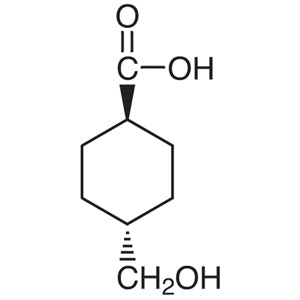
trans-4-(Hydroxymethyl)cyclohexanecarboxylicAcid TCI H1243
Regular price From Rp 3.207.750,00Regular price