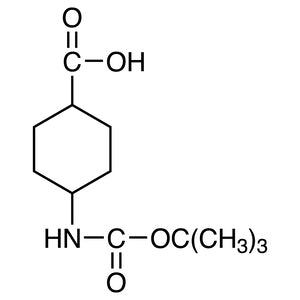
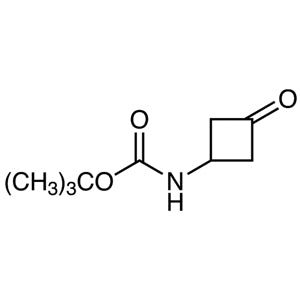
Trans-4-(tert-Butoxycarbonylamino)cyclohexanecarboxylic Acid is a specialized organic compound used in laboratory settings for a variety of synthetic reactions. This compound plays a crucial role in the development of complex molecules, particularly in the field of organic chemistry. Its unique structure allows it to act as a building block in the synthesis of pharmaceuticals, materials, and other chemical compounds. Due to its versatility, it is widely utilized in both academic and industrial research environments.
The compound is valued for its chemical stability under controlled conditions and its reactivity with various reagents such as acids, bases, and organic solvents. Its ability to undergo substitution or deprotection reactions makes it a key component in the synthesis of more complex molecules. The specific molecular structure enables precise control over reaction pathways, making it an essential tool for researchers aiming to achieve high levels of accuracy and reproducibility in their experiments.
In Indonesian laboratories, this compound is commonly used in the synthesis of bioactive compounds and the development of new materials. It is a preferred choice for scientists working on drug discovery, polymer chemistry, and other advanced research projects. Its reliability and chemical properties make it a staple in both university research labs and industrial chemical development facilities.
Related TCI products
- TCI B3253 27687-14-5 trans-4-(tert-Butoxycarbonylaminomethyl)cyclohexanecarboxylic Acid
- TCI B3251 162046-58-4 4-(tert-Butoxycarbonylaminomethyl)cyclohexanecarboxylic Acid (cis- and trans- mixture)
- TCI B3249 53292-90-3 cis-4-(tert-Butoxycarbonylamino)cyclohexanecarboxylic Acid
- TCI B3248 130309-46-5 4-(tert-Butoxycarbonylamino)cyclohexanecarboxylic Acid (cis- and trans- mixture)
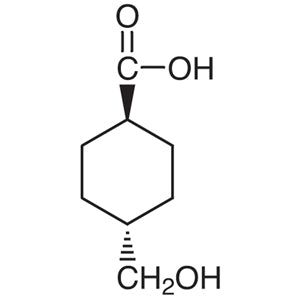
- TCI H1243 66185-74-8 trans-4-(Hydroxymethyl)cyclohexanecarboxylic Acid
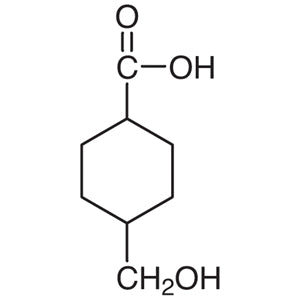
- TCI H1015 13380-84-2 4-(Hydroxymethyl)cyclohexanecarboxylic Acid (cis- and trans- mixture)
- Bioactive Compound Synthesis: This compound is ideal for synthesizing bioactive molecules due to its structural versatility and reactivity, enabling the creation of compounds with pharmaceutical applications.
- Organic Material Development: It is frequently used in the development of new organic materials, where its functional groups allow for the modification of molecular structures to meet specific material properties.
- Pharmaceutical Research: Its role in organic synthesis makes it a valuable tool in pharmaceutical research, supporting the creation of drug candidates through targeted molecular modifications.
- Polymer Chemistry Studies: The compound's ability to undergo substitution reactions makes it suitable for polymer chemistry applications, where it can be used to modify polymer chains for enhanced functionality.
- Molecular Modification Reactions: Its stability and reactivity make it a preferred choice for molecular modification reactions, allowing for the precise alteration of molecular structures in synthetic processes.
| Brand | TCI |
|---|---|
| CAS number | 53292-89-0 |
| Molecular formula | — |
| Purity | — |
| Category | Chemistry > Building Blocks > Non-Heterocyclic Building Blocks |
| Pack sizes | Available in various quantities as per standard laboratory supply options |
| Physical form | Solid powder |
| Storage | Store in a cool, dry place away from direct sunlight and moisture |
This compound should be stored in a cool, dry environment to maintain its chemical stability and prevent degradation. It is recommended to use airtight containers to protect it from moisture and air exposure. Due to its reactivity with certain reagents, it should be handled in a well-ventilated area, and appropriate personal protective equipment should be worn. Avoid contact with strong acids or bases, as they may cause unwanted chemical reactions. The compound should not be stored near incompatible substances to ensure safety in the laboratory. Regular monitoring of storage conditions is advised to maintain its integrity and usability for research purposes.
—
Produk Terkait
-
trans-4-(tert-Butoxycarbonylaminomethyl)cyclohexanecarboxylicAcid TCI B3253
Regular price From Rp 1.563.450,00Regular priceRp 1.108.800,00Sale price From Rp 1.563.450,00 -
4-(tert-Butoxycarbonylaminomethyl)cyclohexanecarboxylicAcid(cis-andtrans-mixture) TCI B3251
Regular price Rp 1.881.600,00Regular priceRp 1.331.400,00Sale price Rp 1.881.600,00 -
cis-4-(tert-Butoxycarbonylamino)cyclohexanecarboxylicAcid TCI B3249
Regular price From Rp 3.498.600,00Regular priceRp 2.462.250,00Sale price From Rp 3.498.600,00 -
4-(tert-Butoxycarbonylamino)cyclohexanecarboxylicAcid(cis-andtrans-mixture) TCI B3248
Regular price From Rp 2.677.500,00Regular priceRp 1.887.900,00Sale price From Rp 2.677.500,00 -
trans-4-(Hydroxymethyl)cyclohexanecarboxylicAcid TCI H1243
Regular price From Rp 3.260.250,00Regular priceRp 2.295.300,00Sale price From Rp 3.260.250,00 -
4-(Hydroxymethyl)cyclohexanecarboxylicAcid(cis-andtrans-mixture) TCI H1015
Regular price Rp 4.399.500,00Regular priceRp 3.092.250,00Sale price Rp 4.399.500,00 -
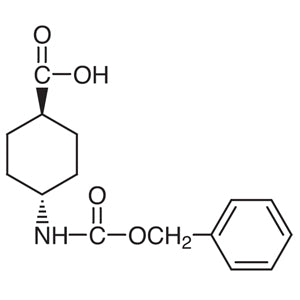
trans-4-(Carbobenzoxyamino)cyclohexanecarboxylicAcid TCI C2036
Regular price From Rp 1.590.750,00Regular priceRp 1.127.700,00Sale price From Rp 1.590.750,00 -
3-(tert-Butoxycarbonylamino)-1-cyclobutanone TCI B4043
Regular price Rp 1.140.300,00Regular priceRp 812.700,00Sale price Rp 1.140.300,00