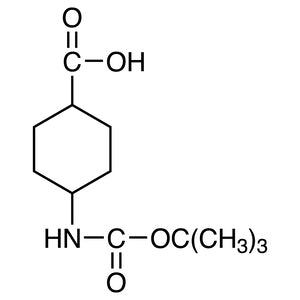
TCI B3249 53292-90-3 cis-4-(tert-Butoxycarbonylamino)cyclohexanecarboxylic Acid is a complex organic compound widely used in laboratory settings as a building block for the synthesis of various organic molecules. This compound is particularly valuable for its ability to participate in reactions that require specific structural features, such as cyclic frameworks and amino groups. Its role in the laboratory is critical for the development of new chemical compounds, especially in the fields of pharmaceutical and industrial chemistry. Due to its structural versatility, it is a key component in the creation of more complex molecules that require precise chemical modifications.
The compound's unique features, including the presence of the tert-butoxycarbonyl group, make it a preferred choice for chemists. This protective group enhances the stability of the molecule and facilitates controlled chemical transformations, reducing unwanted side reactions. Additionally, its cyclic structure allows it to engage in substitution and other types of chemical reactions that require a defined molecular framework. These properties make it highly suitable for use in synthetic pathways where precision and reactivity are essential.
In Indonesian laboratories, this compound is commonly used in both fundamental and applied chemical research. It is a staple in academic and industrial research settings, where it supports the development of new drugs, materials, and chemical processes. Its reliability and chemical versatility make it an essential tool for researchers working on complex organic synthesis projects. Its widespread use in Indonesia reflects its importance in advancing chemical research and innovation.
Related TCI products
- TCI B3250 53292-89-0 trans-4-(tert-Butoxycarbonylamino)cyclohexanecarboxylic Acid
- TCI B3248 130309-46-5 4-(tert-Butoxycarbonylamino)cyclohexanecarboxylic Acid (cis- and trans- mixture)
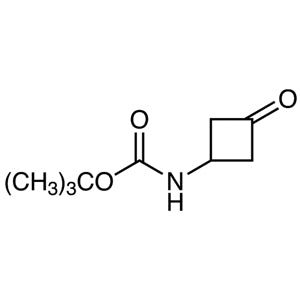
- TCI B4043 154748-49-9 3-(tert-Butoxycarbonylamino)-1-cyclobutanone
- TCI B3856 179321-49-4 4-(tert-Butoxycarbonylamino)cyclohexanone
- TCI B3253 27687-14-5 trans-4-(tert-Butoxycarbonylaminomethyl)cyclohexanecarboxylic Acid
- TCI B3251 162046-58-4 4-(tert-Butoxycarbonylaminomethyl)cyclohexanecarboxylic Acid (cis- and trans- mixture)
- Organic synthesis projects benefit from this compound due to its cyclic structure and amino group, enabling the creation of complex molecules with high specificity.
- Pharmaceutical research utilizes this compound as a building block for the development of new drug candidates, leveraging its reactivity and structural features.
- Industrial chemical production relies on this compound for the synthesis of specialty chemicals, where precise molecular control is essential.
- Academic research in chemical sciences employs this compound to explore new synthetic methodologies and reaction mechanisms.
- Environmental chemistry studies use this compound to investigate the behavior of organic compounds in various chemical environments and reaction conditions.
| Brand | TCI |
|---|---|
| CAS number | 53292-90-3 |
| Molecular formula | — |
| Purity | — |
| Category | Chemistry > Building Blocks > Non-Heterocyclic Building Blocks |
| Pack sizes | Available in various quantities as per standard laboratory supply practices |
| Physical form | Solid (as per standard chemical product descriptions) |
| Storage | Store in a cool, dry place away from direct sunlight and moisture |
This compound should be stored in a cool, dry environment, away from direct sunlight and moisture to maintain its chemical integrity. It is recommended to use airtight containers made of materials that are chemically inert, such as glass or high-density polyethylene, to prevent contamination and degradation. In laboratory settings, it is important to handle the compound with appropriate personal protective equipment, including gloves and safety goggles, to ensure safety during handling. Proper ventilation should be maintained when working with this compound to minimize exposure to airborne particles. Regular inspection of storage conditions is advised to ensure optimal preservation and usability of the material.
—
Produk Terkait
-
trans-4-(tert-Butoxycarbonylamino)cyclohexanecarboxylicAcid TCI B3250
Regular price From Rp 3.630.900,00Regular priceRp 2.554.650,00Sale price From Rp 3.630.900,00 -
4-(tert-Butoxycarbonylamino)cyclohexanecarboxylicAcid(cis-andtrans-mixture) TCI B3248
Regular price From Rp 2.677.500,00Regular priceRp 1.887.900,00Sale price From Rp 2.677.500,00 -
3-(tert-Butoxycarbonylamino)-1-cyclobutanone TCI B4043
Regular price Rp 1.140.300,00Regular priceRp 812.700,00Sale price Rp 1.140.300,00 -
4-(tert-Butoxycarbonylamino)cyclohexanone TCI B3856
Regular price From Rp 557.550,00Regular priceRp 405.300,00Sale price From Rp 557.550,00 -
trans-4-(tert-Butoxycarbonylaminomethyl)cyclohexanecarboxylicAcid TCI B3253
Regular price From Rp 1.563.450,00Regular priceRp 1.108.800,00Sale price From Rp 1.563.450,00 -
4-(tert-Butoxycarbonylaminomethyl)cyclohexanecarboxylicAcid(cis-andtrans-mixture) TCI B3251
Regular price Rp 1.881.600,00Regular priceRp 1.331.400,00Sale price Rp 1.881.600,00 -
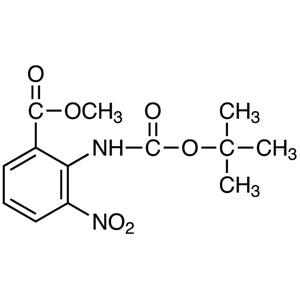
Methyl2-(tert-Butoxycarbonylamino)-3-nitrobenzoate TCI M2797
Regular price From Rp 2.544.150,00Regular priceRp 1.794.450,00Sale price From Rp 2.544.150,00 -
1-(p-Tolyl)-1-cyclohexanecarboxylicAcid TCI T3097
Regular price From Rp 1.696.800,00Regular priceRp 1.202.250,00Sale price From Rp 1.696.800,00