4-(tert-Butoxycarbonylamino)cyclohexanone is a chemical compound widely used as a building block in the synthesis of complex molecules. This compound plays a crucial role in organic chemistry laboratories, where it serves as a versatile intermediate for various chemical transformations. Its unique molecular structure allows it to participate in a range of reactions, including reduction, hydrolysis, and substitution, making it an essential tool for researchers. In laboratory settings, it is frequently used to construct more complex molecular frameworks, supporting the development of pharmaceuticals, industrial chemicals, and scientific research materials.
The compound is valued for its stable molecular structure and controlled reactivity, which enable precise chemical manipulations. Its chemical properties allow it to react with a variety of reagents, including acids, bases, and organic solvents, enhancing its utility in diverse experimental conditions. The solid form and stability under certain conditions make it easy to handle and process, ensuring consistency in laboratory workflows. These characteristics make it a preferred choice for chemists seeking reliable and adaptable reagents.
In Indonesian laboratories, this compound is extensively used in organic chemistry research, particularly in academic institutions and research organizations. Its availability and chemical versatility support a wide range of experimental needs, contributing to the advancement of scientific studies and industrial applications. Its role in both educational and research environments underscores its importance in the chemical sciences.
Related TCI products
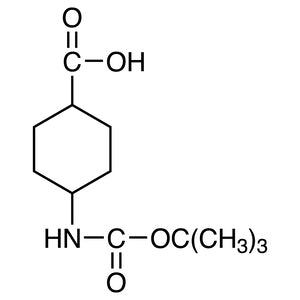
- TCI B3248 130309-46-5 4-(tert-Butoxycarbonylamino)cyclohexanecarboxylic Acid (cis- and trans- mixture)
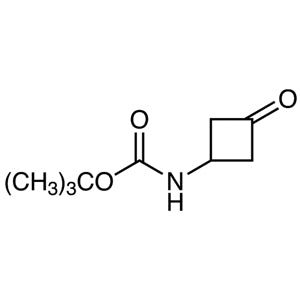
- TCI B4043 154748-49-9 3-(tert-Butoxycarbonylamino)-1-cyclobutanone
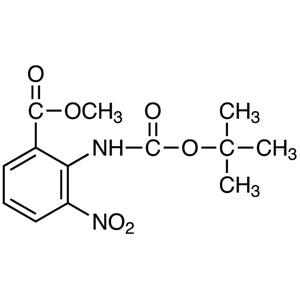
- TCI M2797 57113-90-3 Methyl 2-(tert-Butoxycarbonylamino)-3-nitrobenzoate
- TCI B3253 27687-14-5 trans-4-(tert-Butoxycarbonylaminomethyl)cyclohexanecarboxylic Acid
- TCI B3250 53292-89-0 trans-4-(tert-Butoxycarbonylamino)cyclohexanecarboxylic Acid
- TCI B3249 53292-90-3 cis-4-(tert-Butoxycarbonylamino)cyclohexanecarboxylic Acid
- Organic synthesis applications benefit from this compound's versatility in creating complex molecular structures through various chemical reactions.
- Pharmaceutical research utilizes it as an intermediate in the development of new drug compounds due to its reactivity and structural adaptability.
- Industrial chemical production relies on its stability and reactivity for the synthesis of specialty chemicals and intermediates.
- Academic research in chemistry laboratories uses it to explore reaction mechanisms and develop new synthetic methodologies.
- Analytical chemistry experiments incorporate it as a standard reference material for testing and validating chemical processes.
| Brand | TCI |
|---|---|
| CAS number | 179321-49-4 |
| Molecular formula | — |
| Purity | — |
| Category | Chemistry > Building Blocks > Non-Heterocyclic Building Blocks |
| Pack sizes | Available in standard laboratory quantities |
| Physical form | Solid |
| Storage | Store in a cool, dry place away from direct sunlight |
This compound should be stored in a cool, dry environment, away from direct sunlight and sources of heat. It is recommended to use airtight containers made of glass or high-density polyethylene to prevent moisture absorption and contamination. Due to its chemical reactivity, it should be handled with appropriate personal protective equipment, including gloves and safety goggles. In laboratory settings, it should be stored separately from strong acids and bases to avoid potential chemical interactions. Proper labeling and storage conditions ensure the compound remains stable and safe for use in various experimental applications.
—
Produk Terkait
-
4-(tert-Butoxycarbonylamino)cyclohexanecarboxylicAcid(cis-andtrans-mixture) TCI B3248
Regular price From Rp 2.677.500,00Regular priceRp 1.887.900,00Sale price From Rp 2.677.500,00 -
3-(tert-Butoxycarbonylamino)-1-cyclobutanone TCI B4043
Regular price Rp 1.140.300,00Regular priceRp 812.700,00Sale price Rp 1.140.300,00 -
Methyl2-(tert-Butoxycarbonylamino)-3-nitrobenzoate TCI M2797
Regular price From Rp 2.544.150,00Regular priceRp 1.794.450,00Sale price From Rp 2.544.150,00 -
trans-4-(tert-Butoxycarbonylaminomethyl)cyclohexanecarboxylicAcid TCI B3253
Regular price From Rp 1.563.450,00Regular priceRp 1.108.800,00Sale price From Rp 1.563.450,00 -
trans-4-(tert-Butoxycarbonylamino)cyclohexanecarboxylicAcid TCI B3250
Regular price From Rp 3.630.900,00Regular priceRp 2.554.650,00Sale price From Rp 3.630.900,00 -
cis-4-(tert-Butoxycarbonylamino)cyclohexanecarboxylicAcid TCI B3249
Regular price From Rp 3.498.600,00Regular priceRp 2.462.250,00Sale price From Rp 3.498.600,00