Methyl 1-Methylpyrrole-2-acetate is a heterocyclic compound built on a pyrrole ring whose nitrogen atom is methylated and which carries a methyl acetate ester group at the 2-position. This structure combines an electron-rich pyrrole core with an ester group that is readily converted into a wide range of derivatives, which makes the compound highly valuable as a building block in organic synthesis. In the laboratory, researchers use it to construct molecules based on a pyrrole framework, including active pharmaceutical ingredient candidates and other functional compounds. This TCI product, catalogue code M0846, is supplied as a liquid in 5 mL and 25 mL pack sizes.
The advantage that makes this compound a frequent choice is the presence of two complementary reactive handles. The ester group can be hydrolysed to the corresponding carboxylic acid, reduced to an alcohol, or converted into an amide through aminolysis, giving researchers many branch points along a synthetic route. At the same time, the electron-rich pyrrole ring readily undergoes directed electrophilic substitution, for example acylation or formylation, at positions that remain unsubstituted. Methylation at the nitrogen removes the N–H hydrogen, which reduces unwanted side reactions and simplifies the handling of the ring during multi-step sequences.
In Indonesian laboratories, this compound is typically used in university and institutional research groups working on organic synthesis, medicinal chemistry, and materials chemistry. The 5 mL and 25 mL pack sizes suit exploratory and method-development work, where a reagent is consumed on a small scale across many trial reactions rather than in bulk. It is generally handled as part of a multi-step synthesis programme, in which the pyrrole scaffold is elaborated toward a target molecule of interest to the research group.
- Heterocyclic building block synthesis: the substituted pyrrole core provides a ready-made scaffold that shortens routes toward more complex nitrogen-containing target molecules in research programmes.
- Pharmaceutical intermediate research: the compound serves as a starting point for building active pharmaceutical ingredient candidates whose structures are based on a pyrrole framework.
- Ester transformation chemistry: the methyl ester can be hydrolysed, reduced, or converted into amides, making the compound useful for teaching and developing functional group interconversion methods.
- Electrophilic aromatic substitution studies: the electron-rich, N-methylated pyrrole ring undergoes directed acylation and formylation, supporting investigations of regioselectivity at the unsubstituted ring positions.
- Functional compound development: researchers use this building block to prepare pyrrole-based functional molecules where the ester group serves as an attachment point for further elaboration.
| Brand | TCI, catalogue code M0846 |
|---|---|
| CAS number | 51856-79-2 |
| Molecular formula | — |
| Purity | — |
| Category | Chemistry > Building Blocks > Heterocyclic Building Blocks |
| Pack sizes | 5 mL and 25 mL |
| Physical form | liquid |
| Storage | keep in a cool, dry place in a tightly closed container, following the supplier's documentation |
Store the container tightly closed in a cool, dry, well-ventilated area, away from direct sunlight, heat sources, and incompatible materials, and follow the storage conditions stated on the manufacturer's label and safety data sheet. Keep the material in its original supplier container, or in a chemically compatible sealed glass bottle if transfer is required, and label any secondary container clearly. Handle the liquid in a fume hood using appropriate personal protective equipment, including safety glasses, gloves, and a laboratory coat. Avoid contact with skin and eyes and avoid breathing vapour. Dispense carefully to minimise spills, reclose the container immediately after use, and dispose of residues and contaminated materials through the laboratory's chemical waste procedures.
—
Produk Terkait
-
2-Acetyl-1-methylpyrrole TCI A1014
Regular price From Rp 1.115.100,00Regular price -
3-Methylpyrrole TCI M1144
Regular price From Rp 9.223.200,00Regular price -
1-Methylpyrrole TCI M0414
Regular price From Rp 1.060.500,00Regular price -
3,4-Diethyl-2-ethoxycarbonyl-5-methylpyrrole TCI D2217
Regular price From Rp 3.127.950,00Regular price -
1,2,5-Trimethylpyrrole TCI T1939
Regular price From Rp 1.193.850,00Regular price -
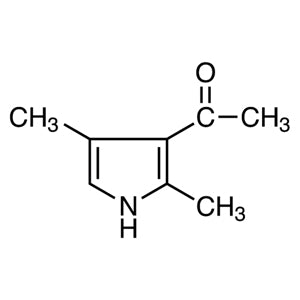
3-Acetyl-2,4-dimethylpyrrole TCI A2734
Regular price From Rp 1.724.100,00Regular price -
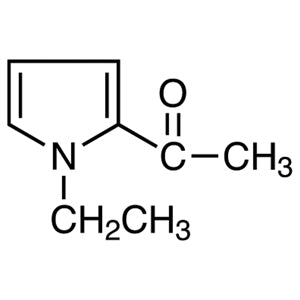
2-Acetyl-1-ethylpyrrole TCI A1977
Regular price From Rp 955.500,00Regular price -
Ethyl2,4-Dimethylpyrrole-3-carboxylate TCI E1075
Regular price From Rp 955.500,00Regular price