TCI M1144 3-Methylpyrrole is a simple pyrrole derivative bearing a methyl group at the 3-position of the ring, that is, the beta position of this electron-rich five-membered heterocyclic system. Pyrrole is one of the most fundamental heterocyclic cores in organic chemistry, present in porphyrins, chlorophyll, heme, and a wide range of natural products and drug molecules. Beta-substituted isomers such as this one are encountered relatively less often than their 2-position counterparts, which makes their availability important for researchers who need a specific substitution pattern to construct target molecules with the correct regiochemistry.
The property that defines its utility is the electron-rich aromatic character of the pyrrole ring, which makes the compound highly reactive toward electrophiles, particularly at the still-unoccupied 2- and 5-positions. This high reactivity is an advantage in synthesis, because transformations such as Vilsmeier formylation, acylation, and halogenation proceed under mild conditions. The same property, however, makes the compound sensitive to air, light, and acid, with a tendency to darken and polymerize if it is not stored correctly. The methyl group at the 3-position slightly increases the electron density of the ring while also serving as a regiochemical marker within the target structure.
In Indonesian laboratories, a building block of this kind is generally used in academic and industrial research groups working on organic synthesis, heterocyclic chemistry, and materials derived from pyrrole. It is typically requested in small quantities for method development, route scouting, and the preparation of intermediates, rather than in bulk. Because handling conditions matter as much as the material itself, it is usually stored alongside other sensitive reagents and drawn out only in the amounts needed for a given experiment.
Related TCI products
- Heterocyclic building block synthesis: the free 2- and 5-positions allow controlled electrophilic functionalization, giving chemists a direct entry into more elaborate beta-substituted pyrrole scaffolds.
- Vilsmeier formylation studies: the electron-rich ring reacts readily under mild Vilsmeier conditions, making this compound a convenient substrate for introducing aldehyde functionality onto pyrrole cores.
- Porphyrin and macrocycle research: because pyrrole is the fundamental unit of porphyrins, chlorophyll, and heme, this beta-methylated variant supports work on substituted macrocyclic systems.
- Medicinal chemistry intermediate preparation: pyrrole appears in many natural products and drug molecules, so this defined regiochemistry helps researchers assemble target structures with the intended substitution pattern.
- Acylation and halogenation method development: the high electrophilic reactivity of the ring lets method chemists evaluate reaction conditions, selectivity, and catalyst systems under comparatively mild laboratory conditions.
| Brand | TCI |
|---|---|
| CAS number | 616-43-3 |
| Molecular formula | — |
| Purity | — |
| Category | Chemistry > Building Blocks > Heterocyclic Building Blocks |
| Pack sizes | available in TCI research-scale packaging; please confirm the current pack options when ordering |
| Physical form | — |
| Storage | sensitive to air, light, and acid; store under conditions that prevent darkening and polymerization |
- Chemical name: 3-Methylpyrrole (product code M1144)
Store this compound in a tightly closed container, protected from light and away from acidic materials, since exposure to air, light, or acid causes darkening and eventual polymerization. Amber glass or an equivalent light-protecting container is appropriate, and an inert atmosphere is advisable for material that will be opened repeatedly. Handle it in a fume hood using gloves, safety glasses, and a laboratory coat, and keep it away from oxidizing agents and ignition sources. Dispense only the quantity required for an experiment, close the container promptly, and consult the manufacturer's safety data sheet before first use.
—
Produk Terkait
-
2-Acetyl-1-methylpyrrole TCI A1014
Regular price From Rp 1.115.100,00Regular price -
Methyl1-Methylpyrrole-2-acetate TCI M0846
Regular price From Rp 1.220.100,00Regular price -
1-Methylpyrrole TCI M0414
Regular price From Rp 1.060.500,00Regular price -
3,4-Diethyl-2-ethoxycarbonyl-5-methylpyrrole TCI D2217
Regular price From Rp 3.127.950,00Regular price -
1,2,5-Trimethylpyrrole TCI T1939
Regular price From Rp 1.193.850,00Regular price -
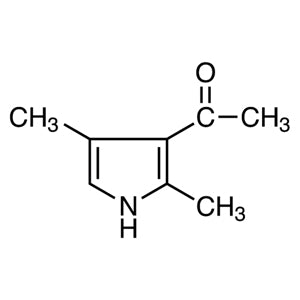
3-Acetyl-2,4-dimethylpyrrole TCI A2734
Regular price From Rp 1.724.100,00Regular price -
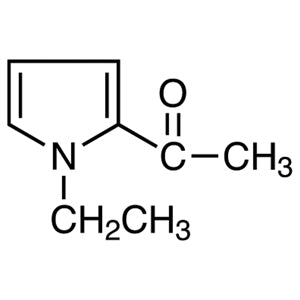
2-Acetyl-1-ethylpyrrole TCI A1977
Regular price From Rp 955.500,00Regular price -
Ethyl2,4-Dimethylpyrrole-3-carboxylate TCI E1075
Regular price From Rp 955.500,00Regular price