Ethyl 2,4-Dimethylpyrrole-3-carboxylate is a versatile organic compound widely used in laboratory settings for the synthesis of heterocyclic compounds. As a building block in organic chemistry, it serves as a key intermediate in the development of complex molecular structures. Its unique molecular framework, featuring a pyrrol ring modified with ethyl and methyl groups, enables it to participate in a variety of chemical reactions. This compound is particularly valuable in the field of heterocyclic chemistry due to its ability to undergo substitution and cyclization reactions under controlled conditions.
The compound's stability and controlled reactivity make it a preferred choice for synthetic chemists. Its ability to interact with various reagents such as acids, bases, and alkali metals allows for a wide range of chemical transformations. This versatility is especially important in research environments where the synthesis of new compounds with specific functional groups is required. Its chemical properties also make it suitable for use in both academic and industrial research.
In Indonesian laboratories, Ethyl 2,4-Dimethylpyrrole-3-carboxylate is commonly used in organic chemistry and pharmaceutical research. It is a fundamental reagent in the development of bioactive compounds and is frequently employed in experiments aimed at creating molecules with specific biological activities. Its availability and reliability make it a standard component in many research projects across various scientific institutions in Indonesia.
- Organic synthesis of heterocyclic compounds due to its stable molecular structure and reactivity.
- Development of bioactive molecules in pharmaceutical research for drug discovery applications.
- Cyclization reactions in the formation of complex ring structures in synthetic chemistry.
- Substitution reactions for the modification of functional groups in organic molecules.
- Research in medicinal chemistry for the design of new therapeutic agents and chemical probes.
| Brand | TCI |
|---|---|
| CAS number | 2199-51-1 |
| Molecular formula | — |
| Purity | — |
| Category | Chemistry > Building Blocks > Heterocyclic Building Blocks |
| Pack sizes | Available in standard laboratory quantities |
| Physical form | Solid or liquid depending on supplier packaging |
| Storage | — |
Ethyl 2,4-Dimethylpyrrole-3-carboxylate should be stored in a cool, dry place away from direct sunlight. It is recommended to keep the compound in a sealed container to prevent moisture absorption and contamination. For long-term storage, it should be kept in a refrigerator at a temperature below 15°C. Proper ventilation is essential when handling the compound to minimize exposure to vapors. Always use appropriate personal protective equipment, such as gloves and safety goggles, when working with this material. The compound is generally non-hazardous under normal laboratory conditions but should be handled with care as per standard chemical safety protocols.
—
Produk Terkait
-
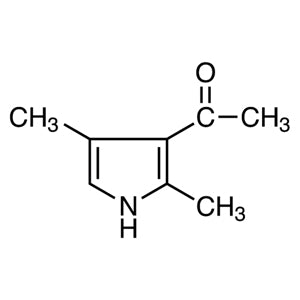
3-Acetyl-2,4-dimethylpyrrole TCI A2734
Regular price Rp 1.776.600,00Regular priceRp 1.257.900,00Sale price Rp 1.776.600,00 -
3-Ethyl-2,4-dimethylpyrrole TCI E0555
Regular price Rp 1.298.850,00Regular priceRp 924.000,00Sale price Rp 1.298.850,00 -
2,4-Dimethylpyrrole TCI D2848
Regular price Rp 1.272.600,00Regular priceRp 905.100,00Sale price Rp 1.272.600,00 -
2,5-Dimethylpyrrole TCI D0260
Regular price Rp 1.060.500,00Regular priceRp 757.050,00Sale price Rp 1.060.500,00 -
1,2,5-Trimethylpyrrole TCI T1939
Regular price Rp 1.246.350,00Regular priceRp 887.250,00Sale price Rp 1.246.350,00 -
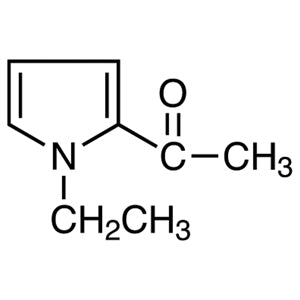
2-Acetyl-1-ethylpyrrole TCI A1977
Regular price Rp 1.008.000,00Regular priceRp 720.300,00Sale price Rp 1.008.000,00 -
2-Acetyl-1-methylpyrrole TCI A1014
Regular price Rp 1.167.600,00Regular priceRp 831.600,00Sale price Rp 1.167.600,00 -
3-Methylpyrrole TCI M1144
Regular price Rp 9.275.700,00Regular priceRp 6.501.600,00Sale price Rp 9.275.700,00