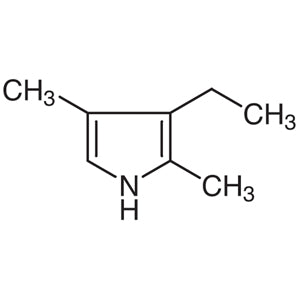
TCI E0555 3-Ethyl-2,4-dimethylpyrrole, also known by its common name cryptopyrrole, is a five-membered heterocyclic compound of the pyrrole class that carries alkyl substituents at three positions on its ring. In organic synthesis laboratories, this material serves as an early-stage building block used to assemble much larger and more complex molecules. Its electron-rich pyrrole ring makes it a classic entry point toward dipyrromethene systems, porphyrins, and boron-based fluorescent dyes. For this reason the compound is rarely an end product in itself; instead it functions as an intermediate whose quality determines the success of the entire downstream synthetic sequence.
The characteristic that leads chemists to select this compound lies in its highly directed substitution pattern. The methyl groups at positions 2 and 4, together with the ethyl group at position 3, effectively block most of the reactive positions on the ring, so that condensation and acylation reactions proceed at the intended position without generating many side products. This matters because unsubstituted pyrrole tends to react unselectively and readily undergoes polymerisation. The high nucleophilic character of the ring also makes the compound responsive under mild conditions, which supports reproducible results across repeated preparations.
In Indonesian laboratories, this building block is typically found in university organic chemistry research groups, in materials and dye synthesis work, and in government or private research institutes developing fluorescent probes and porphyrin-related systems. It is generally ordered in modest quantities appropriate to bench-scale multi-step synthesis rather than in bulk, since it is consumed as an intermediate. Users usually pair it with standard inert-atmosphere technique and routine analytical verification before committing it to a longer reaction sequence.
- Dipyrromethene synthesis: the blocked ring positions direct condensation with aldehydes to the single intended site, giving cleaner dipyrromethene intermediates than unsubstituted pyrrole would allow in the same step.
- BODIPY and boron-based fluorescent dye preparation: the alkyl substitution pattern provides the defined regiochemistry that boron-dipyrromethene dye frameworks require for predictable, reproducible optical behaviour in downstream photophysical work.
- Porphyrin and macrocycle construction: as a classic entry point toward porphyrin systems, it supplies a pyrrole unit whose substitution controls how the four-unit macrocyclic ring closes.
- Acylation and electrophilic substitution studies: the electron-rich, highly nucleophilic ring reacts readily under mild conditions, making it a dependable substrate for teaching and investigating heterocyclic reactivity.
- Multi-step organic synthesis as an early intermediate: because it is a foundational building block rather than a final product, it anchors longer synthetic routes toward larger, more complex target molecules.
| Brand | TCI (Tokyo Chemical Industry) |
|---|---|
| CAS number | 517-22-6 |
| Molecular formula | — |
| Purity | — |
| Category | Chemistry > Building Blocks > Heterocyclic Building Blocks |
| Pack sizes | available in standard TCI research pack sizes; please confirm the currently offered options when ordering |
| Physical form | — |
| Storage | store according to the conditions stated on the manufacturer's label and safety data sheet |
- Catalogue Number: E0555
- Chemical Class: alkyl-substituted five-membered pyrrole heterocycle (common name: cryptopyrrole)
Store this material in a cool, dark place in its original tightly closed container, following the storage conditions specified on the manufacturer's label and safety data sheet. As an electron-rich pyrrole derivative, it is sensitive to air and light and is best kept under an inert atmosphere where the supplied packaging allows, since oxidation and polymerisation degrade its usefulness as a synthetic intermediate. Handle it inside a functioning fume hood using safety glasses, chemical-resistant gloves, and a laboratory coat. Keep it away from strong oxidising agents, ignition sources, and heat. Allow sealed containers to reach ambient temperature before opening to prevent moisture condensation, and always consult the safety data sheet before first use.
—
Produk Terkait
-
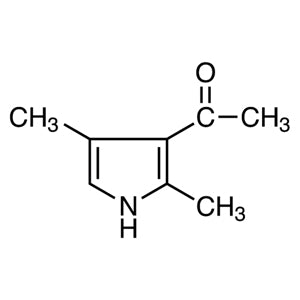
3-Acetyl-2,4-dimethylpyrrole TCI A2734
Regular price From Rp 1.724.100,00Regular price -
Ethyl2,4-Dimethylpyrrole-3-carboxylate TCI E1075
Regular price From Rp 955.500,00Regular price -
2,4-Dimethylpyrrole TCI D2848
Regular price From Rp 1.220.100,00Regular price -
2,5-Dimethylpyrrole TCI D0260
Regular price From Rp 1.008.000,00Regular price -
1,2,5-Trimethylpyrrole TCI T1939
Regular price From Rp 1.193.850,00Regular price -
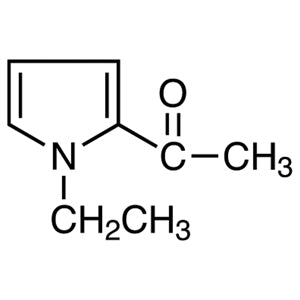
2-Acetyl-1-ethylpyrrole TCI A1977
Regular price From Rp 955.500,00Regular price -
2-Acetyl-1-methylpyrrole TCI A1014
Regular price From Rp 1.115.100,00Regular price -
3-Methylpyrrole TCI M1144
Regular price From Rp 9.223.200,00Regular price