

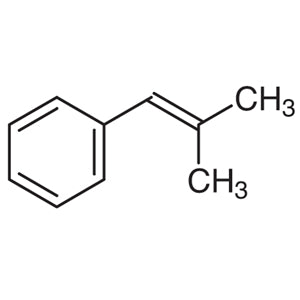
TCI M1015 2-Methyl-1-phenylpropene is an unsaturated hydrocarbon that combines a phenyl ring with a trisubstituted double bond, placing it among the aromatic alkenes within the non-heterocyclic building block group. The compound is often described as the beta-methyl analogue of a branched styrene, and it is widely used not only as a synthetic intermediate but also as a model substrate. In the laboratory, its role is to supply a double bond with a distinctive steric and electronic environment for probing addition reactions, oxidations, and transformations mediated by transition metals and photocatalysts.
The characteristics that make this material a preferred choice are the high substitution level of its double bond and its conjugation with the aromatic ring. This combination stabilises positively charged intermediates at the benzylic carbon, so reactions proceeding through benzylic cation or radical mechanisms become easier to observe and to control. The two geminal methyl groups at the opposite end of the double bond impose clear steric hindrance, which makes the compound useful for testing how well a given catalyst can handle a bulky alkene. As a liquid, it is also straightforward to measure and to introduce into reaction mixtures.
In Indonesian laboratories, 2-Methyl-1-phenylpropene is typically encountered in university and institutional research settings where organic synthesis and catalysis studies are carried out. It serves research groups developing new catalytic methods, students learning alkene reactivity in advanced practical courses, and laboratories that need a well-defined aromatic alkene as a reference substrate when comparing reaction conditions. Its role as a building block also suits groups preparing more elaborate molecular targets step by step.
- Catalyst screening studies, where the bulky trisubstituted double bond reveals how effectively a candidate catalyst tolerates sterically demanding aromatic alkene substrates.
- Benzylic cation and radical mechanism investigations, since conjugation with the phenyl ring stabilises the reactive intermediate and makes mechanistic pathways easier to follow and control.
- Oxidation chemistry development, in which the electron-rich substituted double bond provides a clear and reproducible site for evaluating new oxidising systems and their selectivity.
- Photocatalytic transformation research, where this aromatic alkene acts as a model substrate for testing light-driven additions and the reactivity profile of new photocatalysts.
- Multi-step synthetic work as a non-heterocyclic building block, contributing a phenyl-bearing branched alkene fragment to intermediates destined for more elaborate target molecules.
| Brand | TCI |
|---|---|
| CAS number | 768-49-0 |
| Molecular formula | — |
| Purity | — |
| Category | Chemistry > Building Blocks > Non-Heterocyclic Building Blocks |
| Pack sizes | available in the standard TCI catalogue pack sizes; please confirm the required size when ordering |
| Physical form | liquid |
| Storage | keep in a cool, well-ventilated place in a tightly closed container, away from heat and ignition sources |
- Product code: M1015
Store 2-Methyl-1-phenylpropene in its original tightly closed container in a cool, dry, and well-ventilated area, away from heat, sparks, open flames, and direct sunlight. Chemically compatible glass bottles with secure closures are appropriate, and containers should be kept upright and clearly labelled. Handle the material inside a fume hood, and wear safety glasses, chemically resistant gloves, and a laboratory coat. Avoid contact with strong oxidising agents, keep containers closed when not in use to limit vapour release, and follow the safety data sheet together with your institutional procedures for spill response and waste disposal.
—
Produk Terkait
-
9-Vinylanthracene TCI V0130
Regular price From Rp 2.545.200,00Regular price -
1,4-Bis(4-methylstyryl)benzene TCI B1550
Regular price Rp 5.194.350,00Regular price -
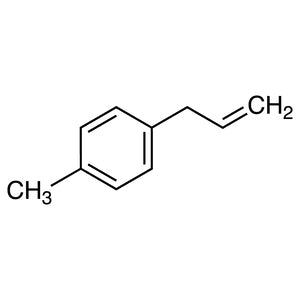
4-Allyltoluene TCI A3685
Regular price Rp 1.644.300,00Regular price -
Allylbenzene TCI P0609
Regular price From Rp 1.565.550,00Regular price -
beta-Methylstyrene(cis-andtrans-mixture)(stabilizedwithTBC) TCI P0495
Regular price Rp 4.771.200,00Regular price -
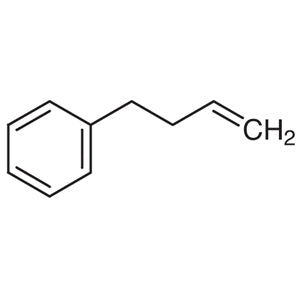
4-Phenyl-1-butene TCI P0161
Regular price From Rp 848.400,00Regular price -
(2-Methylallyl)benzene TCI M3806
Regular price From Rp 2.625.000,00Regular price -
(mixtureof1H-and3H-form) TCI M1425
Regular price From Rp 3.287.550,00Regular price





![2-Methylbenzo[e]indene (mixture of 1H- and 3H-form) - AMI Scientific](http://amiscientific.com/cdn/shop/files/TCI2510M1425.jpg?v=1767124955&width=533)