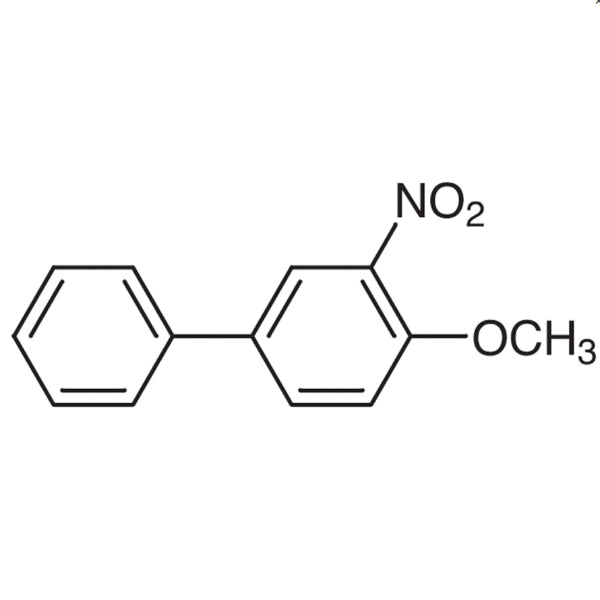
4-Methoxy-3-nitrobiphenyl is a chemical compound widely used as a foundational building block in the synthesis of complex molecules. It plays a crucial role in organic chemistry laboratories, where it serves as an intermediate in various chemical reactions. Its aromatic structure provides stability, making it a reliable component in the development of new compounds. This compound is particularly valued for its ability to participate in multiple functional group interactions, offering versatility in synthetic pathways.
The compound's reactivity and functional group compatibility make it a preferred choice for researchers. Its unique electronic properties, derived from the methoxy and nitro substituents, enable it to engage in substitution and electrophilic reactions. These characteristics allow it to be tailored for specific synthetic needs, enhancing its utility in organic synthesis. Its consistent chemical behavior under controlled conditions ensures predictable results, simplifying both manipulation and storage processes.
In Indonesian laboratories, 4-Methoxy-3-nitrobiphenyl is extensively used in scientific research, especially in the fields of organic chemistry and material science. Its application spans across various studies aimed at modifying molecular structures and developing new chemical entities. The compound's reliability and adaptability make it a staple in both academic and industrial research settings, supporting innovation and discovery in chemical sciences.
Related TCI products
- TCI N0560 885-82-5 4-Hydroxy-3-nitrobiphenyl
- TCI H0753 20281-23-6 4-Hydroxy-2'-nitrobiphenyl
- TCI M0997 2143-90-0 4-Methoxy-4'-nitrobiphenyl
- TCI B4723 115929-59-4 2-Bromo-4-methoxy-6-nitrophenol
- TCI B4539 173336-76-0 4-Bromo-1-methoxy-2-(3-methoxypropoxy)benzene
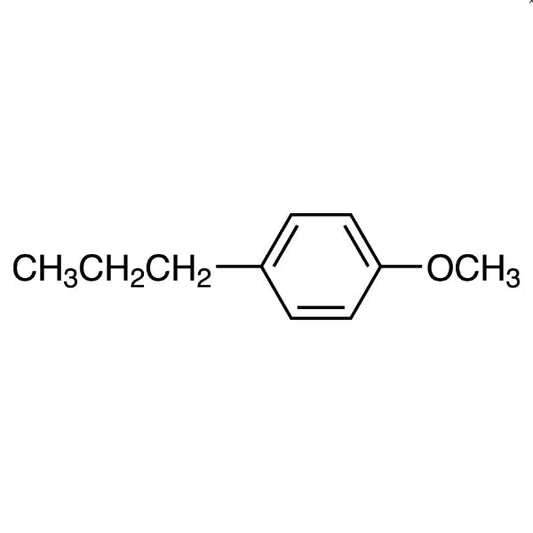
- TCI P3068 104-45-0 1-Methoxy-4-propylbenzene
- Organic Synthesis: This compound is ideal for constructing complex molecular structures due to its aromatic framework and functional group versatility.
- Material Science Research: Its unique electronic properties make it suitable for studies involving conductive or optoelectronic materials.
- Functional Group Modification: The presence of methoxy and nitro groups allows for targeted chemical modifications in synthetic pathways.
- Reaction Intermediate Studies: It serves as a key intermediate in electrophilic and nucleophilic substitution reactions, facilitating the development of new compounds.
- Structural Analysis: Its stable nature makes it useful in spectroscopic studies to understand molecular interactions and reaction mechanisms.
| Brand | TCI |
|---|---|
| CAS number | 15854-73-6 |
| Molecular formula | — |
| Purity | — |
| Category | Chemistry > Building Blocks > Non-Heterocyclic Building Blocks |
| Pack sizes | Available in various quantities as per standard laboratory requirements |
| Physical form | Solid |
| Storage | Store in a cool, dry place away from direct sunlight |
This compound should be stored in a cool, dry environment to maintain its chemical stability. It is recommended to keep it in a sealed container to prevent moisture absorption and contamination. Due to its reactivity, it should be handled in a well-ventilated area, with appropriate personal protective equipment worn at all times. Avoid exposure to heat or direct light, as these conditions may affect its integrity. Proper labeling and storage in a designated chemical storage area are essential to ensure safety and prevent accidental use. Regular inspection of storage conditions is advised to maintain optimal handling and safety standards in the laboratory.
—
Produk Terkait
-
4-Hydroxy-3-nitrobiphenyl TCI N0560
Regular price From Rp 2.757.300,00Regular price -
4-Hydroxy-2'-nitrobiphenyl TCI H0753
Regular price From Rp 3.155.250,00Regular price -
4-Methoxy-4'-nitrobiphenyl TCI M0997
Regular price From Rp 769.650,00Regular price -
2-Bromo-4-methoxy-6-nitrophenol TCI B4723
Regular price From Rp 505.050,00Regular price -
4-Bromo-1-methoxy-2-(3-methoxypropoxy)benzene TCI B4539
Regular price From Rp 848.400,00Regular price -
1-Methoxy-4-propylbenzene TCI P3068
Regular price Rp 1.829.100,00Regular price -
2-Methoxy-6-nitrophenol TCI M3747
Regular price From Rp 2.889.600,00Regular price -
2-Methoxy-4-vinylphenol(stabilizedwithTBC) TCI M3600
Regular price From Rp 2.862.300,00Regular price