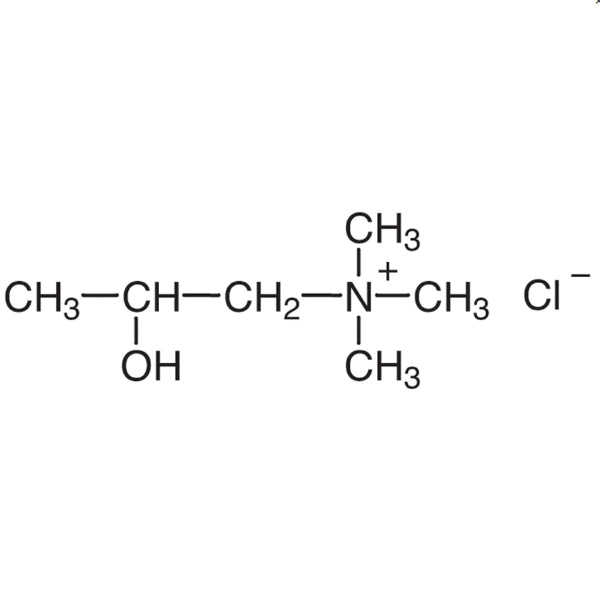
Beta-Methylcholine Chloride is a chemical compound widely used in laboratory settings for its versatility in chemical experiments and scientific research. As a fundamental building block, it plays a crucial role in the synthesis of more complex molecules, particularly in organic chemistry. Its simple molecular structure allows for easy manipulation and integration into various chemical reactions, making it a valuable tool for researchers. This compound is commonly used in the development of bioactive compounds, contributing to advancements in pharmacology and biochemistry. Its presence in Indonesian laboratories underscores its importance in both academic and industrial research environments.
One of the key attributes that make Beta-Methylcholine Chloride a preferred choice is its chemical stability under controlled conditions. This stability ensures consistent performance during experiments, reducing the risk of unexpected reactions or degradation. Additionally, its good solubility in organic solvents enhances its applicability across a wide range of chemical processes. These properties make it an ideal candidate for use in both small-scale laboratory experiments and larger-scale research projects. The high purity and consistent quality of the compound further support its reliability in scientific applications.
In Indonesian laboratories, Beta-Methylcholine Chloride is frequently utilized in organic chemistry, pharmaceutical, and biochemical research. It is a common reagent in experiments aimed at synthesizing new compounds, studying molecular interactions, and developing drug candidates. Its role in scientific research is essential, supporting both undergraduate and advanced research activities in universities and research institutions across Indonesia.
Related TCI products
- TCI M0598 26112-50-5 beta-Methylcholine Iodide
- TCI I0802 98995-40-5 4-Isopropoxybenzenesulfonyl Chloride
- TCI B5121 836-42-0 4-(Benzyloxy)benzyl Chloride
- TCI P1386 2651-46-9 4-Phenoxybutyl Chloride
- TCI P0638 122-35-0 2-Phenoxypropionyl Chloride
- TCI M1006 18092-54-1 4-Methoxy-2-nitrobenzenesulfonyl Chloride
- Organic synthesis experiments benefit from Beta-Methylcholine Chloride due to its role as a versatile building block in creating complex molecular structures.
- Pharmaceutical research often incorporates this compound in the development of bioactive molecules, contributing to drug discovery and formulation.
- Biochemical studies use it to investigate molecular interactions and enzyme mechanisms, supporting fundamental biological research.
- Analytical chemistry applications rely on its solubility and stability for accurate compound identification and quantification.
- Teaching laboratories use it to demonstrate chemical reactions and molecular synthesis techniques to students in chemistry and pharmacology courses.
| Brand | TCI |
|---|---|
| CAS number | 2382-43-6 |
| Molecular formula | — |
| Purity | — |
| Category | Chemistry > Building Blocks > Non-Heterocyclic Building Blocks |
| Pack sizes | Available in various quantities to suit different research needs |
| Physical form | Solid, crystalline powder |
| Storage | Store in a cool, dry place away from moisture and direct sunlight |
Beta-Methylcholine Chloride should be stored in a cool, dry environment to maintain its chemical stability and prevent degradation. It is recommended to keep the compound in a tightly sealed container to avoid exposure to moisture, which can affect its purity and performance. Suitable storage containers include glass or high-density polyethylene (HDPE) bottles, which provide protection against chemical interactions. In laboratory settings, it is important to handle the compound with care, using appropriate personal protective equipment such as gloves and safety goggles. Proper labeling of storage containers ensures safe handling and easy identification. Regular monitoring of storage conditions helps maintain the integrity of the compound for long-term use in research applications.
—
Produk Terkait
-
beta-MethylcholineIodide TCI M0598
Regular price Rp 6.599.250,00Regular price -
4-IsopropoxybenzenesulfonylChloride TCI I0802
Regular price From Rp 2.597.700,00Regular price -
4-(Benzyloxy)benzylChloride TCI B5121
Regular price From Rp 1.724.100,00Regular price -
4-PhenoxybutylChloride TCI P1386
Regular price Rp 1.803.900,00Regular price -
2-PhenoxypropionylChloride TCI P0638
Regular price From Rp 1.298.850,00Regular price -
4-Methoxy-2-nitrobenzenesulfonylChloride TCI M1006
Regular price From Rp 1.115.100,00Regular price -
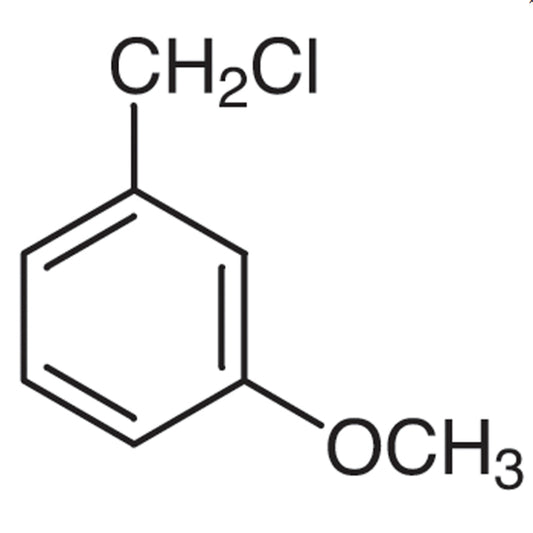
3-MethoxybenzylChloride TCI M0820
Regular price From Rp 1.035.300,00Regular price -
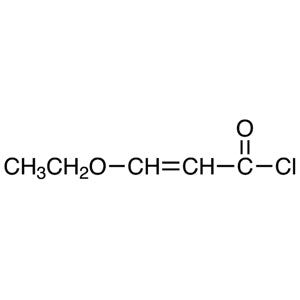
3-EthoxyacryloylChloride TCI E1066
Regular price Rp 3.630.900,00Regular price