

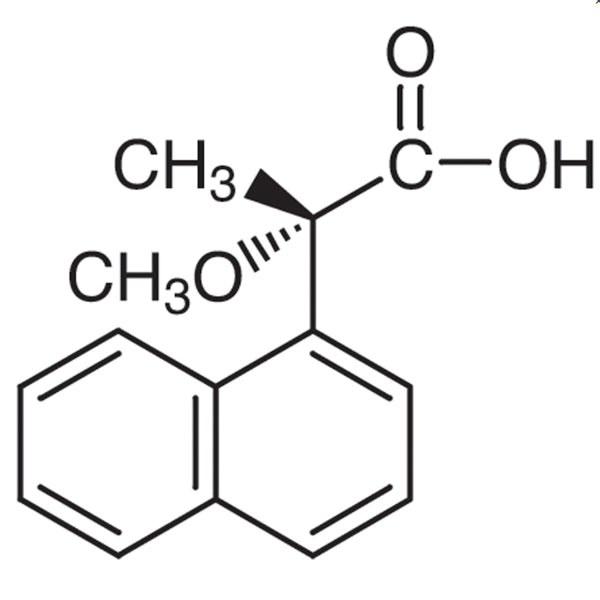
(S)-(+)-2-Methoxy-2-(1-naphthyl)propionic Acid is a chemical compound widely used in analytical chemistry and spectroscopy applications. It serves as a key reagent in various laboratory processes, supporting the identification and characterization of organic compounds. This compound is particularly valuable for its role in UV-Vis and IR spectroscopy, where it aids in the analysis of molecular structure and functional group behavior. Its presence in scientific research helps advance understanding of organic reactivity and molecular interactions.
The compound’s stability and high purity make it a preferred choice for analytical laboratories. Its complex molecular structure and functional groups, such as the carboxylic acid and naphthyl substituents, contribute to its reactivity in chemical reactions like esterification and hydrolysis. These properties ensure reliable results in analytical procedures, making it suitable for high-precision experiments. Its solubility in organic solvents such as ethyl acetate and acetone further enhances its utility in various analytical techniques.
In Indonesian laboratories, (S)-(+)-2-Methoxy-2-(1-naphthyl)propionic Acid is commonly used in scientific research, especially in the field of analytical chemistry. It supports studies on molecular structure, reactivity, and the development of new chemical compounds. Its application in both research and teaching environments ensures its relevance in advancing chemical knowledge and analytical methodologies.
Related TCI products
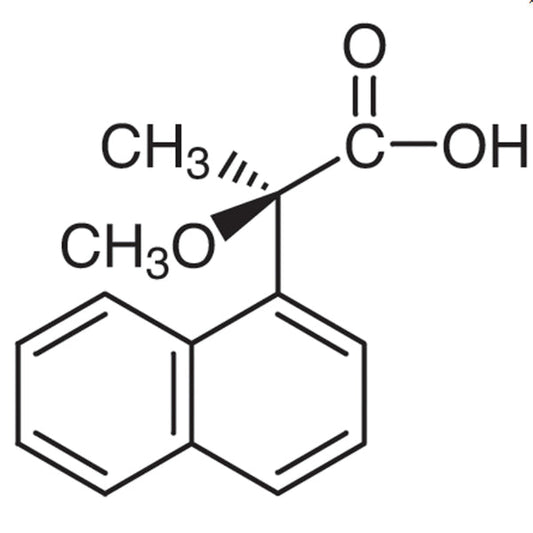
- TCI M1366 63628-26-2 (R)-(-)-2-Methoxy-2-(1-naphthyl)propionic Acid
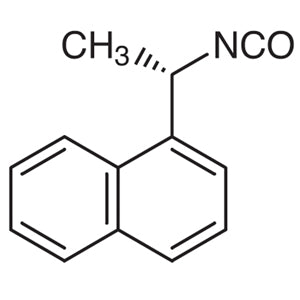
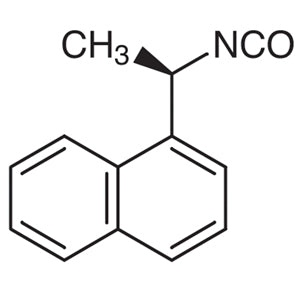
- TCI I0398 73671-79-1 (S)-(+)-1-(1-Naphthyl)ethyl Isocyanate
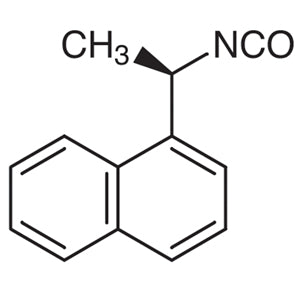
- TCI I0336 42340-98-7 (R)-(-)-1-(1-Naphthyl)ethyl Isocyanate
- TCI M1104 39637-99-5 (R)-(-)-alpha-Methoxy-alpha-(trifluoromethyl)phenylacetyl Chloride [for Determination of the optical purity of Alcohols and Amines]
- TCI M1103 20445-33-4 (S)-(+)-alpha-Methoxy-alpha-(trifluoromethyl)phenylacetyl Chloride [for Determination of the optical purity of Alcohols and Amines]
- TCI M0832 17257-71-5 (S)-(-)-alpha-Methoxy-alpha-(trifluoromethyl)phenylacetic Acid [Optical Resolving]
- UV-Vis Spectroscopy: This compound is ideal for UV-Vis spectroscopy due to its well-defined absorption characteristics, aiding in the identification of organic compounds.
- IR Spectroscopy: Its molecular structure provides distinct infrared absorption patterns, making it useful for functional group analysis in organic chemistry.
- Esterification Reactions: The carboxylic acid group enables participation in esterification, supporting the synthesis of ester derivatives in organic synthesis.
- Molecular Structure Analysis: Its complex structure makes it suitable for studies on molecular conformation and intermolecular interactions.
- Chemical Reactivity Studies: The presence of reactive functional groups allows for investigation into reactivity patterns and reaction mechanisms in organic chemistry.
| Brand | TCI |
|---|---|
| CAS number | 102691-93-0 |
| Molecular formula | — |
| Purity | — |
| Category | Analytical Chemistry > Analytical Reagents > Spectroscopy Reagents |
| Pack sizes | Available in standard laboratory quantities as specified by the supplier |
| Physical form | Solid or crystalline, depending on the batch |
| Storage | Store in a cool, dry place away from light and moisture |
This compound should be stored in a cool, dry environment, away from direct light and moisture to maintain its stability and purity. It is recommended to use airtight containers made of glass or polyethylene to prevent contamination and degradation. When handling, ensure proper ventilation and use appropriate personal protective equipment such as gloves and safety goggles. Avoid exposure to incompatible substances, and keep it away from heat sources. Regular inspection of storage conditions is advised to ensure the compound remains suitable for analytical use. Proper labeling and storage practices help maintain the integrity of the material for accurate laboratory results.
—
Produk Terkait
-
(R)-(-)-2-Methoxy-2-(1-naphthyl)propionicAcid TCI M1366
Regular price Rp 7.792.050,00Regular price -
(S)-(+)-1-(1-Naphthyl)ethylIsocyanate TCI I0398
Regular price From Rp 4.188.450,00Regular price -
(R)-(-)-1-(1-Naphthyl)ethylIsocyanate TCI I0336
Regular price From Rp 3.630.900,00Regular price -
(R)-(-)-alpha-Methoxy-alpha-(trifluoromethyl)phenylacetylChloride[forDeterminationoftheopticalpurityofAlcoholsandAmines] TCI M1104
Regular price From Rp 1.961.400,00Regular price -
(S)-(+)-alpha-Methoxy-alpha-(trifluoromethyl)phenylacetylChloride[forDeterminationoftheopticalpurityofAlcoholsandAmines] TCI M1103
Regular price From Rp 2.147.250,00Regular price -
(S)-(-)-alpha-Methoxy-alpha-(trifluoromethyl)phenylaceticAcid[OpticalResolving] TCI M0832
Regular price From Rp 5.034.750,00Regular price -
(R)-(+)-alpha-Methoxy-alpha-(trifluoromethyl)phenylaceticAcid[OpticalResolving] TCI M0831
Regular price From Rp 4.849.950,00Regular price -
2-Methoxy-2-(1-naphthyl)propionicAcid TCI M1368
Regular price Rp 14.123.550,00Regular price

![39637-99-5 (R)-(-)-alpha-Methoxy-alpha-(trifluoromethyl)phenylacetyl Chloride [for Determination of the optical purity of Alcohols and Amines] - AMI Scientific](http://amiscientific.com/cdn/shop/files/TCI2510M1104.jpg?v=1767124321&width=533)
![39637-99-5 (R)-(-)-alpha-Methoxy-alpha-(trifluoromethyl)phenylacetyl Chloride [for Determination of the optical purity of Alcohols and Amines] - AMI Scientific](http://amiscientific.com/cdn/shop/files/TCI2510M1104_236ece49-4f9f-41af-b05d-1c245793e6af.jpg?v=1772416878&width=533)
![20445-33-4 (S)-(+)-alpha-Methoxy-alpha-(trifluoromethyl)phenylacetyl Chloride [for Determination of the optical purity of Alcohols and Amines] - AMI Scientific](http://amiscientific.com/cdn/shop/files/TCI2510M1103.jpg?v=1767124317&width=533)
![20445-33-4 (S)-(+)-alpha-Methoxy-alpha-(trifluoromethyl)phenylacetyl Chloride [for Determination of the optical purity of Alcohols and Amines] - AMI Scientific](http://amiscientific.com/cdn/shop/files/TCI2510M1103_48fd9d46-fd63-46b5-a725-d1dc2b9fad47.jpg?v=1768819168&width=533)
![17257-71-5 (S)-(-)-alpha-Methoxy-alpha-(trifluoromethyl)phenylacetic Acid [Optical Resolving] - AMI Scientific](http://amiscientific.com/cdn/shop/files/TCI2510M0832.jpg?v=1769142869&width=533)
![20445-31-2 (R)-(+)-alpha-Methoxy-alpha-(trifluoromethyl)phenylacetic Acid [Optical Resolving] - AMI Scientific](http://amiscientific.com/cdn/shop/files/TCI2510M0831.jpg?v=1767123812&width=533)
