2-Methyl-6-nitrobenzoic Anhydride is a chemical compound widely used in organic reactions for the synthesis of complex molecules. As an anhydride of benzoic acid, it possesses high reactivity, making it a valuable reagent in various synthetic pathways. This compound is commonly employed in laboratory settings to facilitate reactions such as nucleophilic substitution and carbon-carbon bond formation. Its versatility allows it to be a key component in the development of heterocyclic compounds, pharmaceuticals, and industrial chemicals.
The compound’s reactivity stems from its anhydride functionality, which readily reacts with amines, alcohols, and other functional groups. This makes it a preferred choice for chemists seeking efficient and reliable synthetic routes. Its stability under controlled conditions also contributes to its practicality in laboratory applications. The compound’s ability to participate in a wide range of reactions, combined with its predictable behavior, ensures its reliability in both academic and industrial research environments.
In Indonesian laboratories, 2-Methyl-6-nitrobenzoic Anhydride is frequently used in organic chemistry research. It is a staple in academic institutions and research centers, where it supports the synthesis of complex molecules. Its availability and effectiveness make it a go-to reagent for researchers working on drug development, material science, and chemical synthesis. Its role in advancing chemical research is well-recognized in the Indonesian scientific community.
Advantages (TCI brochure)
- Shown in a condensation scheme with DMAP and Et3N
TCI brochures (PDF)
- Benzoic Anhydride Derivatives for Macrolactonization 2017-12-25 · p. 1
- Condensing Agents 2025-11-18 · p. 3
Related TCI products
- Synthesis of heterocyclic compounds due to its reactivity in forming carbon-carbon bonds and its compatibility with various functional groups.
- Development of pharmaceuticals as a key intermediate in the synthesis of drugs and medicinal compounds.
- Organic chemistry research for its versatility in facilitating nucleophilic substitution reactions and other synthetic transformations.
- Industrial chemical production as a reliable building block for the creation of specialty chemicals and materials.
- Academic teaching and experimentation in chemistry laboratories for its use in demonstrating reaction mechanisms and synthetic strategies.
From the TCI brochure
- Condensation
- M1439 (1.3 eq.), DMAP (10 mol%), Et3N (6 eq.), CH2Cl2, rt, 13 h (Condensation scheme shown in brochure)
| Brand | TCI |
|---|---|
| CAS number | 434935-69-0 |
| Molecular formula | — |
| Purity | — |
| Category | Chemistry > Building Blocks > Non-Heterocyclic Building Blocks |
| Pack sizes | Available in various quantities as per standard laboratory supply options |
| Physical form | Solid |
| Storage | Store in a cool, dry place away from moisture and direct sunlight |
This compound should be stored in a cool, dry environment to maintain its stability and reactivity. It is recommended to keep it in a sealed container to prevent exposure to moisture and air, which may affect its chemical integrity. Due to its reactivity, it should be handled with care, using appropriate personal protective equipment such as gloves and safety goggles. It is advisable to store it in a well-ventilated area to minimize any potential risks associated with its chemical nature. Proper labeling of storage containers is essential to ensure safe handling and prevent accidental exposure. Always follow standard laboratory safety protocols when working with reactive chemicals.
—
Produk Terkait
-
3-Bromo-4-nitrobenzoicAcid TCI B4786
Regular price From Rp 1.618.050,00Regular price -
2-Bromo-5-nitrobenzoicAcid TCI B3841
Regular price From Rp 1.565.550,00Regular price -
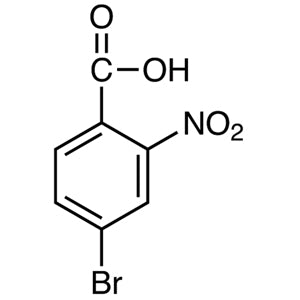
4-Bromo-2-nitrobenzoicAcid TCI B3810
Regular price From Rp 1.298.850,00Regular price -
4-Bromo-3-nitrobenzoicAcid TCI B3689
Regular price Rp 1.829.100,00Regular price -
2-Bromo-4-nitrobenzoicAcid TCI B3607
Regular price From Rp 903.000,00Regular price -
3-Bromo-5-nitrobenzoicAcid TCI B3370
Regular price From Rp 955.500,00Regular price -
2-Bromo-3-nitrobenzoicAcid TCI B3322
Regular price From Rp 3.817.800,00Regular price -
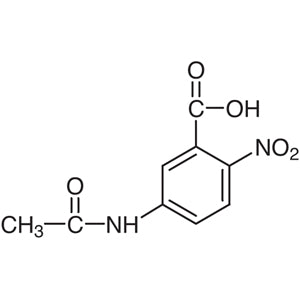
5-Acetamido-2-nitrobenzoicAcid TCI A2156
Regular price Rp 4.559.100,00Regular price