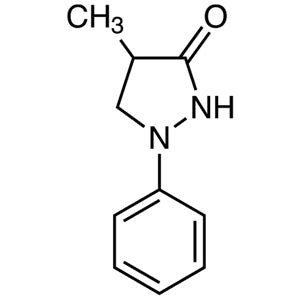
4-Methyl-1-phenyl-3-pyrazolidone is a chemical compound widely used in synthetic reactions to construct complex heterocyclic structures. It plays a crucial role in laboratory settings as a building block for the synthesis of various organic compounds. This compound is essential for researchers aiming to develop new materials, pharmaceuticals, and industrial chemicals. Its versatility makes it a valuable tool in organic chemistry, particularly in the design of molecules with specific functional groups.
The compound is preferred due to its stable chemical properties and good reactivity, which allow it to participate effectively in a wide range of chemical reactions. Its molecular structure, consisting of a pyrazolidone ring linked with methyl and phenyl groups, provides a strong foundation for further chemical modifications. Additionally, its solubility in organic solvents enhances its usability in diverse synthetic processes. These characteristics make it a reliable and efficient reagent for laboratory applications.
In Indonesian laboratories, 4-Methyl-1-phenyl-3-pyrazolidone is commonly used in organic chemistry research, especially in pharmaceutical and industrial chemical development. Its stability and reactivity make it a preferred choice for both academic and industrial research. It is frequently employed in the synthesis of complex molecules, contributing to advancements in drug discovery and material science. Its application is broad, supporting various scientific investigations in the chemical industry.
- Organic synthesis applications benefit from this compound’s ability to form stable heterocyclic structures, making it ideal for constructing complex molecules.
- Pharmaceutical research utilizes it as a key intermediate in the development of new drugs, due to its reactivity and structural versatility.
- Industrial chemical production relies on its stability and solubility, enabling efficient synthesis of various organic compounds.
- Academic research in chemistry uses it to explore new synthetic pathways and reaction mechanisms in heterocyclic chemistry.
- Material science applications take advantage of its molecular structure to design advanced polymers and functional materials.
| Brand | TCI |
|---|---|
| CAS number | 2654-57-1 |
| Molecular formula | — |
| Purity | — |
| Category | Chemistry > Building Blocks > Heterocyclic Building Blocks |
| Pack sizes | Available in various quantities as per supplier specifications |
| Physical form | Solid |
| Storage | Store in a cool, dry place away from light and moisture |
This compound should be stored in a cool, dry environment, away from direct light and moisture to maintain its stability. It is recommended to use airtight containers to prevent exposure to humidity and contaminants. Due to its chemical nature, it should be handled with care, using appropriate personal protective equipment such as gloves and safety goggles. It is important to ensure proper ventilation in the laboratory when working with this compound to minimize inhalation risks. Storage conditions should be consistent to avoid degradation, and it should be kept away from incompatible substances to ensure safety in the laboratory setting.
—
Produk Terkait
-
1-Phenyl-3-pyrazolidone TCI P0153
Regular price Rp 664.650,00Regular price -
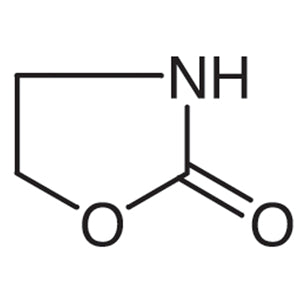
2-Oxazolidone TCI O0188
Regular price From Rp 1.538.250,00Regular price -
3-Methyl-2-oxazolidone TCI M0781
Regular price From Rp 1.035.300,00Regular price -
2-Mercapto-5-thiazolidone TCI M0263
Regular price Rp 4.213.650,00Regular price -
1-Phenyl-3-(2,4,6-trimethylphenyl)-2-pyrazoline TCI P1951
Regular price From Rp 3.525.900,00Regular price -
Furazolidone TCI F0821
Regular price Rp 3.419.850,00Regular price