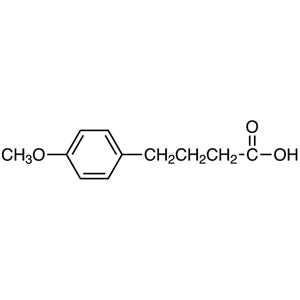
4-(4-Methoxyphenyl)butyric Acid is a chemical compound widely used as a foundational building block in the synthesis of complex organic compounds. This versatile reagent plays a crucial role in organic chemistry laboratories, particularly in the development of pharmaceuticals, industrial chemicals, and analytical reagents. Its molecular structure enables it to participate in various chemical reactions, making it a key component in the creation of aromatic and carbon-chain-based molecules. Due to its stability and predictable chemical behavior, it is a reliable choice for researchers seeking consistent results in their experiments.
The presence of a methoxy group on the aromatic ring imparts unique reactivity, allowing this compound to be involved in substitution and coupling reactions. This reactivity makes it highly suitable for applications requiring functional group modifications or molecular assembly. Its chemical properties ensure compatibility with a wide range of reaction conditions, making it a flexible and dependable option for both academic and industrial research settings.
In Indonesian laboratories, 4-(4-Methoxyphenyl)butyric Acid is commonly used in organic chemistry research, especially in the synthesis of pharmacological compounds and industrial chemicals. It is a valuable tool for scientists working on drug development and material science, contributing to the advancement of chemical innovation in the region.
- Organic synthesis is a primary application where this compound serves as a key intermediate in the creation of complex molecules, enabling the formation of aromatic and carbon-chain structures.
- Pharmaceutical research benefits from its role in the development of new drugs, as it can be modified to produce bioactive compounds with therapeutic potential.
- Industrial chemical production utilizes this reagent for the synthesis of specialty chemicals, contributing to the manufacturing of various commercial products.
- Analytical chemistry applications rely on its stability and reactivity for the preparation of standards and reagents used in qualitative and quantitative analysis.
- Material science research employs this compound in the development of new materials, leveraging its chemical versatility for functional group modification and polymer synthesis.
| Brand | TCI |
|---|---|
| CAS number | 4521-28-2 |
| Molecular formula | — |
| Purity | — |
| Category | Chemistry > Building Blocks > Non-Heterocyclic Building Blocks |
| Pack sizes | Available in various quantities as per standard laboratory supply |
| Physical form | Solid, crystalline appearance |
| Storage | Store in a cool, dry place away from direct sunlight and moisture |
This compound should be stored in a cool, dry environment to maintain its chemical stability and prevent degradation. It is recommended to use airtight containers to protect it from moisture and air exposure. While it does not require special handling under normal conditions, it should be kept away from incompatible substances such as strong oxidizing agents. In a laboratory setting, it is advisable to handle it with standard protective equipment, including gloves and safety goggles, to ensure safe usage. Proper labeling and storage conditions are essential to maintain its integrity and ensure safe handling in research environments.
—
Produk Terkait
-
4-(2-Methoxyphenyl)butyricAcid TCI M2926
Regular price From Rp 1.565.550,00Regular price -
4-(p-Tolyl)butyricAcid TCI T1727
Regular price From Rp 1.035.300,00Regular price -
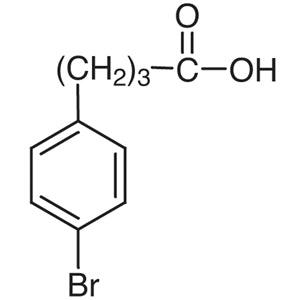
4-(4-Bromophenyl)butyricAcid TCI B3131
Regular price From Rp 1.087.800,00Regular price -
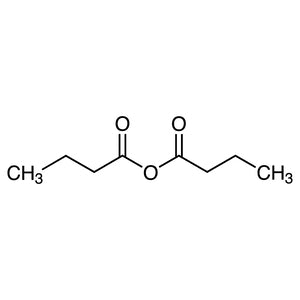
ButyricAnhydride TCI B0766
Regular price From Rp 584.850,00Regular price -
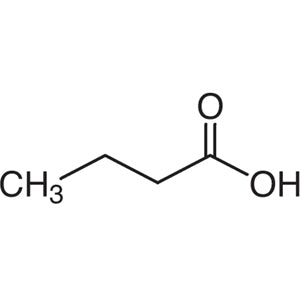
ButyricAcid TCI B0754
Regular price From Rp 477.750,00Regular price -
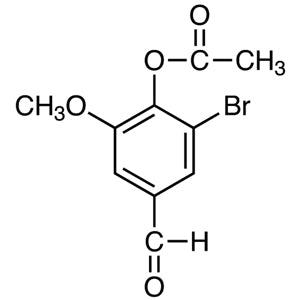
2-Bromo-4-formyl-6-methoxyphenylAcetate TCI B5230
Regular price Rp 1.749.300,00Regular price -
1,3-Bis(4-methoxyphenyl)-1,3-propanedione TCI B1733
Regular price From Rp 4.056.150,00Regular price -
5-Formyl-2-methoxyphenylAcetate TCI A2946
Regular price From Rp 2.466.450,00Regular price