

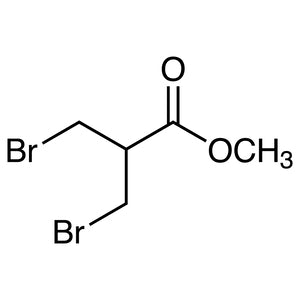
Methyl 3-Bromo-2-(bromomethyl)propionate is a chemical compound widely used in organic synthesis reactions within laboratory settings. This compound plays a crucial role in the development of complex molecular structures due to its unique brominated functional groups. Its chemical structure, featuring two bromo substituents, makes it a versatile building block for various synthetic pathways. It is particularly valuable in the creation of heterocyclic compounds and functionalized molecules, offering chemists a reliable starting point for a wide range of chemical transformations.
The compound’s high reactivity stems from its two bromo groups, which make it an ideal candidate for nucleophilic substitution and electrophilic reactions. Its chemical stability under controlled conditions allows for consistent performance in laboratory experiments. The compound’s ability to participate in coupling reactions and other synthetic strategies makes it a preferred choice for researchers aiming to synthesize complex organic molecules. Its predictable behavior and compatibility with various reaction conditions further enhance its utility in chemical research.
In Indonesian laboratories, this compound is commonly used in organic chemistry research, especially in the synthesis of complex compounds and the development of new materials. It is a key reagent in academic and industrial research settings, supporting both educational and applied scientific projects. Its availability and reliability make it a valuable resource for institutions engaged in chemical innovation and discovery.
Related TCI products
- TCI E0791 58539-11-0 Ethyl 3-Bromo-2-(bromomethyl)propionate
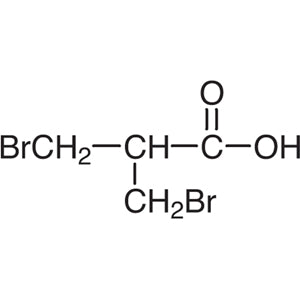
- TCI B3081 41459-42-1 3-Bromo-2-(bromomethyl)propionic Acid
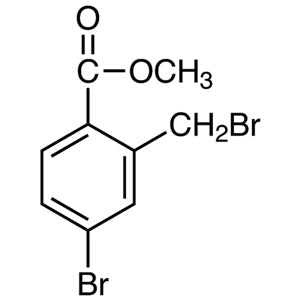
- TCI M2941 78471-43-9 Methyl 4-Bromo-2-(bromomethyl)benzoate
- TCI B4048 72707-66-5 2-(Bromomethyl)acrylic Acid
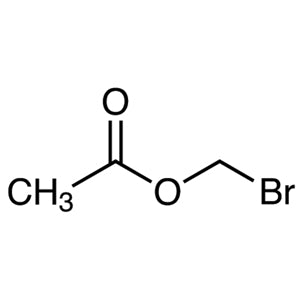
- TCI B3907 590-97-6 Bromomethyl Acetate
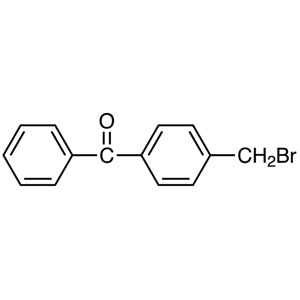
- TCI B3840 32752-54-8 4-(Bromomethyl)benzophenone
- Organic synthesis of heterocyclic compounds due to its brominated functional groups and reactivity.
- Development of functionalized molecules through nucleophilic and electrophilic substitution reactions.
- Coupling reactions in the creation of complex organic structures with controlled chemical modifications.
- Research in material science for the synthesis of new polymers and chemical intermediates.
- Educational use in teaching organic chemistry principles and synthetic methodologies to students.
| Brand | TCI |
|---|---|
| CAS number | 22262-60-8 |
| Molecular formula | — |
| Purity | — |
| Category | Chemistry > Building Blocks > Non-Heterocyclic Building Blocks |
| Pack sizes | Available in various quantities as per supplier specifications |
| Physical form | Liquid or solid, depending on the specific formulation |
| Storage | Store in a cool, dry place away from light and incompatible substances |
This compound should be stored in a cool, dry environment, away from direct sunlight and sources of heat. It is recommended to use airtight containers made of materials compatible with its chemical nature, such as glass or high-density polyethylene. Due to its brominated structure, it should be kept away from incompatible substances like strong bases or oxidizing agents. Proper ventilation is essential when handling the compound to minimize exposure. Laboratory personnel should wear appropriate personal protective equipment, including gloves and safety goggles, to ensure safe handling and prevent accidental contact. Regular monitoring of storage conditions is advised to maintain the compound’s integrity and ensure its effectiveness in laboratory applications.
—
Produk Terkait
-
Ethyl3-Bromo-2-(bromomethyl)propionate TCI E0791
Regular price From Rp 3.127.950,00Regular price -
3-Bromo-2-(bromomethyl)propionicAcid TCI B3081
Regular price From Rp 1.510.950,00Regular price -
Methyl4-Bromo-2-(bromomethyl)benzoate TCI M2941
Regular price From Rp 1.008.000,00Regular price -
2-(Bromomethyl)acrylicAcid TCI B4048
Regular price From Rp 3.817.800,00Regular price -
BromomethylAcetate TCI B3907
Regular price From Rp 2.227.050,00Regular price -
4-(Bromomethyl)benzophenone TCI B3840
Regular price Rp 5.803.350,00Regular price -
Methyl3-(Bromomethyl)benzoate TCI B2224
Regular price From Rp 1.856.400,00Regular price -
2-[4-(Bromomethyl)phenyl]propionicAcid TCI B2101
Regular price From Rp 505.050,00Regular price



![111128-12-2 2-[4-(Bromomethyl)phenyl]propionic Acid - AMI Scientific](http://amiscientific.com/cdn/shop/files/TCI2510B2101_3164fa18-db8c-41f7-9c31-4bf45a41bebb.jpg?v=1767335146&width=533)