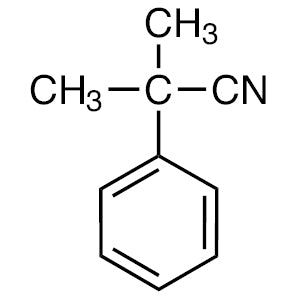
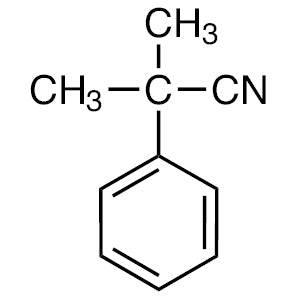
2-Methyl-2-phenylpropanenitrile is a chemical compound widely used as a foundational building block in organic synthesis. It plays a crucial role in laboratories where complex organic molecules are being developed. This compound is particularly valuable for its ability to participate in various chemical reactions, especially those involving nitrile functional groups. Its versatility makes it an essential tool for chemists working on the synthesis of aromatic and non-aromatic compounds.
The compound is known for its chemical stability and reactivity under specific conditions, which makes it ideal for substitution reactions and carbon-carbon bond formation. Its simple molecular structure allows for easy modification, enabling chemists to tailor its properties for different synthetic applications. The high reactivity of 2-Methyl-2-phenylpropanenitrile ensures that it can be effectively integrated into a wide range of chemical processes, making it a preferred choice among researchers.
In Indonesian laboratories, this compound is extensively used in organic chemistry research conducted by universities and research institutions. Its availability and cost-effectiveness make it a commonly sought-after material for experimental work. Researchers rely on it for the synthesis of complex aromatic compounds, where its structural simplicity and reactivity are key advantages. Its widespread use reflects its importance in both academic and industrial research settings.
TCI brochures (PDF)
- C-N Bond Formation Reactions 2025-08-07 · p. 6
Related TCI products
- TCI T3700 7391-28-8 3-Oxo-3-(p-tolyl)propanenitrile
- TCI D5989 140-73-8 N,N'-(Hexane-1,6-diyl)bis(3-phenylprop-2-en-1-imine)
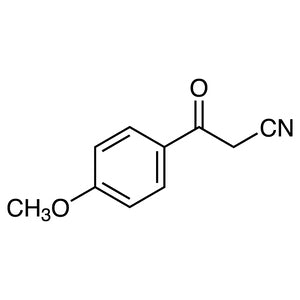
- TCI M3492 3672-47-7 3-(4-Methoxyphenyl)-3-oxopropanenitrile
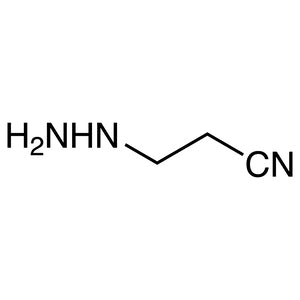
- TCI H1909 353-07-1 3-Hydrazinylpropanenitrile
- TCI B6477 41658-69-9 2-Bromo-2-methylpropanenitrile
- TCI B5950 101184-73-0 2-(4-Bromophenyl)-2-methylpropanenitrile
- Organic synthesis of aromatic compounds where nitrile functionality is required for structural modification.
- Development of complex organic molecules through substitution reactions and carbon-carbon bond formation.
- Research in pharmaceutical chemistry for the creation of drug-related compounds with specific functional groups.
- Preparation of intermediates for further chemical transformations in industrial and academic settings.
- Investigation of reaction mechanisms involving nitrile groups in both academic and applied research environments.
| Brand | TCI |
|---|---|
| CAS number | 1195-98-8 |
| Molecular formula | — |
| Purity | — |
| Category | Chemistry > Building Blocks > Non-Heterocyclic Building Blocks |
| Pack sizes | Available in various quantities as per standard laboratory supply options |
| Physical form | Liquid |
| Storage | Store in a cool, dry place away from direct sunlight and incompatible materials |
This compound should be stored in a cool, dry environment, away from direct sunlight and sources of heat. It is recommended to use airtight containers made of materials compatible with organic solvents to prevent contamination and evaporation. Due to its reactivity, it should be handled in a well-ventilated area, preferably under a fume hood, to minimize exposure. Avoid contact with strong acids or bases, as they may cause unwanted chemical reactions. Always use appropriate personal protective equipment, including gloves and safety goggles, when handling this material. Proper storage and handling ensure the compound remains stable and suitable for use in laboratory applications.
—
Produk Terkait
-
3-Oxo-3-(p-tolyl)propanenitrile TCI T3700
Regular price Rp 1.273.650,00Regular price -
N,N'-(Hexane-1,6-diyl)bis(3-phenylprop-2-en-1-imine) TCI D5989
Regular price Rp 1.936.200,00Regular price -
3-(4-Methoxyphenyl)-3-oxopropanenitrile TCI M3492
Regular price From Rp 1.035.300,00Regular price -
3-Hydrazinylpropanenitrile TCI H1909
Regular price Rp 1.485.750,00Regular price -
2-Bromo-2-methylpropanenitrile TCI B6477
Regular price From Rp 1.298.850,00Regular price -
2-(4-Bromophenyl)-2-methylpropanenitrile TCI B5950
Regular price From Rp 823.200,00Regular price -
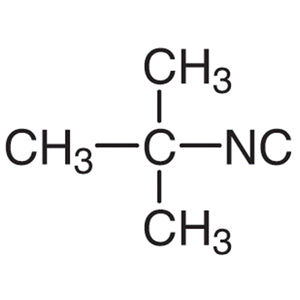
tert-ButylIsocyanide TCI B1274
Regular price From Rp 3.870.300,00Regular price -
tert-Butyl(3-Oxo-3-phenylpropyl)carbamate TCI B5981
Regular price Rp 4.584.300,00Regular price