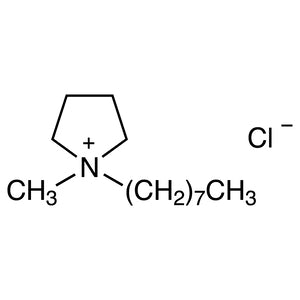
1-Methyl-1-octylpyrrolidin-1-ium Chloride is an ionic liquid that plays a significant role in modern laboratory research, particularly in the field of organic synthesis. As a specialty chemical, it serves as a non-volatile solvent and reaction medium, offering unique advantages over traditional solvents. Its ability to remain stable under extreme conditions makes it ideal for complex chemical reactions that require a controlled and consistent environment. This compound is widely used in laboratories for its versatility and performance in a variety of chemical processes.
The properties of 1-Methyl-1-octylpyrrolidin-1-ium Chloride make it a preferred choice for researchers. It is non-toxic and non-flammable, which enhances safety in laboratory settings. Its high viscosity allows for efficient separation and precipitation of components, improving the overall efficiency of chemical processes. Additionally, its high boiling point ensures that it remains in liquid form under most experimental conditions, eliminating the need for frequent replenishment. These characteristics contribute to its reliability and effectiveness in chemical applications.
In Indonesian laboratories, 1-Methyl-1-octylpyrrolidin-1-ium Chloride is commonly used in organic synthesis and chemical research. Its unique properties make it suitable for a wide range of applications, including catalytic reactions and solvent-based processes. Researchers in Indonesia rely on this compound for its stability, reactivity, and environmental benefits, making it a valuable tool in both academic and industrial settings.
TCI brochures (PDF)
- Ionic Liquids 2026-06-08 · p. 12
Related TCI products
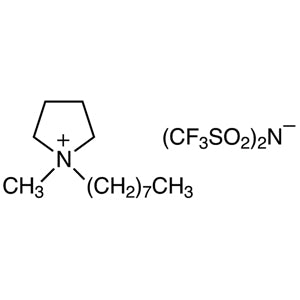
- TCI M3117 927021-43-0 1-Methyl-1-n-octylpyrrolidinium Bis(trifluoromethanesulfonyl)imide
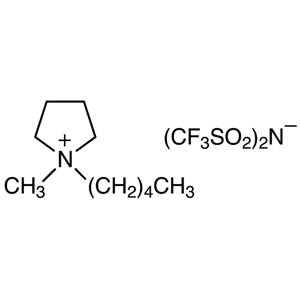
- TCI M3118 380497-17-6 1-Methyl-1-pentylpyrrolidinium Bis(trifluoromethanesulfonyl)imide
- TCI B3358 479500-35-1 1-Butyl-1-methylpyrrolidinium Chloride
- TCI M3562 1012794-01-2 1-(2-Methoxyethyl)-1-methylpyrrolidin-1-ium Chloride
- TCI H1824 380497-19-8 1-Hexyl-1-methylpyrrolidin-1-ium Bis((trifluoromethyl)sulfonyl)amide
- TCI E1498 223436-99-5 1-Ethyl-1-methylpyrrolidin-1-ium Bis[(trifluoromethyl)sulfonyl]amide
- Organic synthesis reactions benefit from this ionic liquid due to its non-volatile nature and high thermal stability, allowing for prolonged reaction times without evaporation.
- It is ideal for catalytic processes where a stable and inert medium is required, providing a consistent environment for reaction mechanisms to occur.
- In separation techniques, its high viscosity enables efficient precipitation and phase separation, improving the purity of final products.
- It is used in green chemistry applications as an eco-friendly alternative to traditional volatile solvents, reducing environmental impact.
- For high-temperature reactions, its high boiling point ensures it remains in liquid form, maintaining reaction conditions without the need for additional cooling systems.
| Brand | TCI |
|---|---|
| CAS number | 909398-60-3 |
| Molecular formula | — |
| Purity | — |
| Category | Chemistry > Specialty Synthesis > Ionic Liquids |
| Pack sizes | Available in various quantities as per supplier specifications |
| Physical form | Liquid |
| Storage | Store in a cool, dry place away from direct sunlight and incompatible materials |
This ionic liquid should be stored in a cool, dry environment to maintain its chemical integrity. It is recommended to use sealed containers made of glass or inert plastic to prevent contamination and evaporation. Due to its non-volatile nature, it does not require refrigeration but should be kept away from heat sources. In laboratory settings, it is essential to handle the material with appropriate personal protective equipment, including gloves and safety goggles. Regular inspection of storage containers is advised to ensure no leaks or exposure occur. Proper labeling and storage practices help ensure the safety and effectiveness of the compound in research applications.
—
Produk Terkait
-
1-Methyl-1-n-octylpyrrolidiniumBis(trifluoromethanesulfonyl)imide TCI M3117
Regular price From Rp 3.021.900,00Regular priceRp 2.128.350,00Sale price From Rp 3.021.900,00 -
1-Methyl-1-pentylpyrrolidiniumBis(trifluoromethanesulfonyl)imide TCI M3118
Regular price From Rp 955.500,00Regular priceRp 683.550,00Sale price From Rp 955.500,00 -
1-Butyl-1-methylpyrrolidiniumChloride TCI B3358
Regular price From Rp 1.326.150,00Regular priceRp 942.900,00Sale price From Rp 1.326.150,00 -
1-(2-Methoxyethyl)-1-methylpyrrolidin-1-iumChloride TCI M3562
Regular price From Rp 1.723.050,00Regular priceRp 1.220.100,00Sale price From Rp 1.723.050,00 -
1-Hexyl-1-methylpyrrolidin-1-iumBis((trifluoromethyl)sulfonyl)amide TCI H1824
Regular price From Rp 2.068.500,00Regular priceRp 1.461.600,00Sale price From Rp 2.068.500,00 -
1-Ethyl-1-methylpyrrolidin-1-iumBis[(trifluoromethyl)sulfonyl]amide TCI E1498
Regular price Rp 1.908.900,00Regular priceRp 1.350.300,00Sale price Rp 1.908.900,00 -
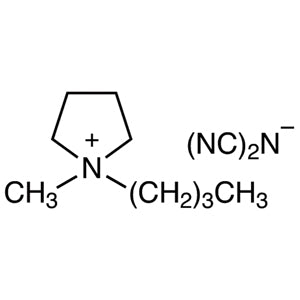
1-Butyl-1-methylpyrrolidiniumDicyanamide TCI B5453
Regular price From Rp 2.306.850,00Regular priceRp 1.628.550,00Sale price From Rp 2.306.850,00 -
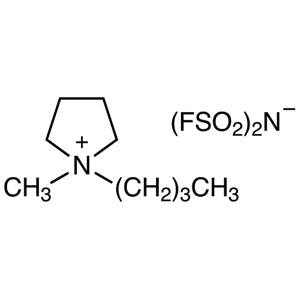
1-Butyl-1-methylpyrrolidiniumBis(fluorosulfonyl)imide TCI B5398
Regular price Rp 3.551.100,00Regular priceRp 2.499.000,00Sale price Rp 3.551.100,00