![328086-60-8 Methyl N-(tert-Butoxycarbonyl)-3-[(3S)-2-oxo-3-pyrrolidinyl]-L-alaninate - AMI Scientific](http://amiscientific.com/cdn/shop/files/TCI2510M3533.jpg?v=1767128385&width=1946)
![328086-60-8 Methyl N-(tert-Butoxycarbonyl)-3-[(3S)-2-oxo-3-pyrrolidinyl]-L-alaninate - AMI Scientific](http://amiscientific.com/cdn/shop/files/TCI2510M3533.jpg?v=1767128385&width=1445)
Methyl N-(tert-Butoxycarbonyl)-3-[(3S)-2-oxo-3-pyrrolidinyl]-L-alaninate is a specialized chemical compound used in organic and biochemical research, particularly in peptide synthesis. This compound plays a crucial role in laboratories by enabling the controlled modification of amino acid residues, which is essential for the development of complex biomolecules. Its unique structure allows for selective binding to specific amino acid sites, making it a valuable tool in the synthesis of peptides and proteins. In research settings, it supports the creation of bioactive compounds, including pharmaceuticals and biologics, by providing a stable and functional building block for molecular assembly.
The compound's preference in laboratory settings stems from its chemical stability under controlled conditions and its sensitivity to moisture and air exposure. The presence of the tert-butoxycarbonyl (Boc) group acts as a protective shield, preventing unwanted side reactions during synthesis. This protective functionality ensures that the compound remains chemically inert until the desired reaction conditions are met, offering researchers precise control over the synthesis process. These properties make it an essential component in advanced peptide chemistry applications.
In Indonesian laboratories, this compound is widely used by researchers in pharmaceutical, biochemical, and health sciences. It is a key reagent in drug development projects, protein modification studies, and molecular interaction research. Its availability supports the advancement of scientific work in these fields, contributing to the development of new therapeutic agents and biological molecules.
- Peptide Synthesis: This compound is ideal for constructing complex peptide sequences due to its ability to selectively bind to specific amino acid residues, ensuring accurate molecular assembly.
- Drug Development: It is commonly used in the synthesis of bioactive molecules, supporting the creation of pharmaceutical compounds with targeted biological activities.
- Protein Modification Studies: The compound facilitates the modification of protein structures, enabling researchers to study functional changes and interactions in biological systems.
- Molecular Interaction Research: Its structural properties allow for the investigation of molecular interactions, aiding in the understanding of biomolecular behavior and function.
- Biologics Research: It is a key reagent in the development of biologics, contributing to the design of therapeutic proteins and other advanced biological therapies.
| Brand | TCI |
|---|---|
| CAS number | 328086-60-8 |
| Molecular formula | — |
| Purity | — |
| Category | Chemistry > Chemical Biology > Peptide Chemistry |
| Pack sizes | Available in various quantities as per standard laboratory supply |
| Physical form | Solid powder |
| Storage | Requires protection from moisture and air exposure |
This compound should be stored in a dry, cool environment away from direct sunlight and sources of heat. It is recommended to use airtight containers to prevent exposure to moisture and air, which can degrade its chemical stability. Due to its sensitivity, it should be handled in a controlled laboratory setting with appropriate safety measures, such as gloves and a fume hood, to minimize any potential risks. Proper labeling and storage conditions are essential to maintain its integrity and ensure its effectiveness in research applications.
—
Produk Terkait
-
tert-ButylN-(tert-Butoxycarbonyl)-L-pyroglutamate TCI B5216
Regular price From Rp 1.035.300,00Regular price -
N-(tert-Butoxycarbonyl)-D-prolineMethylEster TCI B4787
Regular price From Rp 769.650,00Regular price -
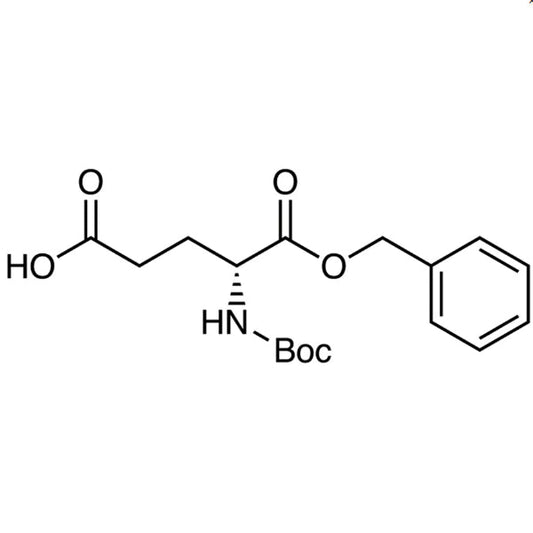
1-BenzylN-(tert-Butoxycarbonyl)-D-glutamate TCI B4303
Regular price From Rp 1.193.850,00Regular price -
N-(tert-Butoxycarbonyl)-L-phenylalanineMethylEster TCI B4259
Regular price From Rp 875.700,00Regular price -
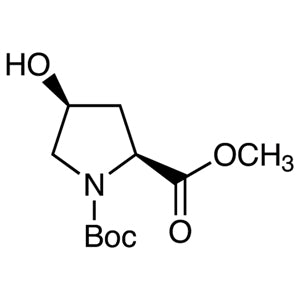
N-(tert-Butoxycarbonyl)-cis-4-hydroxy-L-prolineMethylEster TCI B3987
Regular price From Rp 689.850,00Regular price -
Nalpha-(tert-Butoxycarbonyl)-L-asparagine4-NitrophenylEster TCI B3915
Regular price Rp 1.298.850,00Regular price -
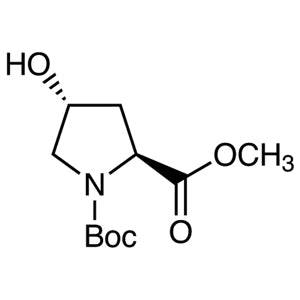
N-(tert-Butoxycarbonyl)-trans-4-hydroxy-L-prolineMethylEster TCI B3843
Regular price From Rp 769.650,00Regular price -
N-(tert-Butoxycarbonyl)-D-prolineSuccinimidylEster TCI B3414
Regular price From Rp 743.400,00Regular price