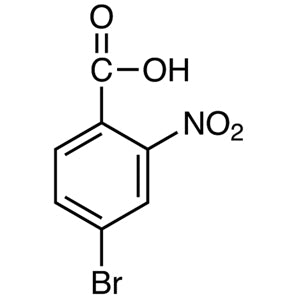
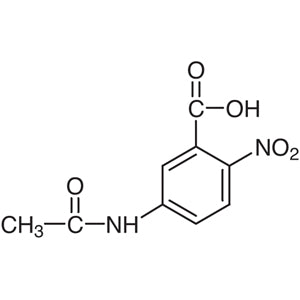
2-Nitrobenzoic Acid is a chemical compound widely used in laboratory settings as a fundamental building block for various chemical reactions, particularly in the synthesis of complex organic compounds. It plays a crucial role in organic chemistry by serving as a versatile reagent that can participate in multiple reaction types due to its functional groups. This compound is commonly utilized in research and development processes across multiple scientific fields, including pharmaceuticals and industrial chemistry. Its chemical structure allows for easy modification through various chemical transformations, making it a valuable tool in the hands of chemists and researchers.
The compound's unique properties, such as the presence of both nitro and carboxyl groups, contribute to its high reactivity and polarity. These characteristics make it suitable for a wide range of chemical reactions, including substitution, esterification, and redox processes. The stability of 2-Nitrobenzoic Acid under normal conditions ensures that it remains effective for extended periods, which is essential for consistent results in laboratory experiments. Its reactivity and stability make it a preferred choice for many synthetic pathways in chemical research.
In Indonesian laboratories, 2-Nitrobenzoic Acid is frequently used in academic and industrial research settings. It is a key component in the development of new chemical compounds and is often employed in the synthesis of heterocyclic compounds, esters, and other derivatives. Its availability and reliability make it a popular choice among researchers working on pharmaceutical and organic chemistry projects in Indonesia.
TCI brochures (PDF)
Related TCI products
- Used in the synthesis of heterocyclic compounds due to its reactive nitro and carboxyl groups, enabling the formation of complex organic structures.
- Applied in esterification reactions because of its carboxylic acid functionality, allowing for the creation of ester derivatives in organic synthesis.
- Utilized in redox reactions due to the presence of the nitro group, which can be reduced to various nitrogen-containing compounds.
- Employed in pharmaceutical research for the development of new drug molecules, as it can serve as a precursor in the synthesis of bioactive compounds.
- Incorporated in industrial chemical processes for the production of specialty chemicals, where its reactivity and stability are advantageous.
| Brand | TCI |
|---|---|
| CAS number | 552-16-9 |
| Molecular formula | — |
| Purity | — |
| Category | Chemistry > Building Blocks > Non-Heterocyclic Building Blocks |
| Pack sizes | Available in various quantities as per standard laboratory supply formats |
| Physical form | Solid |
| Storage | Store in a cool, dry place away from direct sunlight and moisture |
2-Nitrobenzoic Acid should be stored in a cool, dry environment to maintain its chemical stability and prevent degradation. It is recommended to keep the compound in a sealed container to avoid exposure to moisture and air, which can affect its reactivity. Suitable storage containers include glass or polyethylene vessels that are resistant to chemical corrosion. In laboratory settings, it is important to handle the compound with care, using appropriate personal protective equipment such as gloves and safety goggles. While it is generally stable under normal conditions, it should be kept away from strong oxidizing agents to prevent unwanted reactions. Proper storage and handling ensure the compound remains effective and safe for use in research applications.
—
Produk Terkait
-
3-Bromo-4-nitrobenzoicAcid TCI B4786
Regular price From Rp 1.670.550,00Regular priceRp 1.183.350,00Sale price From Rp 1.670.550,00 -
2-Bromo-5-nitrobenzoicAcid TCI B3841
Regular price From Rp 1.618.050,00Regular priceRp 1.146.600,00Sale price From Rp 1.618.050,00 -
4-Bromo-2-nitrobenzoicAcid TCI B3810
Regular price From Rp 1.351.350,00Regular priceRp 960.750,00Sale price From Rp 1.351.350,00 -
4-Bromo-3-nitrobenzoicAcid TCI B3689
Regular price Rp 1.881.600,00Regular priceRp 1.331.400,00Sale price Rp 1.881.600,00 -
2-Bromo-4-nitrobenzoicAcid TCI B3607
Regular price From Rp 955.500,00Regular priceRp 683.550,00Sale price From Rp 955.500,00 -
3-Bromo-5-nitrobenzoicAcid TCI B3370
Regular price From Rp 1.008.000,00Regular priceRp 720.300,00Sale price From Rp 1.008.000,00 -
2-Bromo-3-nitrobenzoicAcid TCI B3322
Regular price From Rp 3.870.300,00Regular priceRp 2.721.600,00Sale price From Rp 3.870.300,00 -
5-Acetamido-2-nitrobenzoicAcid TCI A2156
Regular price Rp 4.611.600,00Regular priceRp 3.240.300,00Sale price Rp 4.611.600,00