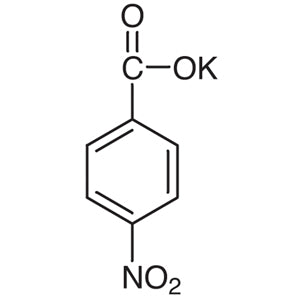
4-Nitrobenzoic acid potassium salt is a versatile chemical compound widely used in laboratory settings for its role in organic synthesis. As a potassium salt of 4-nitrobenzoic acid, it serves as a building block in the creation of complex organic molecules. This compound is particularly valuable in the development of aromatic and heterocyclic compounds, which are essential in pharmaceutical and industrial chemistry. Its chemical structure provides a stable foundation for various synthetic reactions, making it a reliable reagent in chemical research.
The compound is known for its good solubility in both organic solvents and water, which enhances its utility in a wide range of chemical processes. This solubility allows for easy incorporation into reaction mixtures, facilitating efficient chemical transformations. Additionally, its stability under normal laboratory conditions ensures that it remains effective throughout the duration of experiments. The well-defined melting and boiling points further aid in purification and separation techniques, contributing to its overall reliability in chemical applications.
In Indonesian laboratories, 4-Nitrobenzoic acid potassium salt is commonly used in both fundamental and applied chemical research. It plays a key role in the development of new drugs, industrial chemicals, and analytical compounds. Its availability and chemical properties make it an essential component in organic chemistry programs, supporting both academic and industrial research efforts. This compound is frequently utilized in chemical synthesis processes, contributing to the advancement of scientific knowledge and practical applications.
Related TCI products
- Organic synthesis: This compound is ideal for the synthesis of aromatic and heterocyclic compounds due to its reactivity and stability.
- Pharmaceutical research: It is used in the development of new drugs as a building block for complex molecular structures.
- Industrial chemistry: The compound supports the production of various industrial chemicals through its versatile chemical properties.
- Analytical chemistry: Its solubility and chemical stability make it suitable for use in analytical procedures and compound identification.
- Educational research: It is commonly used in academic settings to teach and demonstrate chemical synthesis techniques and reactions.
| Brand | TCI |
|---|---|
| CAS number | 15922-01-7 |
| Molecular formula | — |
| Purity | — |
| Category | Chemistry > Building Blocks > Non-Heterocyclic Building Blocks |
| Pack sizes | Available in various quantities as per standard laboratory supply |
| Physical form | Solid |
| Storage | Store in a cool, dry place away from moisture and direct sunlight |
This compound should be stored in a cool, dry environment to maintain its chemical stability and prevent degradation. It is recommended to keep it in a sealed container to avoid exposure to moisture and air, which could affect its properties. Due to its chemical nature, it should be handled with care, using appropriate personal protective equipment such as gloves and safety goggles. It is important to ensure that it is stored away from incompatible substances to prevent any potential chemical reactions. Regular inspection of storage conditions is advised to ensure the integrity of the material remains intact throughout its shelf life.
—
Produk Terkait
-
3-Bromo-4-nitrobenzoicAcid TCI B4786
Regular price From Rp 1.618.050,00Regular price -
2-Bromo-5-nitrobenzoicAcid TCI B3841
Regular price From Rp 1.565.550,00Regular price -
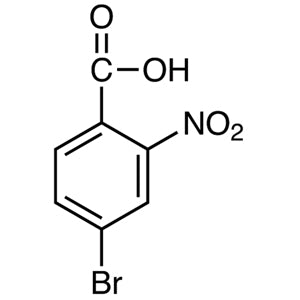
4-Bromo-2-nitrobenzoicAcid TCI B3810
Regular price From Rp 1.298.850,00Regular price -
4-Bromo-3-nitrobenzoicAcid TCI B3689
Regular price Rp 1.829.100,00Regular price -
2-Bromo-4-nitrobenzoicAcid TCI B3607
Regular price From Rp 903.000,00Regular price -
3-Bromo-5-nitrobenzoicAcid TCI B3370
Regular price From Rp 955.500,00Regular price -
2-Bromo-3-nitrobenzoicAcid TCI B3322
Regular price From Rp 3.817.800,00Regular price -
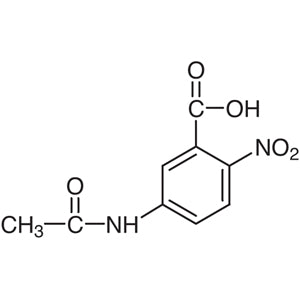
5-Acetamido-2-nitrobenzoicAcid TCI A2156
Regular price Rp 4.559.100,00Regular price