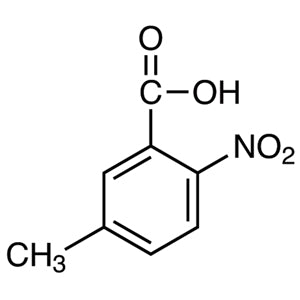
5-Methyl-2-nitrobenzoic Acid is a chemical compound widely used as a building block in various laboratory reactions. It plays a crucial role in synthetic chemistry by serving as a versatile intermediate for the preparation of more complex organic molecules. This compound is commonly employed in research settings where the synthesis of target compounds requires controlled reactivity and structural stability. Its presence in the chemical toolbox allows scientists to design and execute multi-step synthetic routes with precision.
The compound is valued for its predictable chemical behavior, stable molecular structure, and compatibility with a wide range of reagents. These properties make it a reliable choice for both academic and industrial research. Its solubility in organic solvents facilitates efficient purification and isolation of final products, enhancing the overall efficiency of laboratory workflows. Additionally, its consistent performance across different experimental conditions ensures reproducibility and reliability in chemical synthesis.
In Indonesian laboratories, 5-Methyl-2-nitrobenzoic Acid is extensively used in organic synthesis, chemical analysis, and the development of new chemical products. It is a staple in research institutions and educational facilities, supporting both teaching and applied research. Its availability and high quality make it a preferred material for chemists working on a variety of projects, from basic research to more advanced applications.
Related TCI products
- Organic synthesis experiments benefit from this compound's reactivity and structural versatility, allowing the creation of complex molecules with high precision.
- Chemical analysis processes utilize its predictable behavior for accurate identification and quantification of target compounds in various samples.
- Research into new chemical products leverages its stability and compatibility with diverse reagents, supporting the development of novel compounds.
- Educational laboratories use it to teach fundamental concepts in synthetic chemistry and reaction mechanisms to students.
- Industrial research applications take advantage of its reliability and efficiency in large-scale chemical processes and prototype development.
| Brand | TCI |
|---|---|
| CAS number | 3113-72-2 |
| Molecular formula | — |
| Purity | — |
| Category | Chemistry > Building Blocks > Non-Heterocyclic Building Blocks |
| Pack sizes | Available in standard laboratory quantities as per supplier specifications |
| Physical form | Solid, typically in crystalline form |
| Storage | Store in a cool, dry place away from direct sunlight and moisture |
This compound should be stored in a cool, dry environment to maintain its chemical integrity and prevent degradation. It is recommended to keep it in a tightly sealed container to avoid exposure to moisture and air, which could affect its stability. Proper ventilation is essential when handling the material to minimize inhalation risks. Due to its chemical nature, it should be stored away from incompatible substances such as strong bases or reducing agents. Laboratory personnel should wear appropriate personal protective equipment, including gloves and safety goggles, when handling this compound to ensure safe working conditions. Regular monitoring of storage conditions is advised to ensure the material remains in optimal condition for use.
—
Produk Terkait
-
3-Bromo-4-nitrobenzoicAcid TCI B4786
Regular price From Rp 1.618.050,00Regular price -
2-Bromo-5-nitrobenzoicAcid TCI B3841
Regular price From Rp 1.565.550,00Regular price -
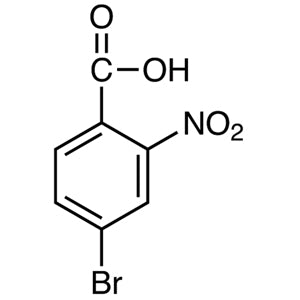
4-Bromo-2-nitrobenzoicAcid TCI B3810
Regular price From Rp 1.298.850,00Regular price -
4-Bromo-3-nitrobenzoicAcid TCI B3689
Regular price Rp 1.829.100,00Regular price -
2-Bromo-4-nitrobenzoicAcid TCI B3607
Regular price From Rp 903.000,00Regular price -
3-Bromo-5-nitrobenzoicAcid TCI B3370
Regular price From Rp 955.500,00Regular price -
2-Bromo-3-nitrobenzoicAcid TCI B3322
Regular price From Rp 3.817.800,00Regular price -
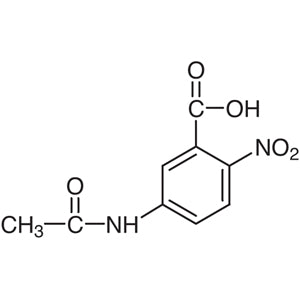
5-Acetamido-2-nitrobenzoicAcid TCI A2156
Regular price Rp 4.559.100,00Regular price