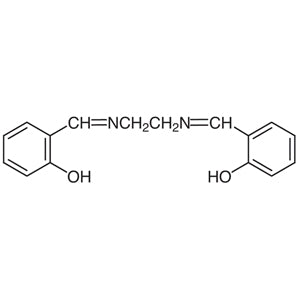
N-(1-Naphthyl)ethylenediamine Dihydrochloride Monomethanolate is a chemical compound widely used as a building block in various laboratory applications. It serves as a versatile reagent in organic synthesis, particularly in reactions involving amines and substitution processes. This compound is valued for its ability to participate in multiple chemical transformations, making it a key component in the development of complex molecules. Its unique molecular structure enables it to interact with a wide range of functional groups, enhancing its utility in synthetic pathways.
The compound exhibits chemical stability under controlled conditions, which makes it suitable for use in laboratory environments where precision and consistency are essential. However, it is sensitive to moisture and air exposure, requiring careful handling and storage. These properties make it a preferred choice for researchers seeking reliable and reproducible results in their experiments. Its reactivity and compatibility with various reagents further contribute to its popularity in both academic and industrial settings.
In Indonesian laboratories, this compound is commonly used in chemical, pharmaceutical, and industrial research. It plays a crucial role in the synthesis of dyes, pharmaceuticals, and other organic compounds. Its application is widespread due to its effectiveness and the ability to meet the demands of diverse experimental needs. Researchers in Indonesia rely on this compound for its consistent performance and adaptability in different synthetic processes.
Related TCI products
- TCI B2318 1820706-16-8 (+/-)-1,2-Bis(2,4,6-trimethylphenyl)ethylenediamine Dihydrochloride
- TCI N0869 1465-25-4 N-(1-Naphthyl)ethylenediamine Dihydrochloride [for Biochemical Research]
- TCI N0063 1465-25-4 N-(1-Naphthyl)ethylenediamine Dihydrochloride
- TCI E0078 333-18-6 Ethylenediamine Dihydrochloride
- TCI B1952 10563-26-5 N,N'-Bis(3-aminopropyl)ethylenediamine
- TCI A1492 37818-93-2 N-(1-Adamantyl)ethylenediamine
- Organic synthesis for the preparation of complex molecules requiring amine functionality.
- Dye chemistry applications where nitrogen-containing compounds are needed for color development.
- Pharmaceutical research for the synthesis of drug molecules with specific biological activity.
- Industrial chemical processes involving the modification of aromatic rings through substitution reactions.
- Analytical chemistry for the preparation of standard solutions and reagents in qualitative and quantitative analysis.
| Brand | TCI |
|---|---|
| CAS number | 138-18-9 |
| Molecular formula | — |
| Purity | — |
| Category | Chemistry > Building Blocks > Non-Heterocyclic Building Blocks |
| Pack sizes | Available in 25g, 100g, and 500g |
| Physical form | White to off-white crystalline powder |
| Storage | Store in a cool, dry place away from moisture and direct sunlight |
This compound should be stored in a cool, dry environment to prevent degradation due to moisture and air exposure. It is recommended to use airtight containers made of glass or high-density polyethylene to maintain its stability. Laboratory personnel should handle the compound with care, using appropriate personal protective equipment such as gloves and safety goggles. Due to its sensitivity, it should be kept away from sources of heat and direct light. Regular monitoring of storage conditions is essential to ensure the compound remains in optimal condition for use in experiments. Proper labeling and storage practices help maintain the integrity of the material and ensure safe handling in laboratory settings.
—
Produk Terkait
-
(+/-)-1,2-Bis(2,4,6-trimethylphenyl)ethylenediamineDihydrochloride TCI B2318
Regular price From Rp 5.352.900,00Regular price -
N-(1-Naphthyl)ethylenediamineDihydrochloride[forBiochemicalResearch] TCI N0869
Regular price Rp 1.538.250,00Regular price -
N-(1-Naphthyl)ethylenediamineDihydrochloride TCI N0063
Regular price From Rp 1.565.550,00Regular price -
EthylenediamineDihydrochloride TCI E0078
Regular price From Rp 505.050,00Regular price -
N,N'-Bis(3-aminopropyl)ethylenediamine TCI B1952
Regular price From Rp 610.050,00Regular price -
N-(1-Adamantyl)ethylenediamine TCI A1492
Regular price Rp 5.062.050,00Regular price -
N,N'-Bis(salicylidene)ethylenediamine TCI H0199
Regular price From Rp 1.298.850,00Regular price -
EthylenediamineSulfate TCI E0082
Regular price From Rp 557.550,00Regular price

![1465-25-4 N-(1-Naphthyl)ethylenediamine Dihydrochloride [for Biochemical Research] - AMI Scientific](http://amiscientific.com/cdn/shop/files/TCI2510N0869.jpg?v=1767130464&width=533)