2,5-Norbornadiene Palladium(II) Dichloride is a chemical compound widely used in catalytic reactions, particularly in C-H activation processes. It functions as a catalyst in various organic reactions, including coupling and isomerization reactions. This compound plays a crucial role in accelerating chemical reactions within the laboratory without altering the fundamental structure of the substrate. Its unique molecular structure allows for efficient interaction with organic substrates, making it a valuable tool for researchers in the field of inorganic and catalytic chemistry.
The compound's catalytic properties are highly stable under specific conditions, enabling repeated use in multiple experimental setups. Its ability to form complexes with a variety of ligands enhances its versatility in different catalytic applications. Additionally, its resistance to degradation ensures long-term reliability in laboratory settings. These properties make it a preferred choice for scientists working on advanced chemical synthesis and catalytic research.
In Indonesian laboratories, 2,5-Norbornadiene Palladium(II) Dichloride is commonly used in chemical research, especially in the fields of catalysis and organic synthesis. It is a key component in academic and industrial research, supporting the development of new chemical processes and materials. Its availability and effectiveness have made it a staple in both educational and research institutions across Indonesia.
- C-H Activation Reactions: This compound is ideal for C-H activation due to its ability to facilitate selective bond cleavage and formation, enhancing reaction efficiency in complex organic transformations.
- Organic Coupling Reactions: Its catalytic properties make it suitable for coupling reactions, where it promotes the formation of carbon-carbon bonds with high selectivity and yield.
- Isomerization Processes: The compound’s stability and reactivity support isomerization reactions, allowing for the conversion of one isomer to another under controlled conditions.
- Metal-Based Catalysis Research: Its unique structure and reactivity make it a preferred choice for studying metal-based catalytic mechanisms in both academic and industrial settings.
- Complex Synthesis Applications: It is widely used in the synthesis of complex organic molecules, where its catalytic efficiency and stability contribute to successful reaction outcomes.
| Brand | TCI |
|---|---|
| CAS number | 12317-46-3 |
| Molecular formula | — |
| Purity | — |
| Category | Chemistry > Catalysis and Inorganic Chemistry > C-H Activation [Catalysis] |
| Pack sizes | Available in various quantities as per standard laboratory requirements |
| Physical form | Solid powder |
| Storage | Store in a cool, dry place away from moisture and direct sunlight |
This compound should be stored in a cool, dry environment to maintain its stability and effectiveness. It is recommended to keep it in a tightly sealed container to prevent exposure to moisture and air. Due to its reactivity, it should be handled with care using appropriate personal protective equipment such as gloves and safety goggles. Avoid contact with incompatible substances to ensure safety in the laboratory. Regular inspection of storage conditions is advised to ensure optimal preservation of the compound. Proper labeling and storage practices are essential to maintain the integrity of the material during handling and experimentation.
—
Produk Terkait
-
TCI B5774 5,10-Bis(4,4,5,5-tetramethyl-1,3,2-dioxaborolan-2-yl)naphtho[1,2-c:5,6-c']bis([1,2,5]oxadiazole)
Regular price Rp 10.255.350,00Regular price -
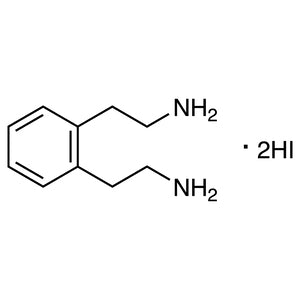
Dihydroiodide TCI B6569
Regular price From Rp 1.936.200,00Regular price -
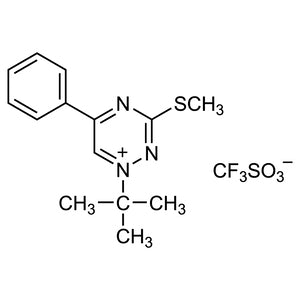
Trifluoromethanesulfonate TCI B7003
Regular price From Rp 1.936.200,00Regular price
![5,10-Bis(4,4,5,5-tetramethyl-1,3,2-dioxaborolan-2-yl)naphtho[1,2-c:5,6-c']bis([1,2,5]oxadiazole) - TCI B5774 - AMI Scientific](http://amiscientific.com/cdn/shop/files/TCI2510B5774.jpg?v=1769180228&width=533)