
![TCI N1285 1024602-82-1 1-[3-(4-Nitrophenyl)propanoyl]azetidin-2-one](http://amiscientific.com/cdn/shop/files/TCI2510N1285_b35ab14f-b015-438e-b152-8d14061df06d.jpg?v=1792651053&width=1946)
![1024602-82-1 1-[3-(4-Nitrophenyl)propanoyl]azetidin-2-one - AMI Scientific](http://amiscientific.com/cdn/shop/files/TCI2510N1285.jpg?v=1767131061&width=1946)
![TCI N1285 1024602-82-1 1-[3-(4-Nitrophenyl)propanoyl]azetidin-2-one](http://amiscientific.com/cdn/shop/files/TCI2510N1285_b35ab14f-b015-438e-b152-8d14061df06d.jpg?v=1792651053&width=1445)
![1024602-82-1 1-[3-(4-Nitrophenyl)propanoyl]azetidin-2-one - AMI Scientific](http://amiscientific.com/cdn/shop/files/TCI2510N1285.jpg?v=1767131061&width=1445)
1-[3-(4-Nitrophenyl)propanoyl]azetidin-2-one is a chemical compound widely used in laboratory settings for its role in bioconjugation reactions. This compound serves as a versatile reagent in chemical biology, enabling the formation of specific covalent bonds between organic molecules and biomolecules. Its unique structure allows it to participate in a variety of chemical reactions, making it a valuable tool for researchers working in bioconjugation and molecular modification. Due to its reactivity and functional group versatility, it is frequently used in applications requiring high specificity and precision.
This compound is preferred for its high reactivity and ability to react with functional groups such as amines and hydroxyls. Its chemical structure allows for efficient coupling reactions, which are essential in the development of conjugated molecules for diagnostic and therapeutic applications. The compound’s stability under controlled laboratory conditions ensures consistent performance, making it a reliable choice for researchers. Its flexibility in application and compatibility with various substrates further enhance its utility in biochemical and biotechnological research.
In Indonesian laboratories, this compound is commonly used in biochemistry, pharmacology, and biotechnology research. It supports the development of medical products, diagnostic tools, and testing methodologies. Many research institutions and universities rely on this compound to advance their studies in molecular interactions and biomolecular engineering. Its widespread use in these fields highlights its importance in modern scientific research in Indonesia.
Advantages (TCI brochure)
- Beta-lactam derivatives reported to bind more nucleophilic lysine residues at physiological pH
- Beta-lactam derivatives reported to enable one-step preparation of homogeneous antibody-drug conjugates
TCI brochures (PDF)
- Protein Site-specific Modification-related Reagents 2025-10-21 · p. 3
Related TCI products
- TCI D5516 32687-78-8 3-(3,5-Di-tert-butyl-4-hydroxyphenyl)-N'-[3-(3,5-di-tert-butyl-4-hydroxyphenyl)propanoyl]propanehydrazide
- TCI A3231 928038-44-2 Azetidin-3-ylmethanol Hydrochloride
- TCI A2028 930-21-2 Azetidin-2-one
- TCI P3292 2254447-10-2 Potassium [[1-(tert-Butoxycarbonyl)azetidin-3-yl]methyl]trifluoroborate
- TCI B6013 183062-96-6 2-[1-(tert-Butoxycarbonyl)azetidin-3-yl]acetic Acid
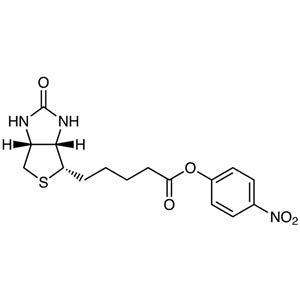
- TCI B4009 33755-53-2 (+)-Biotin 4-Nitrophenyl Ester
- Bioconjugation Reactions: This compound is ideal for creating specific covalent bonds between biomolecules and organic compounds, enabling precise molecular modifications.
- Protein Modification: Its reactivity with amino groups allows for the functionalization of proteins, which is crucial in drug development and diagnostic assays.
- Nucleic Acid Conjugation: It facilitates the attachment of nucleic acids to other molecules, supporting research in genetic engineering and molecular diagnostics.
- Polymer Chemistry: The compound’s ability to react with hydroxyl groups makes it useful in the synthesis of functionalized polymers for biomedical applications.
- Diagnostic Tool Development: Its role in forming stable conjugates supports the creation of targeted diagnostic reagents and imaging agents.
From the TCI brochure
- Selective modification of lysine residues
- Antibody-drug conjugate preparation
| Brand | TCI |
|---|---|
| CAS number | 1024602-82-1 |
| Molecular formula | — |
| Purity | — |
| Category | Chemistry > Chemical Biology > Bioconjugation |
| Pack sizes | Available in various quantities as per supplier specifications |
| Physical form | Solid or liquid, depending on formulation |
| Storage | Store in a cool, dry place away from light and moisture |
This compound should be stored in a cool, dry environment, away from direct light and moisture to maintain its stability and reactivity. It is recommended to use airtight containers to prevent exposure to air and humidity, which may affect its chemical integrity. Due to its reactivity, it should be handled with appropriate personal protective equipment, such as gloves and safety goggles, to ensure laboratory safety. Proper ventilation is essential when working with this compound to minimize inhalation risks. It should not be stored near incompatible substances, such as strong bases or reducing agents, to prevent unintended chemical reactions. Regular monitoring of storage conditions ensures optimal performance and safety in laboratory settings.
—
Produk Terkait
-
3-(3,5-Di-tert-butyl-4-hydroxyphenyl)-N'-[3-(3,5-di-tert-butyl-4-hydroxyphenyl)propanoyl]propanehydrazide TCI D5516
Regular price From Rp 1.431.150,00Regular priceRp 1.016.400,00Sale price From Rp 1.431.150,00 -
Azetidin-3-ylmethanolHydrochloride TCI A3231
Regular price From Rp 2.782.500,00Regular priceRp 1.961.400,00Sale price From Rp 2.782.500,00 -
Azetidin-2-one TCI A2028
Regular price Rp 4.293.450,00Regular priceRp 3.017.700,00Sale price Rp 4.293.450,00 -
Potassium[[1-(tert-Butoxycarbonyl)azetidin-3-yl]methyl]trifluoroborate TCI P3292
Regular price Rp 8.533.350,00Regular priceRp 5.982.900,00Sale price Rp 8.533.350,00 -
2-[1-(tert-Butoxycarbonyl)azetidin-3-yl]aceticAcid TCI B6013
Regular price From Rp 900.900,00Regular priceRp 645.750,00Sale price From Rp 900.900,00 -
(+)-Biotin4-NitrophenylEster TCI B4009
Regular price Rp 1.510.950,00Regular priceRp 1.072.050,00Sale price Rp 1.510.950,00 -
4-Nitrophenyl[2-[3-[(Prop-2-yn-1-yloxy)methyl]-3H-diazirin-3-yl]ethyl]Carbonate TCI N1200
Regular price Rp 8.930.250,00Regular priceRp 6.260.100,00Sale price Rp 8.930.250,00 -
4-NitrophenylLaurate TCI L0100
Regular price From Rp 822.150,00Regular priceRp 590.100,00Sale price From Rp 822.150,00
![3-(3,5-Di-tert-butyl-4-hydroxyphenyl)-N'-[3-(3,5-di-tert-butyl-4-hydroxyphenyl)propanoyl]propanehydrazide (CAS 32687-78-8) - TCI D5516 - AMI Scientific](http://amiscientific.com/cdn/shop/files/TCI2510D5516.jpg?v=1768818453&width=533)


![2254447-10-2 Potassium [[1-(tert-Butoxycarbonyl)azetidin-3-yl]methyl]trifluoroborate - AMI Scientific](http://amiscientific.com/cdn/shop/files/TCI2510P3292.jpg?v=1768362899&width=533)
![TCI B6013 183062-96-6 2-[1-(tert-Butoxycarbonyl)azetidin-3-yl]acetic Acid](http://amiscientific.com/cdn/shop/files/TCI2510B6013.jpg?v=1792631098&width=533)
![2-[1-(tert-Butoxycarbonyl)azetidin-3-yl]acetic Acid (CAS 183062-96-6) - TCI B6013 - AMI Scientific](http://amiscientific.com/cdn/shop/files/TCI2510B6013_c2386273-763e-48c3-9410-efd125264916.jpg?v=1767864198&width=533)

![TCI N1200 2945911-70-4 4-Nitrophenyl [2-[3-[(Prop-2-yn-1-yloxy)methyl]-3H-diazirin-3-yl]ethyl] Carbonate](http://amiscientific.com/cdn/shop/files/TCI2510N1200_ac970c0d-0143-4cee-ae90-d9a3af4c64de.jpg?v=1792650994&width=533)
![2945911-70-4 4-Nitrophenyl [2-[3-[(Prop-2-yn-1-yloxy)methyl]-3H-diazirin-3-yl]ethyl] Carbonate - AMI Scientific](http://amiscientific.com/cdn/shop/files/TCI2510N1200.jpg?v=1767130925&width=533)

