

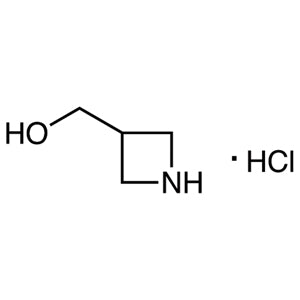
Azetidin-3-ylmethanol Hydrochloride is a chemical compound widely used as a building block in the synthesis of heterocyclic compounds. Its unique three-atom cyclic structure makes it a valuable component in the development of bioactive molecules. In laboratory settings, this compound is essential for reactions requiring high reactivity and structural stability. Due to its chemical properties, it is frequently employed in substitution, coupling, and structural modification reactions. Its versatility makes it a key reagent in various synthetic pathways, supporting both academic and industrial research.
The compound’s reactivity, particularly at the hydroxyl and nitrogen groups in its cyclic structure, makes it a preferred choice for chemists. Its high purity and stability under controlled conditions ensure reliable results in experiments. These characteristics are crucial for applications requiring precision and accuracy. The compound’s ability to participate in multiple reaction types enhances its utility across different research fields. Its consistent performance in laboratory conditions further supports its widespread use in chemical synthesis.
In Indonesian laboratories, Azetidin-3-ylmethanol Hydrochloride is commonly used in pharmacology, organic chemistry, and medicinal chemistry research. It plays a vital role in the development of new drugs and the study of bioactive compounds. Its availability in the local market facilitates research without the need for imports. This accessibility supports the work of researchers and institutions focused on advancing scientific knowledge and innovation.
Related TCI products
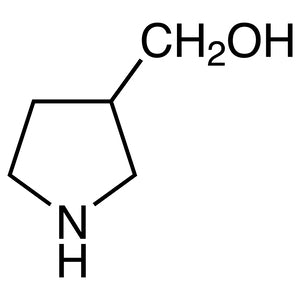
- TCI P2000 5082-74-6 Pyrrolidin-3-ylmethanol
- TCI B6013 183062-96-6 2-[1-(tert-Butoxycarbonyl)azetidin-3-yl]acetic Acid
- TCI A2028 930-21-2 Azetidin-2-one
- TCI P3292 2254447-10-2 Potassium [[1-(tert-Butoxycarbonyl)azetidin-3-yl]methyl]trifluoroborate
- TCI N1285 1024602-82-1 1-[3-(4-Nitrophenyl)propanoyl]azetidin-2-one
- TCI T0516 76-84-6 Triphenylmethanol
- Pharmacological research utilizes Azetidin-3-ylmethanol Hydrochloride for synthesizing bioactive compounds due to its reactivity and structural versatility.
- Organic chemistry experiments benefit from its role in substitution and coupling reactions, enabling the creation of complex molecular structures.
- Medicinal chemistry studies rely on this compound to develop new therapeutic agents by modifying molecular frameworks.
- Structural modification projects use its cyclic structure to design compounds with desired biological activities.
- Drug discovery initiatives incorporate it as a building block for creating novel pharmaceutical compounds with enhanced efficacy.
| Brand | TCI |
|---|---|
| CAS number | 928038-44-2 |
| Molecular formula | — |
| Purity | — |
| Category | Chemistry > Building Blocks > Heterocyclic Building Blocks |
| Pack sizes | Available in various quantities as per standard laboratory supply |
| Physical form | Solid |
| Storage | Store in a cool, dry place away from moisture and direct sunlight |
Azetidin-3-ylmethanol Hydrochloride should be stored in a cool, dry environment to maintain its chemical integrity. It is recommended to use airtight containers to prevent moisture absorption, which can affect its stability. Due to its reactivity, it should be handled with care, ideally in a well-ventilated area. Avoid exposure to strong oxidizing agents to prevent unwanted chemical reactions. Proper labeling of containers is essential for safety and identification. Laboratory personnel should wear appropriate personal protective equipment when handling this compound to ensure safe working conditions.
—
Produk Terkait
-
Pyrrolidin-3-ylmethanol TCI P2000
Regular price Rp 1.378.650,00Regular priceRp 979.650,00Sale price Rp 1.378.650,00 -
2-[1-(tert-Butoxycarbonyl)azetidin-3-yl]aceticAcid TCI B6013
Regular price Rp 900.900,00Regular priceRp 645.750,00Sale price Rp 900.900,00 -
Azetidin-2-one TCI A2028
Regular price Rp 4.293.450,00Regular priceRp 3.017.700,00Sale price Rp 4.293.450,00 -
Potassium[[1-(tert-Butoxycarbonyl)azetidin-3-yl]methyl]trifluoroborate TCI P3292
Regular price Rp 8.533.350,00Regular priceRp 5.982.900,00Sale price Rp 8.533.350,00 -
1-[3-(4-Nitrophenyl)propanoyl]azetidin-2-one TCI N1285
Regular price Rp 5.592.300,00Regular priceRp 3.925.950,00Sale price Rp 5.592.300,00 -
Triphenylmethanol TCI T0516
Regular price Rp 505.050,00Regular priceRp 352.800,00Sale price Rp 505.050,00 -
trans,trans-4'-Pentyl-4-bicyclohexylmethanol TCI P2433
Regular price Rp 848.400,00Regular priceRp 609.000,00Sale price Rp 848.400,00 -
(trans,trans)-4'-Propyl-4-bicyclohexylmethanol TCI P2432
Regular price Rp 1.749.300,00Regular priceRp 1.239.000,00Sale price Rp 1.749.300,00
![2-[1-(tert-Butoxycarbonyl)azetidin-3-yl]acetic Acid (CAS 183062-96-6) - TCI B6013 - AMI Scientific](http://amiscientific.com/cdn/shop/files/TCI2510B6013_c2386273-763e-48c3-9410-efd125264916.jpg?v=1767864198&width=533)

![2254447-10-2 Potassium [[1-(tert-Butoxycarbonyl)azetidin-3-yl]methyl]trifluoroborate - AMI Scientific](http://amiscientific.com/cdn/shop/files/TCI2510P3292.jpg?v=1768362899&width=533)
![1024602-82-1 1-[3-(4-Nitrophenyl)propanoyl]azetidin-2-one - AMI Scientific](http://amiscientific.com/cdn/shop/files/TCI2510N1285.jpg?v=1767131061&width=533)


