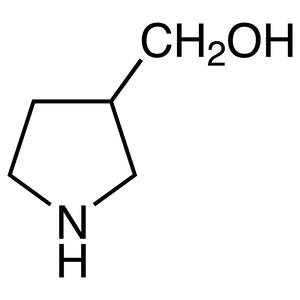
Pyrrolidin-3-ylmethanol from TCI (product code P2000) is a saturated heterocyclic compound made up of a pyrrolidine ring with a hydroxymethyl group at the 3-position. The molecule has two reactive functional groups: a secondary amine within the ring and a primary alcohol on the side chain. Because of this, it is widely used as a building block in organic synthesis. Laboratories use it as a starting point for assembling more complex molecules, especially drug candidates, ligands and bioactive compounds that need a pyrrolidine scaffold.
Chemists choose this compound because its two functional groups can be reacted selectively, one step at a time. The secondary amine nitrogen can be protected with groups such as Boc or Cbz, then alkylated, acylated or used in reductive amination. The primary alcohol can be oxidised to an aldehyde, converted into a leaving group or etherified. The pyrrolidine ring itself appears often in drug structures because it gives molecules a distinctive three-dimensional shape. This flexibility means a single starting material can produce many different derivatives for a compound library.
In Indonesia, this material suits organic chemistry and medicinal chemistry laboratories at universities, research institutes and pharmaceutical development groups. Researchers working on synthetic routes to nitrogen-containing heterocycles can use it to build intermediates, explore structure–activity relationships and prepare small libraries of related compounds. It also works well in teaching laboratories and graduate research projects where students practise protecting-group strategies and selective functional-group transformations on one well-defined heterocyclic scaffold.
Related TCI products
- TCI A3231 928038-44-2 Azetidin-3-ylmethanol Hydrochloride
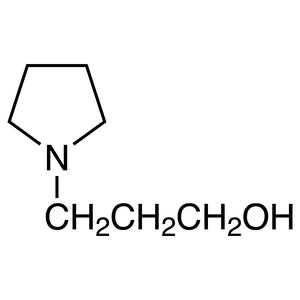
- TCI P3054 19748-66-4 3-(Pyrrolidin-1-yl)propan-1-ol
- TCI P2777 53912-85-9 (S)-2-(Pyrrolidin-2-yl)acetic Acid Hydrochloride
- TCI D4318 55921-65-8 2,6-Diamino-4-(pyrrolidin-1-yl)pyrimidine 1-Oxide
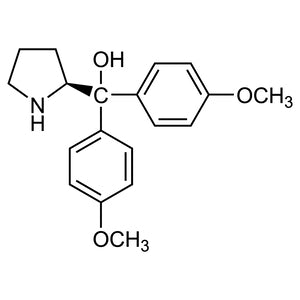
- TCI B6927 131180-57-9 (S)-Bis(4-methoxyphenyl)(pyrrolidin-2-yl)methanol
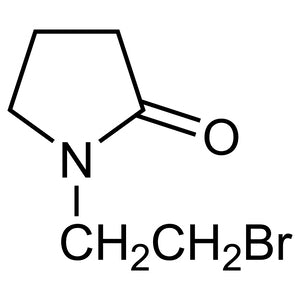
- TCI B6805 117018-99-2 1-(2-Bromoethyl)pyrrolidin-2-one
- Medicinal chemistry scaffold synthesis: the pyrrolidine ring provides a three-dimensional framework found in many drug structures, which makes this compound a practical starting point for building candidate molecules.
- Protecting-group chemistry: the secondary amine can be protected with Boc or Cbz groups, so the alcohol can be modified on its own before the nitrogen is deprotected and functionalised later.
- Reductive amination and N-alkylation: the ring nitrogen reacts as a secondary amine, so researchers can attach a wide range of substituents and produce diverse tertiary amine derivatives.
- Alcohol transformations: the primary hydroxymethyl group can be oxidised to an aldehyde, converted into a leaving group or etherified, which opens routes for chain extension and coupling.
- Compound library preparation: two functional groups that can be modified independently let a single building block produce many distinct derivatives for screening and structure–activity studies.
| Brand | TCI (product code P2000) |
|---|---|
| CAS number | 5082-74-6 |
| Molecular formula | — |
| Purity | — |
| Category | Chemistry > Building Blocks > Heterocyclic Building Blocks |
| Pack sizes | see the pack-size options shown on the product listing |
| Physical form | see the TCI specification sheet and certificate of analysis |
| Storage | follow the storage conditions on the TCI label and safety data sheet |
Store Pyrrolidin-3-ylmethanol in its original tightly closed container in a cool, dry, well-ventilated place, away from heat sources, direct sunlight and incompatible materials such as strong oxidising agents and acids. Because the compound contains an amine and an alcohol, keeping the container sealed reduces exposure to air and moisture. Always check the product label and safety data sheet for specific temperature or inert-atmosphere requirements. Handle it in a fume hood while wearing suitable gloves, safety glasses and a lab coat. Avoid inhalation and skin or eye contact, label secondary containers clearly, and dispose of waste according to institutional and local regulations.
—
Produk Terkait
-
Azetidin-3-ylmethanolHydrochloride TCI A3231
Regular price From Rp 2.730.000,00Regular price -
3-(Pyrrolidin-1-yl)propan-1-ol TCI P3054
Regular price From Rp 1.060.500,00Regular price -
(S)-2-(Pyrrolidin-2-yl)aceticAcidHydrochloride TCI P2777
Regular price From Rp 2.359.350,00Regular price -
2,6-Diamino-4-(pyrrolidin-1-yl)pyrimidine1-Oxide TCI D4318
Regular price From Rp 1.246.350,00Regular price -
(S)-Bis(4-methoxyphenyl)(pyrrolidin-2-yl)methanol TCI B6927
Regular price Rp 9.406.950,00Regular price -
1-(2-Bromoethyl)pyrrolidin-2-one TCI B6805
Regular price From Rp 3.155.250,00Regular price -
Triphenylmethanol TCI T0516
Regular price From Rp 505.050,00Regular price -
trans,trans-4'-Pentyl-4-bicyclohexylmethanol TCI P2433
Regular price From Rp 795.900,00Regular price