


Naphthalene-1,2-diamine is a chemical compound widely used in scientific and industrial applications. As a key reagent in materials science, it plays a crucial role in the synthesis of complex compounds, particularly in the production of polyimide materials. This compound is valued for its aromatic structure and two amine groups, which contribute to its versatility in chemical reactions. In the laboratory, it serves as a fundamental building block for creating advanced materials with specific functional properties. Its presence in various research projects highlights its importance in both academic and industrial settings.
The high reactivity of Naphthalene-1,2-diamine makes it a preferred choice for chemical synthesis. Its ability to participate in condensation and substitution reactions allows for the formation of diverse chemical structures. The compound’s molecular complexity and reactivity enable it to bond with various functional groups, leading to the development of materials with unique properties. This versatility makes it an essential component in the creation of new materials, especially in the fields of organic chemistry and advanced material research. Its application extends to the development of electronic and construction materials, where specific functional properties are required.
In Indonesian laboratories, Naphthalene-1,2-diamine is commonly used in scientific research, particularly in organic chemistry and material science. It is frequently found in projects aimed at developing new materials with enhanced performance characteristics. Researchers rely on this compound for its ability to contribute to the synthesis of complex structures, making it a valuable resource in both academic and industrial research environments. Its consistent use underscores its importance in advancing material science and chemical innovation in Indonesia.
TCI brochures (PDF)
- Raw Materials for Polyimide Synthesis 2026-05-11 · p. 4
Related TCI products
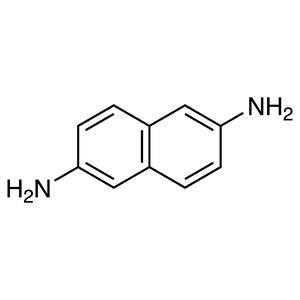
- TCI D6067 2243-67-6 Naphthalene-2,6-diamine
- TCI D6282 75389-89-8 2,4(or 4,6)-Diethyl-6(or 2)-methylbenzene-1,3-diamine (mixture of isomers)
- TCI D4492 655-86-7 Phenazine-2,3-diamine
- TCI D1045 771-97-1 2,3-Diaminonaphthalene
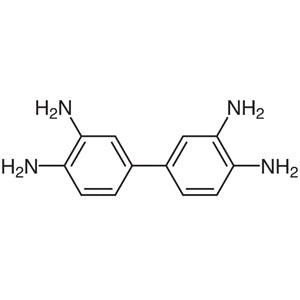
- TCI D0077 91-95-2 3,3'-Diaminobenzidine
- TCI B1018 20734-58-1 1,8-Bis(dimethylamino)naphthalene [for Dehydrohalogenation]
- Organic synthesis applications benefit from Naphthalene-1,2-diamine due to its aromatic structure and two amine groups, enabling the formation of complex chemical structures.
- Polyimide material development relies on this compound as a key raw material, contributing to the synthesis of high-performance polymers with thermal and mechanical stability.
- Research in advanced materials utilizes Naphthalene-1,2-diamine for creating compounds with unique functional properties, essential for electronic and construction applications.
- Chemical reaction studies often incorporate this compound because of its high reactivity, allowing for a variety of condensation and substitution reactions.
- Material science experiments use Naphthalene-1,2-diamine to explore new material properties, supporting innovation in both academic and industrial research settings.
| Brand | TCI |
|---|---|
| CAS number | 938-25-0 |
| Molecular formula | — |
| Purity | — |
| Category | Materials Science > Polymer/Macromolecule Reagents > Polyimide Raw Materials |
| Pack sizes | Available in various quantities as per supplier specifications |
| Physical form | Solid, typically in powder or crystalline form |
| Storage | Store in a cool, dry place away from direct sunlight and moisture |
Naphthalene-1,2-diamine should be stored in a cool, dry environment to maintain its chemical integrity. It is recommended to keep the compound in airtight containers to prevent exposure to moisture and air, which could lead to degradation. Due to its reactivity, it should be handled with care, using appropriate personal protective equipment such as gloves and safety goggles. The compound should be stored away from incompatible substances to avoid potential chemical reactions. In laboratory settings, it is important to ensure proper ventilation when handling this material. Always follow standard safety protocols to minimize risks associated with its use and storage.
—
Produk Terkait
-
Naphthalene-2,6-diamine TCI D6067
Regular price Rp 3.949.050,00Regular price -
2,4(or4,6)-Diethyl-6(or2)-methylbenzene-1,3-diamine(mixtureofisomers) TCI D6282
Regular price From Rp 1.618.050,00Regular price -
Phenazine-2,3-diamine TCI D4492
Regular price From Rp 2.359.350,00Regular price -
2,3-Diaminonaphthalene TCI D1045
Regular price From Rp 3.446.100,00Regular price -
3,3'-Diaminobenzidine TCI D0077
Regular price From Rp 2.041.200,00Regular price -
1,8-Bis(dimethylamino)naphthalene[forDehydrohalogenation] TCI B1018
Regular price From Rp 928.200,00Regular price -
Naphthalene-1,4,5,8-tetracarboxylicDianhydride(purifiedbysublimation) TCI N0755
Regular price From Rp 2.227.050,00Regular price -
Naphthalene-1,4,5,8-tetracarboxylicDianhydride TCI N0369
Regular price From Rp 2.439.150,00Regular price


![20734-58-1 1,8-Bis(dimethylamino)naphthalene [for Dehydrohalogenation] - AMI Scientific](http://amiscientific.com/cdn/shop/files/TCI2510B1018_1ed1f360-c291-4dd0-9e2f-8717aa029c6e.jpg?v=1767230873&width=533)

